


|
|

Antoine Day was wrongfully convicted of muder and attempted murder in Illinois in 1991. He spent over...
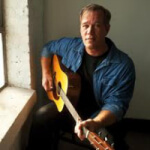
Eddie James Lowery was wrongfully convicted of rape in Kansas in 1982. He was incarcerated for 10...
William Dillon is a man who served 28 years of a life sentence for a murder he...

Michael Semanchik is the Executive Director of The Innocence Center (TIC), a formidable national legal institution dedicated...
| Published: | April 2, 2026 |
| Podcast: | For The Innocent |
| Category: | Access to Justice , News & Current Events , True Crime |
How do you rebuild a life after it was taken from you? A wrongful conviction strips a person of their agency, leaving pain and loss where there once was freedom and purpose. Healing from such a profound injustice is no easy task, and even after exoneration, the ache of what was lost remains.
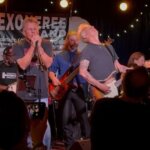
In this episode, Michael Semanchik sits down with Antoine Day, Eddie Lowery, and William Michael Dillon—all members of The Exoneree Band. Together, they share how music became a powerful outlet for processing their experiences, reclaiming their voices, and transforming pain into purpose. Through their performances, The Exoneree Band spreads awareness about wrongful incarceration, tells their personal stories, and educates communities about the human cost of injustice. Their message is clear: freedom is everything.
Learn more or book the band at ExonereeBand.com.
Listen to William Michael Dillon’s Story.
William Michael Dillon:
Want somebody please set me free?
Michael Semanchik:
Last episode, we told the story of Bill Dylan, the wrongful conviction, the decades lost, and the fight for freedom. But a story doesn’t end the day someone walks out of prison. The real question is, what comes next? How do you rebuild a life after it’s been taken from you? How do you process the anger, the trauma, the lost time? How do you reclaim your identity? For Bill and for other exonerees around the country, part of that answer is music. Not as a metaphor, but as a band. Today, we’re joined by Eddie Lowery, Bill Dylan, and Antoine Day. They’ve each survived wrongful convictions. Now they’re creating something together. This is a conversation about survival, brotherhood, and what it means to step onto a stage after spending years behind bars. So let’s get into it. Let’s start round robin. Introduce yourselves. State where you were wrongfully incarcerated and how many years and what instrument you play.
Let’s start with Eddie.
Eddie Lowery:
Yeah. My name’s Eddie Lowery. I was wrongfully convicted for 21 years. Accept in my case, I did 10 years in prison, then I was paroled and spent 11 years registering as a sex offender until I was finally exonerated in 2003.
Michael Semanchik:
Antoine.
Antoine Day:
Hi, I’m Antoine Day. Spent over 14 years in prison, over another 12 years waiting to be exonerated. Prior to prison, I was a musician who played and I traveled. I come from a very strong family who knew me better than what the state said and sit around and fought with me.
Michael Semanchik:
Awesome. Bill, welcome back.
William Michael Dillon:
Hi, glad to be here. My name is William Michael Dillon. I spent 27 years and some change wrongfully in prison. I was convicted in the state of Florida. In 1981, I was arrested for it and I was released on November 18th, 2008.
Michael Semanchik:
Okay. So Bill, Eddie, Antoine, whose idea was it to form a band?
Eddie Lowery:
What I remember of it, we were in Seattle for a talented show and we were all going to do our own individual song.
William Michael Dillon:
Cincinnati.
Eddie Lowery:
Yeah, in Cincinnati. And from what I remember, I thought it was Bill who brought up the idea, why don’t we back each other up and make it sound fuller? And so we got together in a practice room and Antoine was there, Bill, myself, Raymond Tyler and Darby Tillis. And for some reason, we formed together and bonded together and backed each other up and played this talent show. From there, just kind of evolved into the exoneree band. And some members have left since then. But in the very beginning, there was five of us who bonded together and that’s kind of how it started.
Antoine Day:
It had been an idea for us to do a collaborative effort and come bring everybody together when we was in Cincinnati. But prior to that, we had had some conversations about connecting Eddie, myself, Ray. Who else was it?
William Michael Dillon:
Darby.
Antoine Day:
Yeah, Darby. That’s what I was trying to figure out. It was Darby. And we all just collaborated, man. And we collaborated. We fell in love. With the sound, we fell in love with the group of guys we had. And from that point, it just continued.
Michael Semanchik:
In those early days, who brought music to the table and said, “This is something we should play,” or were you just kind of covering songs at that point?
Eddie Lowery:
I had a few songs originally wrote and I know Bill did. I think each of us just brought in the music that we grew up on. Bill brought in some country, I like rock, Antoine, R&B. And we just put it all together and that’s kind of how we are. We play a full range of music.
Michael Semanchik:
That’s awesome. Bill and Eddie, Antoine said he had been playing music his whole life. Were you playing music before you went to prison?
Eddie Lowery:
No, I wasn’t. I grew up around music. I grew up with very talented people. For instance, I went to school with Vince Neal and Motley Crue. He was two years behind me. I didn’t really know him all that well, but I knew that he played in a band called Rock Handy. I grew up with Mark Kendall. He was a league guitar player for Great White. And I’d sit around listening to these guys play, but I could never do a bar chord. My fingers just would not do a bar chord. And so when I was wrongfully convicted and sent to prison, my mom sent me an acoustic guitar in prison. And one day I was just sitting there trying to play it and I could do a bar chord for some reason. I don’t know, just out of nowhere, just I was, “All right, I can do a bar chords.” And then I started kind of taking lessons from other men in prison, whether it was R&B, country, or rock, I just wanted to learn how to play the sang.
And so that’s where my very beginnings of playing guitar started was in prison and I just developed over from that time.
Michael Semanchik:
And Bill, you told us a similar story in the previous episode.
William Michael Dillon:
Same thing for me. Same thing for me. The only thing I did was sing a little bit before prison. I sang, sang along with the radio, whatever that is, never written, never done anything like that there. And same thing for me. I learned in prison. I’d always wanted to play because I could sing a little bit. I wasn’t rockstar in any way, shape or form, but I could sing a little bit and I wanted to play guitar. And plus it seemed like something to do in place that was so boring. That’s basically what I did is I started to grab ahold of music and it just ate up so much of my time. It made me feel so much better.
Michael Semanchik:
It give you hope.
William Michael Dillon:
Definitely gave me hope. I’ll be honest with you, I never really had much of it in that sense hope-wise. I just didn’t believe in it. Once they had done what they did to me, I just lost all basic hope.
Michael Semanchik:
What kind of access to instruments did you have, Antoine? So I know Bill had some access to guitar and Eddie had guitar as well and acoustic guitar. What did you have in prison?
Antoine Day:
When I got to prison, which was one of the worst hell holes in the state of Illinois, they wanted you to have something to do, but nobody had to know how to do it. So when I came in, I was talking to a superintendent and I was like, “Man, got some music in here, man. You calm a lot of these guys down.” At first, we was thinking DJ or just play music where guys can … Then we said, “What if we put a band together?” So he was like, “Well, if you put it together, I’d get you some instruments.” They had the University of Illinois who had drums, guitars, bass, amps, horns, and stuff like that. So he just went to the school and they donated it. We started a band right in prison, The Power Soul Band. And again, it was a band that had everybody in it.
We had white guys and Mexican guys, black guys. We had everybody. We brought it together and I mean, it was a good thing. I loved it. We played concerts at the picnics. We played when certain officials come down to the institution. We played family gatherings.
William Michael Dillon:
Antoine, you had white guys in the Soul Band?
Antoine Day:
Yeah. We had one guy who thought he was James Brown with blonde hair.
William Michael Dillon:
Hoo. Yes, sir.
Antoine Day:
Yaka.
Michael Semanchik:
That’s awesome. Do you stay in touch with any of your bandmates from inside?
Antoine Day:
I have seen one. One guy got exonerated. His name was Sean World. He got exonerated. So I seen him since he been out, but I haven’t seen him lately.
Michael Semanchik:
Bill Eddie, did you guys form informal bands when you were in, or was it just more about learning and playing music?
Eddie Lowery:
For me, it was more about learning and playing. But eventually, after a few years, I started playing with a rock band, which kind of didn’t really last too long. Then I went over to a country band and just started playing rhythm for the country band. And that was what I did besides taking lessons with whoever I knew in there could play guitar.
William Michael Dillon:
Same thing for me in Polk County. For years, I was in a country band and a rock band, two of them. And we’d put on shows every three months we’d put on different shows and stuff, and full day of bands and stuff, and prisoners and everything would just hang out and enjoy it. In and out, big multipurpose building. We’re on stage, living in color.
Eddie Lowery:
I was playing in the country band one time and we were playing some country music, and then next thing you know, everything’s silent because somebody unplugged us on the yard. We were playing on the yard. I guess they didn’t want to hear it. So I always thought that was pretty funny. Yeah. I think what came easier than learning to play guitar for me was I started off writing poems and I turned that into writing my story of my life and everything that happened to me. Even before I was wrongfully convicted, I was writing poems and that would turn into a song of some sort about my life. That was easier for me than actually playing a guitar and learning the notes and everything on the neck.
Michael Semanchik:
And Bill, you had a similar thing, right?
William Michael Dillon:
Yep. Yep. I was a kid. I enjoyed poetry, believe it or not. I enjoyed it and understood it a lot more than anything. And I didn’t necessarily go and think of writing poetry. I had a couple songs. My original song, Black Ropes and Lawyers, was written sort of as a … It was sort of an anger statement, but it was meant to be a sort of poetic statement of kinds, but it was forever long. I don’t know. The first time the band heard it, I think it was about eight or nine minutes long. But poetry is the way for writing. There’s just no way around it. Poetry is definitely the way to go in that sense. As Julius would say, you have to have a high and a low.
Michael Semanchik:
Antoine, did you write songs as well or was it myself as a drummer? I know you kind of just play along to what the poets are putting together.
Antoine Day:
Yeah. So I kind of just listen and go. They do the writing and I do everything else, I guess. I get into the vocals and I do some arrangement stuff. Me and Bilden collaborated on numerous things. But back then, no, we come up with it. We did mostly cover tunes. And later on, I got into a little bit more writing. Like I said, we collaborated on those.
William Michael Dillon:
Well, we pushed the issue with Four Years in the Hole. When we sat him down, this is something that we did. We sat him down because he’s got a great grasp on things. He just won’t sit down and apply himself to it, basically in a sense, but he’s got a really good grasp. Have you heard Four Years and a Whole?
Michael Semanchik:
Me? I don’t think I have. Uh-uh.
William Michael Dillon:
Okay. See, and that’s another song that you need to hear because it’s basically something we sat him down and made him apply himself to putting us some words on paper because we wanted to hear from him. We wanted to hear what he had to say. And same thing with It Ain’t My Destiny. This is just some times where we got together and he probably doesn’t remember half of this stuff, but he’s old now, grayheaded. He’s old and grayheaded now. But it’s just where we got him. We wanted to apply. And same thing with Ted. Same thing with Ted. We wanted Ted to put some words to paper. We wanted him to apply himself. Like I say, none of us are them rock stars in any way, shape or form, but he’s shy and he doesn’t want to, but we got him to apply himself to some words and stuff.
So now we have some songs with some words. So now we have to just get him to get out there and get them done. Get him song. Let people hear him because part of your question was the fact that, what are we doing this for? We’re doing it for fun, but we’re doing it for people to hear about wrongful conviction. It’s not just what was me, what happened to Antoine and Eddie and me and Ted and Darby and all of us. It’s about letting people know that these things still happen. That’s basically what it is. It’s music in the ears. People listen to music before they listen to you talk.
Michael Semanchik:
We’ll be right back. So I want to back up just a little bit before the band was formed. What was it like when you first came home? And we’ll start, Antoine, how long did it take you to pick up an instrument again and get back into playing music when you came home from prison?
Antoine Day:
Oh, man. It was like right away. When I walked in my house, my old drum set was down into the basement. So I got released that day. After I hugged and kissed my mom, I strolled down to the basement and my drum set was still set up in the basement. I sat on it and tap, tap, tap. I’m proud to say I’ve been blessed to be able to continue from the very first time I came home.
Michael Semanchik:
Sounds like your drum set was waiting for you.
Antoine Day:
Yeah, it was waiting for me, just sitting right there. I’ve been at it ever since.
Michael Semanchik:
That’s great. Eddie, when you came home, what was it like? Did you jump right back into music? Did you pick up?
Eddie Lowery:
No. For me, it was kind of tough because I got out and I was on parole. So my case involved a rape that I never committed. And so my name’s on the sex offenders list. I’m worried about all that. I got married, had children. I’m concerned about being on the sex offenders list and my name came out in a newspaper and I’m trying to hide my address. And it was just a really difficult time for me to deal with something like that. When everybody in my family and my friends knew I could never do anything like that. I’m living in Kansas City, Missouri, and my ex- wife now, her dad got me a job at Ford Motor Company and at the assembly plant in Kansas City. And I kind of just stayed hidden in that and dealing with having to register as a sex offender every three months.
And eventually somewhere along the line, I don’t know how long it took, I’d go down in the basement and start strumming on the guitar. And then I started working on songs from there. But it took a while for me to do that after I got out because of the whole stress of being innocent and not yet being exonerated yet and dealing with that on the outside, because sometimes on the outside, it was very difficult to live your life when you’re hoping that a neighbor doesn’t find out that you’re a sex offender or somebody else. And the stress of just the whole thing was just, it was very difficult to deal with at times.
William Michael Dillon:
I can definitely see that, Eddie. And my heart goes out to you there with that because I can imagine I experienced that with just the murder, just the whole concept of I got out and through paperwork kind of thing, but I can definitely understand that. It’s a painful thing just in thinking all the time that you’re looking around at your neighbors or looking at you like you’re some rapist of some kind. And yeah, I can definitely understand that. It’s sad but true.
Eddie Lowery:
Yeah. Barry Scheck called me and told me that they had found my DNA because when they were looking for the DNA to get it all tested and everything, they couldn’t find it at first, but then he called me and said they found it. And I just fell down to my knees and I cried because I knew at that time that I was going to finally be exonerated for this crime I never committed.
William Michael Dillon:
Exactly.
Eddie Lowery:
Yeah. So I think after that is when I finally was able to start working on music and playing a guitar and putting my story into music.
Michael Semanchik:
Bill, when you came home, did you just pick up the guitar and keep going?
William Michael Dillon:
First night I came home, I went right in and we had lasagna and I played a song the very first night right there, filmed it and everything. They filmed it and everything. Can’t remember. It was one of my favorite songs. It just goes to show you how age has grown on everybody.
Michael Semanchik:
Well, that’s okay. Let’s talk about some of the performances that you all have done. So you’ve been performing at the Innocence Network Conference for a number of years. Antoine, I’ll go to you. What’s your favorite network conference you’ve ever performed at?
Antoine Day:
Let me see. Let me see. We done played so many. The favorite one I think was at the House of Blues when we first got together. I think that was one of the best experiences because we enjoyed it so much. It’s just like nothing can’t replace the first time. That was really great.
Michael Semanchik:
Had you rehearsed a lot leading up to that?
Antoine Day:
We didn’t, because what we did was we rehearsed like the day before we got there. When we get there, say on a Thursday, we play on a Friday. We rehearse all day Thursday and we go right in like we’ve been together 20 years on that Friday and pull it off. That was one of the most memorable times was at the House of Blues in Ohio.
Michael Semanchik:
Bill, what about you?
William Michael Dillon:
For me, I know it’s going to seem a little cliche, but I think for me, I think it was San Diego. San Diego was a time that was extra special to all of us. We all got together. We were able to practice a little bit more because keep in mind, this exoneree band is not from the same place. We’re all from different parts of the United States. We practice by ourselves. We don’t get to practice as a band until we come together. And then we can’t really practice per se vocally because we have a show to do in the next day or so. And we can do a little bit here, a little bit there, trim up on things, but we have to be ready. And it’s always a frustration thing, but at the end of it all, it always comes out like beautiful in the same sense.
So for me at San Diego, when we had a chance to play with you and we had a chance to play with all of the California Innocence people, it was a great time for me. It was a good time. There’s so many memorable times that we played together, but that for me was good because I thought the show was really powerful. And we had introduced new music at that time too. Some new songs were coming in and out and it was just a good time.
Michael Semanchik:
Yeah. I thought that was a great show. The Exonerators opened for the Exon
William Michael Dillon:
Ram. Yeah, Exonerators. Exactly. The Exonerators opened up for us too. That was pretty cool.
Michael Semanchik:
Eddie, what was your favorite?
Eddie Lowery:
I’d have to say when we played in Florida in Orlando, I believe it was, we were playing one of my songs, it’s called Can’t Touch My Soul. It’s kind of an upbeat song. And Raymond, right after the song said, “Did you ever imagine people dancing like they did during your song?” And I was like, “Yeah, it was just really exciting to see people out there dancing to my song that I didn’t know if they’d even like or not. ” So I think that was personally one of my most favorite times seeing that and having Raymond come over and say that to me. And that was really cool.
William Michael Dillon:
The Tin Roof.
Eddie Lowery:
Yeah. Oh, the 10 roof.
William Michael Dillon:
The 10 roof. Yeah.
Eddie Lowery:
Yeah.
William Michael Dillon:
That’s also the elevator. That’s also where the elevator came from.
Eddie Lowery:
Yeah.
William Michael Dillon:
Remember the elevator?
Eddie Lowery:
Yep.
William Michael Dillon:
Antoine, you remember the elevator?
Antoine Day:
Uh-uh.
William Michael Dillon:
That’s where you were waiting on you. You said I’m in the elevator. We’re outside parked in the damn lobby, front parking area. You said I’m in the elevator 30 minutes later. Yeah, I know. I know.
Antoine Day:
Yeah, I forget. I forgot about that.
William Michael Dillon:
Yeah, that’s where the elevator came from. But that’s a good one too though. Florida was a good one day. Yeah, it
Eddie Lowery:
Was fun.
William Michael Dillon:
Yeah. Florida was fun. It was good. It was kind of warm, but it was nice though. It was nice. The 10 roof, that was a big jam and people were definitely into it, that’s for sure. It
Antoine Day:
Was on the floor.
William Michael Dillon:
Yes,
Antoine Day:
Sir. All night.
William Michael Dillon:
Yep. That was pretty good.
Antoine Day:
And the Arizona one was a nice suit. I mean, we played so many dudes.
William Michael Dillon:
That’s why I say … It’s hard to pick them.
Michael Semanchik:
You guys have had a number of people that have made guest appearances. Antoine, I’ll start with you again. Who was your favorite guest to appear with you all?
Antoine Day:
Well, I know we just played in Seattle. The guitars for Pearl Jam. I mean, I mean, lit it up.
Michael Semanchik:
Mike McCready.
Antoine Day:
Yeah. Mike McCready. So let me go back and think other than him, who …
Eddie Lowery:
There was that drummer from Green Day. Remember where we met in there? I think it was Green Day.
Antoine Day:
Yeah, from Green Day. Yeah. We had some great, great shows, man, especially when all the guys was there. But what’s the piano player name, played in New York?
William Michael Dillon:
She passed, but yeah, goodness gracious. She was awesome too. Yeah. Yeah, we did. We had some good ones that really highlighted and gave us some real push. They gave us a good sound, good things. Everybody brought in was so good. But one thing we forgot to mention though was Darby, because Darby was such a … Darby came in and brought in such a different sound for us too, such a spirit. He wasn’t an additive. He was actually a band member. He was an original. But every time Darby got up there and just started doing stuff, the things just seemed to change. He was good. He was good at getting us going, keeping us together.
Antoine Day:
That old preacher.
William Michael Dillon:
Yeah, that old preacher. That old black preacher.
Antoine Day:
But we old. It’s just not about the band. We got one young lady that goes way out and far beyond, and I love her. She really puts in the energy, the time for us, and really asks for nothing back. She our secret weapon.
William Michael Dillon:
Her name is Ellen.
Antoine Day:
Oh, it’s Ellen.
William Michael Dillon:
It’s my wife, Ellen.
Antoine Day:
I wanted you to say it.
William Michael Dillon:
It’s my wife, Ellen. She’s a sweetheart.
Antoine Day:
Ellen is my hero. She the backbone. She keep everything going, man, and I could never tell her enough.
Michael Semanchik:
Bill, when did she step up and take on the role of helping you all and managing the band?
William Michael Dillon:
She’s been trying to basically do it for years basically, but in the background here and there, basically not trying to push herself on anything because just when we need help and especially when I started to fail, she started to pick it up a little bit because I was having a lot of trouble trying to keep things together in a sense with music and bringing things in and stuff and a lot of direction and stuff. And it was a lot of weight for me. I think she just stepped in and said, “I’m tired of this. I’m going to help you do this. ” Okay. Well, please go ahead.
Antoine Day:
Yeah. She takes care of the business.
William Michael Dillon:
Yeah, she definitely does. She believes in it. That’s one thing about it. She’s not just a fan of me or Eddie or Antoine. She believes in the wrongful conviction. She believes in helping people. Remember, Ellen was more than that. She was working in DNA before I met her and she was doing free DNA testing for exonerees in Cincinnati in a lab that she was in control of. So Ellen was a believer long before she met me or any of us. And she’s always been working hard in the background. She wants to help out as much as she can. She pays her own money. She does stuff for us with her own money and makes things happen.
Michael Semanchik:
That’s great.
William Michael Dillon:
We are certified exoneree band now, by the way. That name and logo belongs to us, me, Eddie, Ted, and Antoine.
Michael Semanchik:
So she got a trademark?
William Michael Dillon:
Yes. She paid for our trademark. Yep.
Michael Semanchik:
That’s really cool. We’ll be right back after this break. So what are each of your hopes for the band going forward? What do you hope to accomplish? What do you think is the thing you still have that you want to do that you haven’t done yet?
Eddie Lowery:
I don’t know if it was COVID or what the dough was, but it just seemed really to kind of put us hold on the band lately. I’d really like to see us get back out and play again. I’d like to have people bring us in and hear our stories because our music really revolves around our story and our life. And I’d like to see us get maybe some gigs where we even just go in and we just sit down acoustically or electric and just share our story on stage with the audience with no covers, just original music and our life experience on how this band started and the music behind the stories and what that sounds like and everything. I would really hope that with some work and some advertising out there about the band, again, we can get back out there and play.
Michael Semanchik:
So if people wanted to book the band for an event, how do they go about doing that? Let’s make sure that makes it in the show.
William Michael Dillon:
That would have to be Ellen. Yeah. Ellen would get us together. She will find out between us whether we want to do it, whether we can do it, whether it’s financially feasible for us to do it, and can we do it?
Eddie Lowery:
How can they get in touch with Ellen in order for them to bring us in, Bill?
William Michael Dillon:
They’d have to contact the show, basically. The show knows how to contact Ellen.
Michael Semanchik:
We’ll make sure that we drop a link in the show notes so that people can track you all down. Antoine, what are you hopeful for the future of the band?
Antoine Day:
Outside of health, I’m just hoping that we can come together and continue to spread the word, man, because as I continue to speak in different places, I find out more people, they just don’t know what’s going on out here. And we can bring an awareness to people, man, so you can be ready before it happens to you. And then you’ll know who to be involved with if it happens to you. God forbid that it does. My thing is just to keep on spreading the word, being able to get out here. One of the things that I think the network might be confused with is the finances. We’re not in this for the cash. We didn’t do this to make money. We did this so people can be aware what happened to us and how it happened. Whatever we got extra was extra. But we really wanted to get the word out and let people know that this is happening to people every day because even now I sit in a room of 40, 50 people, at least got three people that might’ve heard about it, understand the wrongful incarceration.
We need to really be out here and involved in that part. That’s what I would like to do and continue to play music. I continue to play every day. I play in the band here, but it’s nothing like the exoneree band. It’s cool, but it don’t have the story that we have. It doesn’t have the happiness and tragic stories.
William Michael Dillon:
There’s nothing like the exoneree band, Antoine. Only one in the world.
Antoine Day:
And it’s a brotherhood too. So we come together as a family. We do things and we get involved with the families. And man, I just wish we can just continue to go and continue to spread this word and make the people that came before us proud of what we doing today.
Michael Semanchik:
Love that. That it’s more than just playing music and it’s definitely not about making money. It’s about getting the word out and teaching the public about wrongful convictions. That’s great.
Eddie Lowery:
People just need to know that wrongful convictions doesn’t just happen to someone that’s down on their luck or poor. It happens to all types of people in society, rich people, police officers, lawyers, teachers, military people, men and women. Just the ordinary person in the life can be wrongfully convicted at any time. And knowing their rights, we like to point out to know your rights when you’re being interrogated in one of those rooms that you really don’t want to be in.
Michael Semanchik:
Definitely. I think education is key there. And what a cool thing to use music to educate the public on some of these things.
William Michael Dillon:
Well, music’s just a draw. Music’s the draw, but the education comes from our mouths. Telling our stories, tell them just simply what happened. And of course, yeah, well, I was in prison for a long time. Eddie was in prison. They were. And things don’t necessarily happen the same way, but they do happen the same way because that same teaching is in today as it was 20 years ago, the same way to arrest people, that same way to confine you, that same way to interrogate you is still in play today. Anytime one of them law persons get a women in their mind that you’re guilty and you may not be, and they’ll drive you right into the prison thinking just because they believe in their heart that you’re guilty, they will cut every corner to make sure that you get convicted because they believe it.
Antoine Day:
And now that I speak to a lot of police training classes, we do a training where we go in and we talk to all the new recruits. We do it all across the state of Illinois and they’re beginning to pick up across the country. But we go in, who I’m proudly to say my son was in one of the classes, he just became a police officer, something he’d been wanting to do since my incarceration. That’s what he used to talk, say, “I want to be a police.” But now he is. And so Being in this class, I get a chance to talk to people that has no knowledge of what’s actually going on. And we’re able to go in and then we able to have sidebars. We talk on the side. The guys be saying, “Man, I didn’t know that they was doing this kind of stuff.” Yeah, this thing is happening.
Especially in Illinois. I mean, we had some of the worst with the people that was here and committing these crimes and then breeding it to the next generation to come in behind them. So it continued, continued, continued. That’s why we have so many rock incarcerations here in Illinois. I enjoy that part, being able to go in and talk to guys about what they’re doing and how to not let your partner make you a criminal. See, a lot of times it’s what happens when we don’t realize it, because even in my case, I noticed that this one cop, he wasn’t feeling it, but he didn’t have the power or the ability to tell his guy, “Hey, man, we’re not doing this. Simple as death, we’re not doing it. ” He didn’t do that part. So without that part, I ended up going to prison for a crime I didn’t commit.
And the guy who had committed the crime was still out there committing crime and they knew it, but they had already committed me so they couldn’t take it back. This system wouldn’t allow you to say, “Okay, I made a mistake. Let me take this back. Let me go look for the actual guy.” Because everybody knew from the beginning, because I remember one of the officers said, “Man, well, he don’t even fit the description.” Description, I was 6’2″ like complected with curly hat, long curly hair. And that ain’t me at all.
William Michael Dillon:
They missed you on that one.
Antoine Day:
Yeah. 6’2″. It’s just crazy. So that’s what we go in and we like to go in and teach the new recruits how to be somebody who can stand up for other people.
Michael Semanchik:
Yeah, that’s great.
Antoine Day:
And two, that’s what our music is about. Our music is about speaking about it, sharing it, giving the knowledge to people who don’t have it because you will be surprised. How many people don’t understand what role for incarceration is?
Michael Semanchik:
So I want to go around the horn. I want to ask a last question of each of you. I’m going to start with you, Eddie. If there was a venue that you could play at anywhere in the world, what venue would it be?
Eddie Lowery:
Wow, that is a good question. I’d probably would say a venue like where the Rams are right now at a football stadium type venue. As far as being a huge venue, that would be one of my all- time favorite fantasy places to play is a stadium-type venue. A smaller one would probably be basically any festival, anywhere outdoors where we can just get out and reach people and play. But a stadium venue would be awesome.
Michael Semanchik:
Bill?
William Michael Dillon:
I want to bring the exoneree band to the SuperBowl and play at the halftime show. I think then that’s where the world will see the exoneree band for the most and see it for what it is because we’ll not only get to play, but we’ll get hyped. They’ll talk about us being there. They’ll talk to us while we’re there. That would be the ultimate place for us to play for messages, for music, fans, everything you can think of.
Michael Semanchik:
NFL, if you’re listening, you heard it from Bill first there.
William Michael Dillon:
That’s right.
Eddie Lowery:
I changed my mind. I agree with Bill.
Michael Semanchik:
Antoine, what about you?
Antoine Day:
Well, we all kind of in the same position because I’ve always wanted to play a soldier’s field.
Michael Semanchik:
I
Antoine Day:
Always wanted to play in that kind of arena because you can fill this place up and so many people will hear you. Or Grant Park in Chicago where you can look out and see a people who’s moving and dancing and feeling what you’re putting out. And that’s just what I would love to do. That would be my ultimate. Have some of the guys that left come back.
Michael Semanchik:
I love that.
Antoine Day:
Like Darby Tillers and Ray and the guys we started this thing with. Oh yeah.
Michael Semanchik:
I love that it all comes back to getting the word out. Getting in front of as many people as you can and getting the word out. It’s really cool.
William Michael Dillon:
For me also, I would like to put this in there that I think that the exoneree band should continue. All of us can’t go on forever, but exonerees do go on forever. And I think that the exoneree band still should exist. It is the only band in the world like it. And exonerees should continue to thrive and make it thrive. Regardless of who’s in it anymore. It should continue to thrive. It’s a message. It’s a post and we can still find a way to make this happen. Still find a way to grow. It’s about growing, right?
Antoine Day:
Keeping it alive, you don’t creating it over and over again just in different ways because every generation is different.
Michael Semanchik:
And everybody’s got different stories.
Antoine Day:
Yeah. Don’t tell different stories.
William Michael Dillon:
Exactly. We’re just the root right now. We need to allow access for growth. It just needs to happen.
Antoine Day:
Because only freedom matters.
William Michael Dillon:
That’s right. Only freedom matters, buddy. Love
Antoine Day:
It. Only freedom matters.
Michael Semanchik:
If you want to hear more from the Exoneree Band, you can check them out at exonereeband.com. That’s E-X-O-N-E-R-E-E-B-A-N-D.com. Thank you so much to each of you for joining today. It’s been a lovely conversation, and I look forward to seeing you at your next show.
Antoine Day:
Thank you so much.
William Michael Dillon:
Yeah, thanks for hearing us, Mike. We really appreciate you guys at Legal Talk, and thanks for having us. We needed a big to- do as far as the senses for recognizing the exoneree band.
Eddie Lowery:
Yeah, thanks for having us on. Really appreciate it.
Michael Semanchik:
If you like what you heard, share with your friends, leave a comment or review the show on Apple Podcasts and tune in next time. I’m Michael Semanchick, executive director of The Innocent Center. Thank you for listening to For The Innocent. For The Innocent is produced by myself and Adam Lockwood. Our assistant producer is Ali Kevitt. Our theme song is by Exoneree, William Michael Dylan. For The Innocent is a proud part of the Legal Talk Network, an InfoTrack company.
Notify me when there’s a new episode!
|
|
For The Innocent |
Hosted by Michael Semanchik, For the Innocent reveals the shocking realities of wrongful convictions. Season 3 features the stories Amanda Knox, JJ Velasquez, Bruce Lisker, and more. Plus, legal experts reveal how false confessions, flawed forensics, and corruption put innocent people behind bars. Seasons One and Two are now available.