|
|

Casey Sherman is the Supervising Attorney of the ID Unit at Colorado Legal Services. She obtained her...

Steven Reed has worked as an attorney for Southeast Louisiana Legal Service for 14 years. His experience...
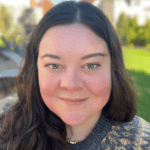
Lee Rawles joined the ABA Journal in 2010 as a web producer. She has also worked for...
| Published: | April 28, 2026 |
| Podcast: | Talk Justice, An LSC Podcast |
| Category: | Access to Justice , News & Current Events |
Talk Justice explores the legal battle of a Colorado-born woman with no birth certificate, the roadblocks people without identification and other vital documents experience and how attorneys at civil legal services organizations can help. Legal services attorneys from Louisiana and Colorado discusses how this work supports veterans, survivors of domestic violence, unstably housed people and those impacted by natural disasters.
Casey Sherman:
We’re creating self-sufficiency. We’re helping people get housed, get employed, get healthcare, open businesses. They need these records to participate in modern society, and it’s really hard to break that cycle without legal intervention.
Announcer:
Equal access to justice is a core American value. In each episode of Talk Justice and LSC Podcast, we’ll explore ways to expand access to justice and illustrate why it is important to the legal community, business, government, and the general public. Talk Justice is sponsored by the Leaders Council of the Legal Services Corporation.
Lee Rawles:
Hello and welcome to Talk Justice. I’m Lee Rawles, longtime legal journalist and your host for this episode. We all know the pain of needing a certain legal document and not knowing where it is. We’ve all frantically searched our drawers for a very important piece of paper, but what if it isn’t misplaced? It’s actually just gone. Maybe you lost it in a natural disaster or because of an eviction, or perhaps like one high profile case in Colorado that we’ll talk about today, you never had a birth certificate or a social security number at all. There are all kinds of documents that are vital to our everyday lives, IDs, social security cards, leases, titles, utility bills, banking info, wills, and more. Not having these can put up major roadblocks that affect a person’s ability to find employment or housing, to travel, to access insurance benefits, or government services.
When these are lost or inaccessible, people often need the help of an attorney to recover their documents or to find a way forward without them. Joining me today to discuss, we have Casey Sherman, supervising attorney of the iD Project at Colorado Legal Services and Steven Reid, staff attorney in the Litigation and Advocacy Unit at Southeast Louisiana Legal Services. Thank you both so much for joining us.
Casey Sherman:
Happy to be here.
Steven Reed:
Thank you for having us.
Lee Rawles:
So Casey, I would love to start us out hearing about this case of the woman who was born in an off the grid situation who came to Colorado Legal Services for help. Could you tell us about her experience and what you were able to do for her?
Casey Sherman:
So Georgia Legal Services referred Abigail to us in 2022. She was born in a midwife’s home in Woodland Park, Colorado. She’s now 31 years old. She’s been trying to get a birth certificate since she was 16 years old. We’re hoping that will finally, finally be resolved very soon due to our litigation and a recent change in the law. Abigail’s parents specifically did not record her birth or the birth of three of her siblings due to their religious and political beliefs. So they utilized midwife services, requested that the midwife not report the birth, and then intentionally did not create a social security number for Abigail or her siblings.
Lee Rawles:
So Casey, I can think of a couple different instances where certainly I needed my birth certificate and it would’ve been a huge problem if I didn’t have it, but what’s the impact been on Abigail? What’s it been preventing her from accessing not having a birth certificate?
Casey Sherman:
It impacts pretty much every aspect of her life. Large and small. She’s not able to get a driver’s license. She’s not able to get a job. She’s not able to open a bank account, purchase a home, rent a home. She can’t get a hunting license. She can’t sell games to a video game store. She can’t get controlled medications. She really can’t get medical care outside of emergency services because she can’t get insurance. She’s an undocumented US citizen functionally. So Colorado’s delayed birth certificate requirements were two pieces of evidence, at least two pieces of evidence that document all the birth facts. So name, place of birth, date of birth, and parents’ names. And they required at least one record to be created before the applicant’s 10th birthday. And the oldest record we had for Abigail was from age 11. And there was absolutely no wiggle room in the regulation, so we sued.
Lee Rawles:
And what can be the resolution? I know that you’re working hard on this. Do you see an endpoint and how are you going to get her there?
Casey Sherman:
The Colorado Board of Health just adopted a rule change, no longer requiring a record created by age 10. So the new rule allows for a record created by age 10 or a record that’s at least 10 years old. So it opened a door that was previously close to a lot of people. The impact of that small change is going to be massive for my clients. We have a pending application now under the new rule, and I’m very hopeful that Abigail will finally be approved for a birth certificate soon.
Lee Rawles:
And does she have plans for when she has that birth certificate in hand?
Casey Sherman:
First thing, get a driver’s license, of course, and then marry her partner that she’s been with for years and hasn’t been able to legally marry.
Lee Rawles:
Oh, wow. And they have children together, right?
Casey Sherman:
They do. They have two children together and she’s not able to add him to the birth certificate because she doesn’t have an ID and they’re not legally married. It’s just all these trickle down consequences to a decision that was made for her many years ago.
Lee Rawles:
I think back, and it used to be that plenty of people were born in home situations, so that must have been more common, but this does seem very unusual.
Casey Sherman:
Before I started this job, I would’ve said so as well, but we see quite a few of these cases and not always for these reasons. Colorado is a big state and has some very remote parts to it. So there are cases like Abigail’s where it’s a choice that her parents made to just not have the government be a part of their lives. Or we have clients who are the children of migrant farm workers who are just in the state temporarily and perhaps because of their immigration status, they’re afraid to seek that medical help or registration services or even just people who were born in really remote mountain communities that don’t register the birth just because it’s not needed at the time and they don’t have those resources locally to do so.
Lee Rawles:
Oh, that’s fascinating. But the ID project is broader than that. Can you tell us about the common issues that the ID project is also helping people with?
Casey Sherman:
I think we might be the only program in the country that does what we do. So we help people get IDs, whether that’s an easy legal issue or a complicated one like Abigail’s. We have a grant that pays for records. So a lot of our clients, in addition to meeting the usual LLC income asset requirements, usually aren’t able to get those records because they lack the records that you need to get the records. So if you need a birth certificate, but you don’t have an ID to get a birth certificate, but you can’t get your birth certificate, get an ID and you get stuck in that vicious sloop. So we have a grant that will pay for records for folks who can’t afford them. Our most typical case is a person who’s new to Colorado. They don’t have a safe place to stay. Their documents get stolen and they’re starting from scratch trying to replace everything to get a state ID for the first time.
So they need proof of their identity, proof of their citizenship or their lawful status, proof that they live in Colorado, and then proof of their social security number.
Lee Rawles:
So Steve, I see you nodding. Is this similar to the work that you’re doing in Louisiana?
Steven Reed:
We’ve not had a standalone program, which is amazing to have that as a standalone grant and a standalone funding source. We have done it under other grants and ancillary to work that we’re doing. So for example, we had a SS VF grant that I would bill. I remember a lot of that work too, but in a similar vein, folks would come in. Generally, they were coming from out of state or they were unstably housed and folks in that situation tend to often lose a lot of their identifying documents. So it became fairly routine that we would request the documents and get those for folks. And also, I mean, it’s absolutely necessary just as part of doing some of the other case work. If you don’t have ID, you can’t really apply for social security, for example, or it can be very challenging. So that’s kind of the context where we had done a lot of the same similar work.
It sounds very exciting though to have a standalone grant and program like you do in Colorado. I’m a little jealous, I will be honest.
Casey Sherman:
It was originally intended to be a temporary program just to get over the hurdle of real ID, I think in 2014 when Colorado passed it, but the work’s not slowing down. We helped a thousand people last year.
Lee Rawles:
Well, Steve, you brought up unstably housed people. And I certainly have seen news coverage of tent encampments being cleared and things of that nature. And it seems very easy for someone’s personal belongings to be trashed, and that could include literally anything they have with them to identify themselves. Could you talk a little bit about the unstably housed folks without ID and what sort of roadblocks that then creates for them?
Steven Reed:
Well, you touched on a huge issue there. So in my community in New Orleans, when they started doing the sweeps, and I want to say that was in 2014, or maybe 2013, I was actually out there at about 3:00 or 4:00 AM for the first sweep that they ever did. And at that time, they were making all of these affirmative promises to people that things that you need to keep, we will store for you things that obviously can’t be kept or too big to be kept, I guess is the way to put it, you’re going to have to get rid of. Well, a lot of people trusted the police and gave their belongings over to these city officials or city workers, however you want to look at it, only to find out that they were thrown out. It’s pretty common. And it’s very routine that where we work for some of our clients, we have held items because of this, documents and the like.
We have tried to offer that service actually to work against that. And then on the other end of it, we also routinely request records.
Lee Rawles:
Well, and I’m thinking of situations like perhaps someone is a veteran and they’re entitled to healthcare from the VA, but how do you prove that if you have literally under your documentation?
Steven Reed:
Yes. And there’s absolutely. And in that case, actually in some ways with the VA, it’s almost there are some paths to get help from the VA and work with the VA to move those ones along. And the grant I mentioned before that we were doing a lot of this work under was actually a veterans grant. I apologize. I don’t remember what SSVF stands for off the top of my head, but that was a veterans project that we were doing collaboratively with our continuum of care or COC locally in New Orleans.
Lee Rawles:
Well, I’ve been thinking about other situations that could result in anyone having to leave their home quickly, maybe not being able to pack everything that they would ideally have. And there are sort of the obvious ones like fires or disasters, but there could be domestic violence situations or if you, for example, had to leave home as a young teen and are estranged from your parents, how do you get the things you need? So that’s what’s coming to mind for me. Are those the kinds of things that you are seeing in your work? Casey, I’ll start with you.
Casey Sherman:
Absolutely. We’re seeing all of that. The funding allocation is, so it comes from the state, specifically was designated for people who are low income, have disabilities, are victims of natural disaster and victims of domestic violence. So it really contemplated all those reasons that someone might need help either replacing or obtaining vital records for the first time.
Lee Rawles:
And Steve, you work for Southeast Louisiana Legal Services. I know that Louisiana has had to face a lot of natural disaster events. So surely you’ve done a lot of disaster recovery work. Could you talk a little bit about, in the wake of the disaster, what people are coming to you for help with?
Steven Reed:
On the document recovery side, the first things that they’re usually coming for help with are usually land ownership documents that they may have had a copy of, probably the last thing in the world they ever thought they’d need or would grab and rushing out the door because of a disaster. And rightfully so. Most people are focused on, “I have to go to the ATM and take out money. I have to fill up gas. I have to get groceries, et cetera, medications, things like that. ” So grabbing a copy of a will that you have in the back file of a draw is probably not your priority or grabbing the copy of the sale agreement from three generations back, things of that nature. Same thing, especially if it’s like somebody who owns a mobile home, the title to that mobile home may very well still be inside the mobile home somewhere.
And so we see a lot of documents lost that way. And sometimes some of the regular, I think people would consider maybe what they might remember to grab in a disaster, like your birth certificate, social security number or social security card. Those items are the ones generally that we’ll usually help with in the immediate wake of a disaster.
Lee Rawles:
Well, you talk about the immediate wake of the disaster, but surely things could crop up years later, not in the immediate, but then you realize, oh no, eight years ago this was all drowned in mud and muck. So what do you do when someone realizes years and years later that there’s been a really crucial document that is gone now?
Steven Reed:
Okay. And I can give you a good context example for this. In the initial storm, you may get FEMA benefits, and then you may also down the line get a block grant that money that Congress approves that comes through HUD to help finish the repairs in your home if the FEMA funds were not enough. For both of those programs, you have to prove that you were the owner and the occupant at the time of the storm. And sometimes they can be very specific about the evidence, the proof, the documents that they want from folks. So in particular, they’ll say, “I need a utility bill that you got in the mail a month before, a month after.” And who would keep those anyways? But now those are documents that more than likely were water damaged, usually water damaged in my area, or just blown away or something else or mold over time and they’re destroyed.
Nobody knows where they are, even if they did know. And frankly, they weren’t that important to begin with. It might have been documents that who knows, maybe you put in a filing cabinet, maybe.
Lee Rawles:
But it probably wouldn’t go in your emergency box.
Steven Reed:
Absolutely not. Who’s going to say, “Oh, I need to run out of my house. Let me grab my heating bill and
Lee Rawles:
Run.” So I’m thinking about all these situations we’ve talked about and Casey, I’d love to hear from you. You’ve been doing this work for a long time, but how likely is it that people are able to solve these types of problems without help from an attorney? Can you provide sort of self-help information or do people really need that extra helping hand to navigate these labyrinths?
Casey Sherman:
It depends on the type of document you need. So to get a birth certificate, you have to verify your identity and your entitlement to the document. So if you have no identity proof, then you can’t even get your own birth certificate and most state’s immediate family members are able to get that record for you. So if you don’t have your ID, but your sibling does, they could order that birth certificate on your behalf. But if you don’t have anybody else in your close network to be able to make that request for you, you’re going to have to have an attorney be able to get that record for you.
Lee Rawles:
Steve, how about you? What do you think would happen in these disaster recovery situations if people didn’t have access to free legal services?
Steven Reed:
Lots of terrible things. In short, for many people, the gateway to benefits, they’re not going to get much, if any, assistance if they’re not able to prove who they are, prove what they own, prove where they were, and prove, in some cases, their costs and expenses. All of those documents and recovering them can be very difficult and really pull on your creativity. And without … As lawyers, we have trouble getting these documents. In the disaster recovery context that in what Casey had referred to, it is remarkable sometimes you take for granted how easy it can be to request a birth certificate for a client, even though they would clearly hit the roadblock, you kind of have a path, but sometimes with the disaster recovery stuff, a document that’s gone is a document that’s gone. If a will is destroyed, a will is destroyed. We can’t do anything about that.
If a grant program or FEMA is requiring very specific documentation of occupancy in the form of a literal old utility bill, if they’re destroyed, they’re destroyed. Some of that you really can’t recreate or find workarounds for, and that can just be very challenging for anybody. Being a lawyer there, there are things we can do.
Lee Rawles:
I was going to ask, how do you resolve that then? Is it just a lot of staying on the phone with people and explaining the situation again and again?
Steven Reed:
Well, honestly, really, once you hit the road, this is where you’re a lawyer. Once you hit the end of the road, to me, on evidence gathering, that’s when I start knocking on the agency’s door and start saying, “Why exactly won’t you accept this documentation? What exactly is the issue here?” At the end of the day, everybody knows that the disaster happened and everybody is looking at the damaged property, and it’s just a matter of getting to the other side usually. So in that way, I find most of the bureaucrats conceptually want to help, but have this hands tied feeling. And so I constantly try to take the approach of, “Let me show you how to get there. Let me show you the path. Let me show you this will satisfy your HUD grant. This will satisfy your bosses. This will satisfy whoever you’re worried about can be satisfied.” So that’s really the only way once you hit that end of the road with the documents you’re going to get.
Lee Rawles:
Well, I think that just really drives home the importance of people being able to have an advocate that you can’t necessarily talk the bureaucrat around for yourself. You need that intermediary. Well, Casey, I know that Steve is now intrigued by the idea of this standalone project, and I’m just curious to hear from you. If any of our listeners are from states that don’t have this kind of standalone ID project, and it sounds like if it’s not Colorado, it’s not there. What would be your selling points to them about why it’s been beneficial to have this be its own thing, a standalone project, and maybe something that they should start trying to get going in their own state?
Casey Sherman:
It’s a pretty low overhead program that just has unimaginable down the road impact on people because we’re opening doors, we’re creating self-sufficiency. We’re helping people get housed, get employed, get healthcare, open businesses. They need these records to participate in modern society, and it’s really hard to break that cycle without legal intervention.
Lee Rawles:
So obviously being able to obtain these documents makes a huge individual impact, but when we zoom out, it seems like there can be such a societal economic benefit to all of these things being taken care of. And it sounds like it doesn’t actually cost that much to get done. Casey, could you speak a little bit about that?
Casey Sherman:
I think helping people get through this basic entry point to fully participate in society is huge for people. So it’s $20 for a birth certificate, but that means that that person can work, pay taxes, drive for their children where they need to obtain medical care. They can do all these things that just benefit society as a whole.
Lee Rawles:
And Steve, you mentioned this people can be blocked from starting businesses, all sorts of other different impacts. What do you think about when it comes to the economic benefit of this work?
Steven Reed:
Well, I mean, the first and foremost is just turning on the flow of government benefits all the way around. And government benefits is everything from disaster work, to Social Security, to Medicaid, Medicare, and the like. I mean, I was thinking, I mean, I hate to be so driven by the numbers, but in Casey’s client situation, 31 years old means she’s lost over 10 years of paying into her Social Security. It’s going to have a direct economic impact on her retirement. And the sooner you can kind of stop the bleeding, the sooner you can start having the opposite effect. So I mean, that’s how my mind started turning when I was thinking about the project and what you could track and see. And then frankly, I mean, some of these ideas cost like 10, 15 … I mean, maybe 10 not anymore, but 15, $25 maybe now.
It’s not anything. I mean, when I do an expungement for someone, which is kind of trying to do a similar thing, clear the path for someone to get employment and documents and things like that, we have a grant that helps with that, and that’s about, I want to say around $700 of filing. And then you still have to do so much other work to get the record fully expunged. That’s a whole other well. But just thinking about the cost input output, I just think my wheels are turning, if you will, about how much impact you can have. It’s very evident. I don’t know.
Casey Sherman:
I think our work intersecting so much with the other units at CLS really speaks to that. So we get referred clients from our taxpayer clinic, from our benefits unit, survivors of domestic violence, a lot of benefits, issues. We work with nearly every other unit at CLS.
Lee Rawles:
Well, thank you, Steven Casey, for doing this really critical work and for taking the time to tell us about it today. And thank you listeners for tuning in to this episode of Talk Justice. Be sure to subscribe so you don’t miss an episode.
Announcer:
Podcast guest speakers views, thoughts, and opinions are solely their own, and do not necessarily represent the Legal Services Corporation’s views, thoughts, or opinions. The information and guidance discussed in this podcast are provided for informational purposes only and should not be construed as legal advice. You should not make decisions based on this podcast content without seeking legal or other professional advice.
Notify me when there’s a new episode!
|
|
Talk Justice, An LSC Podcast |
Join us as we explore innovative ways to expand access to justice, bringing together legal experts, technologists, business leaders, community organizers and government officials for thoughtful conversations about ending the access-to-justice crisis.