
|
|

Barbara Aker serves as Family Pride Director at Richmond Baking/More Than A Bakery, part of a family-owned...
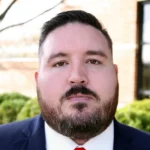
Ryan Bowman is the Director of Partnerships at the Kentucky Chamber of Commerce, where he has led...

Ronald S. Flagg was appointed President of the Legal Services Corporation effective February 20, 2020, and previously...
| Published: | August 11, 2026 |
| Podcast: | Talk Justice, An LSC Podcast |
| Category: | Access to Justice |
Talk Justice spotlights Kentucky’s efforts to boost the state’s workforce and help people thrive in the aftermath of the opioid epidemic through the Kentucky Comeback initiative. Workforce participation rates in Kentucky have been among the lowest in the nation. In response, the Kentucky Chamber and it’s foundation launched the Kentucky Comeback initiative and the Fair Chance Academy to encourage businesses to remove barriers for job seekers in recovery. Richmond Baking, based in Versailles, Kentucky, was one of the first businesses to participate and has seen amazing results.
Ryan Bowman:
They’re so far down in a hole that they can’t see the light at the end of the tunnel. And sometimes I have to be the one to shine a flashlight and say, “There’s a light here. Come to me and let’s try to get you some help.”
Announcer:
Equal access to justice is a core American value. In each episode of Talk Justice, an LSC Podcast, we’ll explore ways to expand access to justice and illustrate why it is important to the legal community, business, government, and the general public. Talk Justice is sponsored by the Leaders Council of the Legal Services Corporation.
Ron Flagg:
Hello and welcome to Legal Services Corporation’s podcast, Talk Justice. I’m Ron Flagg, president of LSC and the host of this conversation. Across the country, employers are struggling to find workers while many qualified people remain on the sidelines because of legal and other barriers that have little to do with their ability to do the work or succeed. We’re going to hear about the Kentucky Comeback Initiative and how through that initiative, the Bluegrass state has prioritized second chance employment as a way to both address workforce needs and help people thrive in the aftermath of the opioid epidemic. The success of this program serves as a powerful example for the rest of our nation of what workforce development could look like in the coming decade. This conversation was recorded live on July 20th at an LSC event in Louisville, which focused on expungement and workforce development. Two people deeply involved in Kentucky’s second chance efforts joined me for this panel.
They are Ryan Bowman, the director of partnerships for the Kentucky Chamber Foundation and its Workforce Recovery Program, and Barbara Aker, who leads human resources as the Family Pride Director at Richmond Baking and More Than a Bakery. My first question is for Ryan. The Kentucky Chamber made Second Chance Employment a major initiative several years ago. Can you tell us what prompted the chamber to make this work a priority?
Ryan Bowman:
So the Kentucky Chamber of Commerce, I work for the Kentucky Chamber Foundation, but as you think of a chamber of commerce, you really don’t think of a recovery program, workforce recovery as far as an initiative goes. We are the biggest business association in the state. And what we’re hearing from our membership, which is businesses that are operating in Kentucky, that they’re having struggles finding their workforce. And Kentucky is among the lowest workforce participation in the nation. We’re historically in the bottom 10, about 54% workforce participation. And we’re the lowest of any state that’s around us except for West Virginia. So we say thank God for West Virginia. It is very difficult for employers to find employees in this economic climate. So in response to that, we developed what we call the Workforce Recovery Program, where we want to get more people from the sidelines that are willing and able to work, that are qualified to work, that do have some barriers to employment, give them the opportunity by showing businesses tools and resources that they have available to them free of cost in the state to help individuals overcome those barriers, maybe change some policies around a little bit, but welcome a large and robust workforce into their workplace.
Ron Flagg:
What have been some of your biggest lessons learned to date?
Ryan Bowman:
Yeah, one of the big things I’m sure from legal counsel side of things is we use acronyms and this world of terminology that we have. I come from a human services background, background in psychology, clinical psychology. I spent a lot of time working with the recovery population, justice involvement and recovery population. So I was having trouble really early on relating that to the business world. So we were using terms that are very common to us like recovery. Well, to a business leader that’s led a business or worked in HR their entire lives, they don’t really know what recovery is. So whenever we approach a business and tell them that there’s a recovery population or a justice-involved population out there that’s willing and able to work, a lot of times people automatically jump to, are you asking me to hire someone that is actively using or abstaining for drugs and alcohol?
Or are you getting someone that has either been convicted or getting ready to be sentenced or freshly out of prison with no preparation whatsoever and asking me to invite them into my workplace? Well, the answer was no for us really early on. But when we use those terms with individuals that are in the business world, sometimes that gets lost in translation. So really had to take a step back. And we created this program called the Fair Chance Academy where we develop these kind of translations between our world, which is like the recovery and justice involved population or those terminologies, and really use that in business acumen and show them that what we’re doing is developing a workforce that’s a real workforce development strategy and not a community engagement strategy.
Ron Flagg:
And so what sort of resources do you have? You have a website. What sort of resources do you provide to the business community?
Ryan Bowman:
Yeah, so during the Workforce Recovery Program, we introduce them literally to the resources that they have available to them in the state. Whenever we first started, we did a statewide academy. So it was usually directors and above that we would invite to come in and speak. And for those of us that are directors and above, sometimes we tell businesses how it should be operating and not how it’s actually operating. So that’s one of the lessons that we’ve learned too. So as we have gone into those regional areas, we invite the people that if a business leader is going to call that organization, that is the person that’s going to answer the phone or the person that they’ll be directed to that’s actually doing the work that we invite in and tell them how they have those resources available. We have everything available to them on the website that we have, kentuckycomeback.com, but we also have a live document for individuals that attend our classes or our academies, because those of us in this room know that once you print it, it is out of date.
So we want to keep it live and updated as quickly as we can. So individuals that attend our regional events, those are live documents that stay updated.
Ron Flagg:
Thank you, Ryan. Barb, Richmond Baking Company has created intentionally opportunities for people to rebuild their lives. What led you and your company to embrace second chance employment?
Barbara Aker:
Well, it started off as a personal story. My nephew, we lost him to an opioid addiction at the age of 28. He had gotten tangled up in the justice system, didn’t have a lot of opportunity, and it didn’t turn out the way we had hoped. That kind of led me to wanting to do something more, which leads me to Ryan. So they announced the first Fair Chance Academy with the state. I went to our owner and I pled my case. He knew my story and he said, “Go for it.” So I attended the first Fair Chance Academy, which was amazing. I opened my eyes to a lot of things, but it didn’t come away with a lot of tools necessarily at the time because we were the first one. So we had to really go back and kind of evaluate everything. When I first approached our management team about doing this, it was met with some fear, I’ll have to tell you, but we were able to work through it and start a stream of hiring that has really helped us with retention.
We had a lot of turnover in our organization and it went from a project of the heart to a business strategy. So it was really critical to us to get that going at the bakery.
Ron Flagg:
So there really are two strands here. One is the desire to give back, the desire to help people get back on their feet. And there’s this kind of business aspect. What’s a bottom line, if you will, a business case for it. Could you talk a little bit about that?
Barbara Aker:
Sure. So this makes up about 10% of our workforce currently, but what’s happened is we’ve hired so many second chance, or as our owner likes to say, first chance family members, that it started a referral program within them. So it’s a constant stream. And plus we trust these gentlemen and ladies that are doing these referrals because they know these people inside and out. So that in and of itself, just having that referral stream is amazing. But also with the retention, we also have leaders growing within our organization. So of that 10%, almost all have been promoted once, if not twice within our bakery walls. So it really has helped us grow.
Ron Flagg:
And just to underscore this point, you talked about 10% of your colleagues being part of this program. And what was the percentage before you proactively and intentionally started this?
Barbara Aker:
Zero.
Ron Flagg:
So
Barbara Aker:
That’s a big difference. Exactly.
Ron Flagg:
Ryan, expanding workforce participation like any other difficult endeavor requires collaboration across many sectors. What partnerships have been most important to Kentucky’s success?
Ryan Bowman:
You really have to double underline partnerships. This isn’t possible without the partnerships that we’ve created. It sounds almost cliche to say now that it takes a village, but it really does take a village of people willing to support individuals in order to make them successful. And it is not our view of what success is. It’s success on the individual’s level. But our partnerships have been just the most valuable that they could possibly be in creating a program where businesses take part in. First and foremost has to be the business community because it has to fall within, I call it their business ethos. Because we can’t create a program and say, “Here’s the framework, do this at your organization, and you’re going to find success.” That is, we call it this One More Thing Initiative. If we add one more thing to a business leader’s plate, they are not going to do it.
We have to be the ones that take things off of their plate. Just like partnering with recovery facilities that have a real workforce development component to their recovery program so we can have a steady pipeline of employees exiting those facilities. So instead of an employer picking up the phone to call a temporary service or the Kentucky Career Center is another great partner of us, but instead of calling those to post those jobs, that they’re calling the recovery facility or the justice facility and saying, “Hey, that last person that you sent me worked out great. He or she has been promoted. We want another one.” And so developing those pipelines of employees are huge and those relationships to those businesses so we get a clear understanding of what they need as far as an employee goes. And also on the talent side, the recovery facilities, the justice facilities and the state have been great partners.
Ron Flagg:
So here in Kentucky and across the country, record clearing and expungement are a major component of Legal Aid program services. Can you talk about the partnerships you’ve had with Legal Aid here in Kentucky?
Ryan Bowman:
Oh, yes. So Goodwill and Legal Aid, the Bluegrass are fantastic partners for us. We always work to do expungement clinics. And just a little plug for ourselves here. We’ve created this new program in partnership with Legal Aid of the Bluegrass and Goodwill that we call Fair Chance Opportunity Fairs. For everyone in the room that has participated in a expungement clinic, it is exactly as it sounds. It is very clinical. You’re asking people that are uncomfortable with their backgrounds to come in and expose themselves and show others what maybe they feel shame for. And the Fair Chance Opportunity Fair was developed in this way that we wanted it to be inviting. I had this premise, my fiance works in the medical field, and she was like, “Look, let’s just throw a parking lot party where we have music, we have food. It is a very inviting atmosphere where people can bring their families so you’re not waiting in a line with your life, what you feel is your life in documents in your hand waiting to see a lawyer.” And it has been extremely successful in partnership with Goodwill and Legal Aid of the Bluegrass to bring people in so they get not only their records expunged, but resources and potential jobs moving forward.
Ron Flagg:
Barb, I know you’ve partnered with others in the community, including Goodwill. Could you talk a little bit about that please?
Barbara Aker:
Yes, we would be dead on the vine without our community partners. So we partner with Lexington Rescue Mission, Jubilee Jobs, Goodwill of Kentucky, Kentucky Department of Corrections, and they’re kind of a feeder. They know our culture and what we’re looking for in family members, and I mean employees, we say family members at the bakery, sorry, they know what we’re looking for, and that’s so critical. And then as it goes for expungement, when we talked earlier this week, I shared that we had a gentleman that joined us after being in prison for 24 years. He came out, was having intense difficulty finding a job, but because of the referral to us, he was able to come and we hired him. If he had had expungement available or he had taken advantage of that, it could have been life-changing for him. He could have gone a different route, but thankfully we scored him at the bakery because he has emerged as the father figure, the leader, takes care of all of our second chance hires.
Ron Flagg:
That’s a great story. And I was in private practice for 30 years before I came to LSC, and we talked a lot about Bet the Company cases, which we would do on occasion. And in Legal Aid, Bet the Company cases are pretty much every case. If you’re keeping somebody in their home, helping them out with a domestic violence situation. Ladies and gentlemen, as you know, those are Bet the Company cases and expungements and record clearing are really Bet the Company cases. So thank you for that. I
Ryan Bowman:
Just want to add one thing really quick. Yeah, please do. For the individuals that we work with that do have a record or history of substance use disorder, opioid use disorder, they are the first to disqualify themselves. And it’s terrible to say, but if we could give them that hope, I used to work directly dealing with population that is struggling, overcoming barriers to employment and things of that nature. Sometimes I would say they’re so far down in a hole that they can’t see the light at the end of the tunnel. And sometimes I have to be the one to shine a flashlight and say, “There’s a lot here. Come to me and let’s try to get you some help.” So for individuals that are disqualifying themselves, especially whenever it comes to expungement, whenever it comes to career opportunities, it’s so important that our businesses put themselves out there as a welcoming atmosphere and as well as our partners that are doing expungements and things of that nature as that welcoming atmosphere as well.
Ron Flagg:
That’s a great segue. Barb, you talked about the initiation of the program and you’ve talked about a little bit of its success. I’d like to do a deep dive as to how you created that. How did you create a culture that accepted new colleagues with different backgrounds and what does it take to build a recovery-friendly workplace culture?
Barbara Aker:
Well, I was fortunate that we have a very strong vision, mission, and values already at More Than a Bakery. Like I said, we say family member. We don’t say employee, open door policy. And before we launched this, we talked a lot about policies that might eliminate some of these candidates. They may have court dates, they may have drug screens they need to attend. So doing a deep dive into our policies and making sure that they will help and welcome these family members. We also do a vision, mission, values meeting with all our new hires. And at that time, typically they share their story, their background with other family members that weren’t hired through Second Chance. And I see tears rolling down people’s faces as they share what’s happened in their lives and how they’ve kind of been reborn and now are really giving back to the community because they’re providing for their families, and it’s just an amazing thing.
Ron Flagg:
That’s terrific. Ryan, Kentucky has made significant progress through both public-private partnerships that you’ve described, but also legislative reforms while other priorities such as streamlining expungement remain works in progress. And I know I’ve talked to Vic about that in the last couple days about streamlining the expungement process both here in Kentucky and elsewhere. Where do you see this work heading over the next several years? And what advice would you offer business leaders in other states?
Ryan Bowman:
On the business leader side, you have to get involved. This 1980s vision of how business works and your workforce works, it didn’t work then, but it sounded good. It doesn’t work now. This asking people to leave your personal problems at the door, work your eight to 12 hours, and then pick your personal problems up on the way home, that doesn’t work. And I tell businesses all the time, of course I’m very judicious as I’m talking to businesses, but I subtly tell them that they’re a part of the community in which they live and operate. And if the community in which they’re in is struggling with opioid issues, high incarceration rates, chances are that their workforce is struggling with the same. So the old adage of it’s nice to have it and not need it as to need it and not have it, having those resources available to their workforce is huge.
So whenever it came along to providing resources to business leaders and our partners out there, it was huge to do criminal justice reform and also protect businesses along the way. So in 2020, we passed the Kentucky Transformational Employment Program, which provides civil liability protection for employers when they’re hiring from the Fair Chance population. So God forbid they develop a Fair Chance hiring pipeline, and then one of those people from that Fair Chance population causes an accident, someone gets hurt. The employer cannot be pursued for civil liability saying that you knew that they were from a Fair Chance population, you assumed that risk, and then I got hurt because of it. They cannot be pursued because of that. But also there’s more work to be done whenever it comes to expungements. It’s really expensive. It’s hard for us to put on these expungement clinics, especially our Fair Chance Opportunity Fair because we make as much as we can free.
We give free food, free music, all of those things. It’s really expensive to do those things. And if we could do something where the charges that are able to be expunged currently would automatically roll off, oh, that would be a godsend. And then just expanding some of the opportunities for individuals that do have lesser crimes that could be expunged in the future is huge. I understand. I’ve heard from judges, I’ve heard from lawyers, I’ve heard from everyone on the spectrum. I understand some of the concerns, but there’s more that can be done from especially our point of view, seeing individuals that are struggling that we know would be successful if they were just given a chance that are blocked from that chance because of their past.
Ron Flagg:
What about recruiting directly from recovery facilities?
Ryan Bowman:
That’s been huge, but there are steps that have to be taken along the way. In working with employers, there is very few in the state of Kentucky that’s like a 30-day treatment program. We’ve learned our lesson in the treatment world that doesn’t necessarily work. That starts the abstinence program. A lot of people don’t understand the difference between recovery and abstinence. And 30 days, they are just abstinent at that point. They are not in recovery, they’re not working a program. So if these longer treatment facilities that develop this workforce development aspect as towards the end of six to nine-month program where they’re getting job skills training, introducing them to those employers that are providing fair chances to individuals that are going through that program is huge and overwhelmingly successful. So I would like to see more partnerships, more employers come to us asking to partner with those recovery facilities that are developing those skills that are really needed out in the workforce.
Ron Flagg:
Barb, what advice would you offer to other business leaders, both in Kentucky and other states based on your experience?
Barbara Aker:
I can’t tell you how wonderful this has been for us as a bakery. And I think a lot of employers are intimidated or afraid to make that change. And it has been so transformative for us on so many levels, just getting to know these family members, our retention rate, leadership within our organization. And I just want to tell everyone how important this is, and please try it.
Ron Flagg:
Last opportunity for both of you. If Kentucky wants to continue leading the country on workforce participation and second chance employment, what’s the next big opportunity? Ryan?
Ryan Bowman:
Clone Barb about 20 times. Put her on a bus and send her speaking to every region in Kentucky. No, I think a lot of it is not being afraid to learn. For us at the chamber, we created curriculum for employers and we thought that as we move forward with this curriculum, that it would apply universally. We have had recently employers that have, we build relationships with employers and employers have been like, stop trying to convince me. Show me how. So I think moving forward, it is important to us to move beyond philosophy. There’s a fair chance population of folks out there that are willing and able to work. We understand that. Show me the best methodology that I can do here to put it into practice. And I think partnering with. I mean, Barb, she is a champion for this work. She is a superstar in this work, but finding business leaders that have done it, that have been successful and us learning from them so we can teach more businesses to be successful is going to be so important in the future.
Like I said, the time for us of creating curriculum and expecting other people to follow is almost over and done with. We need to meet employers where they are, hear from them, and then institute change on that system level that’s going to be able to support them through that.
Ron Flagg:
So Barb, you get the last word. How do we clone you?
Barbara Aker:
I told you, get me a bus. I’ll drive across the United States. But building an employee success program once you have people join your organization and sharing that with other employers to show this can be done. And again, the transformation for your organization is amazing. So let’s get the bus and go.
Ron Flagg:
I want to thank Barbara and Ryan again for sharing their perspectives and allowing us to have this great conversation. And thanks to you, our listeners, for tuning into this episode of Talk Justice. Be sure to subscribe so you don’t miss an episode. Stay well.
Announcer:
Podcast guest speakers’ views, though, and opinions are solely their own and do not necessarily represent the legal services corporation’s views, though, or opinions. The information and guidance discussed in this podcast are provided for informational purposes only and should not be construed as legal advice. You should not make decisions based on this podcast content without seeking legal or other professional advice.
Notify me when there’s a new episode!
|
|
Talk Justice, An LSC Podcast |
Join us as we explore innovative ways to expand access to justice, bringing together legal experts, technologists, business leaders, community organizers and government officials for thoughtful conversations about ending the access-to-justice crisis.