
|
|
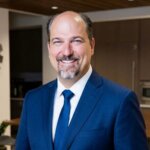
Marc Raco is the Director of Legal Talk Network, and an award-winning seasoned podcast host and producer...
| Published: | September 25, 2026 |
| Podcast: | On the Road |
| Category: | Conference Coverage |
Maine has more legal work than it has lawyers to do it, and that gap grows every year even as rural opportunity grows with it. Rachel Okun, President of the Maine State Bar Association and a solo personal injury attorney at Okun Law, breaks down why she sees rural practice as a real career path, not a compromise, and why she taught herself AI tools so she could speak to her membership with real experience instead of theory. She also connects a less obvious dot: attorney burnout, she says, is one of the leading drivers behind bar complaints, since overextended lawyers start missing client communications long before anything more serious goes wrong. Okun closes on her defining message as bar president, that the profession loses something real every time a Zoom call replaces a handshake, and that relationships built through bar leadership, not marketing budgets, are what actually built her practice.
Proving once again that ALPS Insurance puts the “treat” in retreat, they gathered leaders in law from across the country this summer. These sit-down conversations reveal flavors of leadership and legal trends from a variety of perspectives. Cool takes, one scoop at a time, recorded live at the 2026 ALPS Bar Leaders Retreat in Missoula, MT.
Rachel Okun [00:00:00 – 00:00:29]
get involved with your bar association and get involved with leadership. So, you know, I would’ve not known this when I started. I got involved with leadership sort of by accident just ’cause I thought it was fun and I, I just liked the bar association. I liked getting together with people. But what I didn’t realize, but it was actually a way to build my business. So, I didn’t do it for that purpose. But the more that you get to know people, the more you get out in your community, the business comes. And so, I didn’t go with traditional marketing or anything like that.
Rachel Okun [00:00:29 – 00:00:38]
I just sort of built my business organically through relationships in my community, but also with other lawyers. And it all sort of happened organically because of those relationships I built.
Marc Raco [00:00:43 – 00:01:28]
Welcome to another conversation in our series of phenomenal conversations on location in Missoula, Montana, at the Alps Insurance Retreat for Bar Leaders. I’m Marc Raco, and I’m very happy you’re here for this conversation with Rachel Okun. She’s the president of the Maine State Bar Association, and she had some just really tremendous things to share. A little about Rachel for context. She’s the founder and managing attorney. She’s a solo practitioner of Okun Law PLLC in Maine. She’s a personal injury attorney and has extensive bar leadership experience. She’s the former chair of the Maine State Bar Association Legislative Committee and a former ABA delegate.
Marc Raco [00:01:28 – 00:01:45]
She was recognized, get this, by the ABA as a 2025 On the Rise honoree. Oh yeah, and she’s a strong advocate for access to justice and rule of law initiatives. So let’s welcome Rachel Okun. Welcome, Rachel.
Rachel Okun [00:01:46 – 00:01:46]
Thanks for having me.
Marc Raco [00:01:47 – 00:01:48]
How’s Montana treating you so far?
Rachel Okun [00:01:48 – 00:01:50]
It’s awesome. It’s beautiful here.
Marc Raco [00:01:50 – 00:01:57]
Isn’t it just so serene? I mean, we are literally at the intersection 5 mountain ranges. So we’re definitely in the center of this little universe, right?
Rachel Okun [00:01:57 – 00:02:05]
Yeah. Flying in, it was like I felt like I flew over one mountain range. I thought we were landing, and then you almost fly into another mountain range and then you land. It was very cool.
Marc Raco [00:02:06 – 00:02:19]
There you go. If you get a chance to climb up one of the— I don’t know if you went on a hike this morning— climb up one of the mountains. I climbed up the one with the M yesterday, and the vista at sunset was stunning.
Rachel Okun [00:02:19 – 00:02:22]
I will maybe make the one tomorrow. I did not make the hike this morning.
Marc Raco [00:02:22 – 00:02:32]
I didn’t. I did it on my own last night. But anyway, so, Rachel, you are president of the State Bar for Maine.
Rachel Okun [00:02:32 – 00:02:32]
Yes.
Marc Raco [00:02:33 – 00:03:01]
And my question to start out is, is, you know, Maine is a smaller state, small but mighty, with a very powerful legal profession, a group of legal professionals, obviously incredible culture of legal professionals. From your chair as Bar President, how are you seeing the sense of professional satisfaction and wellbeing at this moment across your membership?
Rachel Okun [00:03:03 – 00:03:25]
I think it varies. Probably that’s a very legal answer of it depends. I think it depends on which practice area you’re in and where you are in your career. You know, personally, I find it to be very satisfying. I like my work. I have a solo firm and I get to manage my caseload. I get to manage what I do. I get to choose my own cases.
Marc Raco [00:03:25 – 00:03:25]
Sure.
Rachel Okun [00:03:26 – 00:04:10]
Other people who work at firms where they don’t have that autonomy aren’t quite as satisfied. I’ve, I talked to some of the younger lawyers who have a lot more, less control over what they do and over their schedule, and I’ve heard some complaints about maybe the freedom not quite being what they’d like it to be. So I think it varies, but overall, there are things, you know, we move in the right direction. We’re always trying. We’ve had some wellness initiatives over the past few years. I think firms are making efforts to do better than we did in the past, right? We’re always trying to move things forward. So I think we’re doing better than we have in the past, but I think there’s still a a ways to go.
Marc Raco [00:04:11 – 00:04:32]
Okay, with that in mind, what do you think the overall vibe is on career outlook and kind of professional direction across the membership, but also considering the new generation of lawyers hopefully to come? How are you seeing that right now?
Rachel Okun [00:04:32 – 00:04:38]
There’s, I mean, there’s plenty of work. So that is from a career perspective.
Marc Raco [00:04:38 – 00:04:39]
The opportunity is there.
Rachel Okun [00:04:39 – 00:05:22]
Yes, we need more lawyers. There is, I would say, considering like, so I’ve been practicing for 12 years and in that time the amount of work that is available has just continued to grow. So every year I’d say unfortunately the access to justice gap grows because we have more work needed and not enough lawyers. But on the flip side for lawyers, there is more and more work available for us. So when you’re looking at career development and career growth, options and abilities for lawyers, there’s definitely room to continue your career and find ways to do that. But you might have to be creative. So it depends on what you’re trying to do. There’s definitely in the rural areas a huge need for lawyers.
Rachel Okun [00:05:22 – 00:05:32]
So if you’re willing to move into the rural areas or practice in those underserved areas, there’s definitely a lot of room, a lot of cases, and a lot of work available for you.
Marc Raco [00:05:32 – 00:06:16]
So what do you think operationally, especially for an attorney who might decide to move to a rural area to take on that opportunity? That also means that in some cases, the case sizes might be smaller. There may be different economics at play there. I mean, that’s just a reality often in rural areas, not all, but many. What do they need to be thinking about operationally to make sure that that’s still a profitable opportunity for them? Because maybe there’s more opportunity, but that also means working harder and longer to reach the same amount of you know, income as perhaps being in a situation that may have much higher payouts, right? So what do they have to be thinking about operationally to make that work?
Rachel Okun [00:06:17 – 00:06:36]
So yes and no. I mean, okay, I will say push back. Yeah. Yeah. I mean, one, the rural areas are less expensive to live. Living in Portland area is really expensive compared to the more rural areas of Maine. So I think that you like housing costs are gonna be cheaper. if you move to a rural area.
Rachel Okun [00:06:36 – 00:07:32]
But, um, there’s also, I think, enough work that the cases are not really something where you’re making that much less money on them. I mean, sure, maybe you’re not going to pay $500 an hour for a divorce lawyer like you are in Portland, but if you— it’s still an ex— you’re still getting paid enough per hour that it would make it work. Um, I’m not— and I will say I’m not up on the economics of what each case costs, but— It, I, my understanding of the work that’s available is that there’s plenty of work to go around. And I would like to go back and clarify this if we can. Just, um, I was talking to, for example, an attorney who works in the criminal and family law field, and he’s actually stopped taking cases because he’s so, so busy. But he told me that he could charge as much as he wants for a family law case right now because there’s just not enough people to take them. And he said people will pay that. And he’s working kind of in a pretty large area of the state doing that.
Marc Raco [00:07:33 – 00:07:54]
How interesting. Rachel, right now as bar president, what’s on your mind related to the needs of your membership because of the increase in need? And yet there aren’t enough attorneys out there to meet that need. So where are you aiming to solve that or to try to have answers for that?
Rachel Okun [00:07:55 – 00:09:05]
Yeah, I mean, I think we’re trying to help the members that we do have, have the resources that they need to serve their clients and to serve their communities. There are ways, you know, that you can make your practices more efficient. Like, for example, I know that some people are starting to use AI to become a little bit more efficient. Now, you can’t use AI to, say, replace a lawyer, right? You can use it to maybe help you start working on something or become a little more efficient, as long as you’re reviewing the work like you would with any sort of legal assistant. You’ve got to review the work, but that can help you be more efficient and maybe you can serve your clients a little bit faster to help you take on a little bit more work. But then also, if you are just finding ways to serve your communities in a way, education in the communities, supporting the organizations that are providing free legal services to people who are low income. So there’s, there’s several organizations in our state such as Pine Tree Legal Assistance and the Volunteer Lawyers Project, and they provide a lot of services for free. And so that helps in those communities.
Rachel Okun [00:09:06 – 00:09:08]
And so again, it’s just sort of supporting the people that we can.
Marc Raco [00:09:09 – 00:10:35]
So as a solo attorney, You have a lot of experience with trying to make the most out of your practice, to be efficient, to have strong operations, to think proactively, and to just try to make every moment count and only grow at the pace that you need to grow, but meet the opportunity and obligation that you have as you go, right? Those are challenges. And you mentioned AI, and obviously there’s lots of technology and innovation out there. As bar president and just in general across the legal field, how are you thinking about how to inspire, number one, established attorneys who may be resisting those kinds of tools, but you’re seeing it through your own lens, the power of that if done well. And also paired with that, the next generation of legal industry is coming armed with a different ideology about AI and automation tools and things like that. They’re thinking that’s part of doing work. So there’s a dissonance there that we’re going to have to get past. So from your chair, how are you thinking about that? How are you prepared to encourage adoption and reduce the friction?
Rachel Okun [00:10:36 – 00:11:21]
Yeah, I mean, starting— honestly, starting kind of in my own firm is I started to learn how to use it myself because when I started at, for example, the National Conference of Bar Presidents event a couple years ago, first talking about AI, you know, I wanna say it was like 4 years ago, we were talking about whether it was ethical to use it. And then I went back a year later with the ABA and there was discussions about whether it was going to become unethical not to use AI. And it was such a quick shift. And so I thought, okay, now I’m in bar leadership, I better learn how to use this because if I’m gonna be talking about it with my bar association, Mm-hmm. I can’t do that without knowing myself. And I was honestly a little hesitant to use AI at first. I’m like, I don’t need that. So I started with just learning how to use ChatGPT, you know, just basic questions.
Rachel Okun [00:11:21 – 00:12:10]
And so now what I’ve done is learned the— one of my legal software, Clio, for example, has an AI program, and I’ve been learning that. And I have a new law grad who’s working with me. She’s not licensed as an attorney yet, and I’m having her kind of use that as a tool in our office and having her check it through all of the sites, make sure everything’s accurate so that then I can go back and, and as a bar president and say, okay, this tool is accurate or not. So then when people or members are coming to me, I can say, well, I’ve used it and this is where I’m seeing the accuracies, this is where I’m not. Now that doesn’t make up for the fact of you have to do your own checking, But originally with the AI, I felt like it was making a lot more mistakes. It is getting better. It still makes mistakes.
Marc Raco [00:12:11 – 00:12:46]
Well, you know, I wonder if part of the key— I want to know what you think about this— some of the ways people are looking at AI is to do the searching for them, to find case law and so forth. That’s where hallucinations come in. That’s where the challengeable things come in. But AI, Some attorneys are talking about the ways they’re using AI just more operationally. You know, so much of what a lot of areas of law, you know, is purely administrative in a way, operationally, it’s procedural.
Rachel Okun [00:12:46 – 00:12:46]
Right.
Marc Raco [00:12:46 – 00:12:55]
And AI can just often do those things faster and more efficient, leaving you to do the stuff that lawyers do.
Rachel Okun [00:12:55 – 00:12:56]
Right.
Marc Raco [00:12:56 – 00:13:14]
And especially as a solo, you know, you’re, you’re spread thin everywhere, every part of the operation. Um, so that makes sense. What— how did you learn whatever skills you’ve had? Um, you mentioned a couple tools, but what process did you use to try to learn even how to get started?
Rachel Okun [00:13:15 – 00:13:37]
Uh, I mean, personally, I just sort of— it was trial and error. But, um, we’ve offered some CLEs, and then by doing that, I went to some— they weren’t CLEs, but it was through the bar leadership. Yeah. Institute, like through the ABA, they did some programming. And then you, the more you go through them, the more you kind of see the differences in how they work. And then the more you use it, that just the more you can see the better ways to use it.
Marc Raco [00:13:37 – 00:14:04]
So are you thinking about mining your membership about the different ways that they’ve been utilizing, let’s say, AI or other technologies and learn across the membership? Tell me your stories about how this has affected your practice and you’ve used it in ways that we may not think of. put that together and then that becomes perhaps new CLE offerings or informing those new offerings?
Rachel Okun [00:14:04 – 00:14:07]
I mean, it’s, that’s a good idea. That’s not what I was saying, but I like that idea.
Marc Raco [00:14:08 – 00:14:08]
Okay.
Rachel Okun [00:14:08 – 00:14:57]
So I, I was more saying we were offering different CLEs now to them to teach them. But I like the idea of asking them too, what are you doing? But it’s more just to kind of give the, give the people the options. And people have been giving good feedback on the AI programming. We did, I think, 4 sessions that included AI at our most recent meeting, and they weren’t all like, here’s how to use AI. One was basic, one was about like AI in the workplace as far as HR types things, you know, whether you need employment practices with AI. And one was on like trademark usage with all the use of AI in like likeness appropriation, you know, just so interesting, different substantive areas of law with how AI is being used. And so people seem to like those sessions.
Marc Raco [00:14:58 – 00:15:20]
I understand that some of the resistance to innovation like AI, there’s 2 really. One is, well, I guess there’s 3. One is, I don’t wanna. 2 is, I have an ethical issue with it. And 3 is, I’m worried this is going to cause a problem for me.
Rachel Okun [00:15:20 – 00:15:21]
Right.
Marc Raco [00:15:21 – 00:15:30]
And they’re all understandable, and they have their own place. So from the I’m worried this is going to be a problem for me standpoint, we’re talking about risk.
Rachel Okun [00:15:30 – 00:15:31]
Yes.
Marc Raco [00:15:31 – 00:15:47]
So that’s one risk. What are some of the other types of risks that the bar and your membership are really focused on right now? And, and how are you thinking about ways to help educate them to, you know, moderate those risks?
Rachel Okun [00:15:47 – 00:15:49]
Like it pertains to AI or about anything?
Marc Raco [00:15:49 – 00:15:55]
Oh, just in general across the board. Everything from cybersecurity to AI to succession planning to what, whatever you’re thinking about.
Rachel Okun [00:15:56 – 00:16:03]
Yeah. I mean, I think another piece that we’ve been focused on the last few years is, you know, attorney wellness. Um, burnout really leads to—
Marc Raco [00:16:03 – 00:16:04]
I’m hearing a lot about that, by the way.
Rachel Okun [00:16:05 – 00:16:31]
Yeah. It’s, I mean, burnout is one of the big things that leads to, um, honestly, it leads to malpractice, leads to issues with, um, issues with disciplinary actions. Because if you get burnt out and you can’t practice and you start ignoring your clients, you know, your work slips. And that’s where, you know, if you, if you ignore your clients, that is one of the number one, my understanding, one of the number one causes of getting a bar complaint, right?
Marc Raco [00:16:31 – 00:16:31]
Sure.
Rachel Okun [00:16:31 – 00:16:44]
And so when you can maintain that work-life balance, you can, maintain your, your personal wellness, then you’re much more likely to be able to sustain your practice and, and do that. So we try to focus on wellness initiatives as well.
Marc Raco [00:16:45 – 00:16:51]
Which is interesting ’cause there’s technology including AI. One of the great uses of it is to help you stay in touch with your clients.
Rachel Okun [00:16:51 – 00:17:02]
But I think if we outsource the personal communication to our clients with AI, we’re really losing something. And so that’s not personally something I would recommend doing, but Okay. That’s fair. I understand people would do that.
Marc Raco [00:17:03 – 00:17:30]
I don’t mean to debate it with you, but let me push back on that. Can’t those tools— or what do you think about this, really? Can’t those tools facilitate a more efficient way to have that personal communication? Can’t replace you having a phone call with someone, but it may facilitate a regular cadence of outreach in some fashion to stay in touch.
Rachel Okun [00:17:30 – 00:17:38]
Yeah, I mean, I think, I guess it depends on the client if the client is okay with that, where it’s just sort of an automated AI communication.
Marc Raco [00:17:38 – 00:17:42]
Well, I mean, it’s not done to replace the hands-on, but yeah.
Rachel Okun [00:17:42 – 00:18:03]
Yeah. I mean, and I guess this is where I would separate myself as an attorney and the way I practice from my role as a bar president and what I would, you know, as far as like AI as a tool, because my personal style as an attorney is I really have relationships with my clients. And I think if I were to, outsource it to AI, they would lose that sort of personal touch.
Marc Raco [00:18:03 – 00:18:03]
Sure.
Rachel Okun [00:18:03 – 00:18:16]
But I do understand that if the client isn’t somebody who needs a lot of personal handholding type communication, but I deal with injured clients. Yeah. I, I do plaintiff’s personal injury. And so they, they like that personal communication. Sure.
Marc Raco [00:18:16 – 00:18:17]
I’m on the case, right?
Rachel Okun [00:18:17 – 00:18:17]
Yeah. Yeah.
Marc Raco [00:18:18 – 00:18:48]
So let’s go back to the, the, the burnout and, and, and that aspect of, of really liability and, and risk as, as well as just ethical considerations. Why is this being paid attention to so much more recently? Do you have any sense of that? Because I keep hearing it from a number of attorneys or bar leaders that this is on their minds right now. Is it— I can’t imagine this is a new phenomenon. Why are people thinking about it now?
Rachel Okun [00:18:49 – 00:19:20]
I think the pandemic maybe gave people a lot of a shift. They realized that things could be done differently. You know, all of a sudden you had firms realizing that you didn’t have to be in the office to get your work done. You don’t have to sit there at your desk to, you know, all day. All of a sudden, remote work did become an option and things could be done by Zoom. I mean, you even have court hearings done by Zoom. And so when you realize that you can have a little bit more work-life balance, you realize what you were missing when you didn’t. And it wasn’t that we didn’t need it before.
Rachel Okun [00:19:20 – 00:19:24]
It’s just people noticed what they were missing, and they realized there was another way to do it.
Marc Raco [00:19:25 – 00:19:38]
So is this part of what’s going to inform what the practice needs are now, is to manage these kinds of things? What do you think the focus of practice needs going forward really is?
Rachel Okun [00:19:40 – 00:20:11]
I do think that it’s going to inform it, but one other piece is I think the younger generations realize what they need and are willing to stand up for what they want and they’re not willing to settle for just, I work a million hours a week and my job, my identity is being a lawyer. And I’ve seen that my sort of, again, I was, I meant 12 years of practice and I think my level is sort of was on the, the cusp of that. You know, we were kind of taught that way, but we weren’t really willing to do that. And I’m kind of one of the older millennials, I would say.
Marc Raco [00:20:11 – 00:20:11]
Yeah.
Rachel Okun [00:20:12 – 00:20:22]
And then you see the young, you know, the younger millennials and then the Gen Z, they, they kind of had that shift. And I think COVID gave the excuse, not excuse, but the wake-up call to people.
Marc Raco [00:20:22 – 00:20:23]
Inspiration for sure. Yeah.
Rachel Okun [00:20:23 – 00:20:35]
Yeah. Wake-up call. It’s not an excuse, but it was to say, hey, listen, we don’t have to do this. We can do it differently. Yeah. And we also wanna, you know, we wanna be home with our kids. I, you wanna see your kids’ games, you wanna do this. And so it demanded change.
Rachel Okun [00:20:35 – 00:20:40]
And so people aren’t going to accept What was accepted before.
Marc Raco [00:20:40 – 00:21:12]
Sure. Look at hiring practices right now. You know, when, when you’re recruiting top talent, not even just in legal, across any space, there are expectations of how the company is going to take care of you with mental health and work-life balance and all those things like that. Do you see that that’s a trend that’s going to start happening across the legal industry as well? And because, like you said, they will demand this, and that will begin to shape the, even the way larger firms behave with attorneys.
Rachel Okun [00:21:12 – 00:21:39]
I do. And I’m going to say one thing that I noticed last year. I went to the law school for their wellness fair as part of just my role as, you know, as in the, in the bar leadership role. And I was kind of, I was inspired, a little shocked, and honestly a little bit jealous because their first day of orientation was a wellness fair. Mm-hmm. And they were talking about how they get, you know, 10 hours of counseling for the year and they have all of these really nice things. And, um, I was like, that was just—
Marc Raco [00:21:39 – 00:21:40]
Must be nice.
Rachel Okun [00:21:40 – 00:22:09]
Not a thing. And they even, you know, they even got this umbrella and not that I actually got one now too, but they gave out this like nice little bag with an umbrella and you got counseling sessions. And it was this whole like, what are we offering to you to make sure that you survive your first year of law school? And I was like, I, I just thought that was fascinating. Oh, I think they had like massages. It was just like a really nice thing to offer to students. That was not offered to me when I started law school in 2011. Again, not a bad thing. I was jealous.
Rachel Okun [00:22:09 – 00:22:25]
But it’s like to see the difference of what’s being provided to make sure that they are supported, the students, as they move forward now. And it’s a good thing. It means that we’re moving forward as a profession. But as those students graduate, they’re going to continue to demand that they have that— those needs met.
Marc Raco [00:22:26 – 00:22:36]
Would you say there’s anything particularly unique about the culture of the legal profession within Maine that stands out compared to other areas of the country?
Rachel Okun [00:22:36 – 00:23:07]
What I have always found, and I, I’m from Maine, so I’m probably a little biased. That’s okay. You can be, is that Maine has always been very collegial and very friendly. Mainers, it’s a, it’s one big small town. And so your reputation is, it’s really important and everybody kind of knows each other. You know, if I don’t know you, I definitely know someone that you know. And so we all, for the most part, get along and it’s not some big fight with each other. But on the other side, if you do lose that reputation, it’s really hard to get back.
Marc Raco [00:23:08 – 00:23:47]
Which I think is something that you’re going to see more and more in the legal profession as the younger generation starts to shape what their expectation is of what being a lawyer’s going to mean as a profession, as a lifestyle, right? So what’s on your mind in your tenure as bar president right now? What, like, if you had, if you had like, you know, 2 minutes to address the entirety of the United States legal profession, what’s the message you’d really want to be giving across about, you know, what’s next or what to think about or guidance or inspiration, whatever comes to mind?
Rachel Okun [00:23:48 – 00:24:22]
So what I’ve really been focusing on, uh, this year as bar president is just, Reconnecting with people and having people remember that human connection matters. We are living in a world where, uh, Zooms and just being, you know, emails, Zooms, everything like that is more and more common and it’s more convenient. But it is so important that we continue to get together in person. When you don’t do that, you lose something. And when you lose that, it’s really hard to get to know people. Like when I have a Zoom deposition, I don’t have 5 minutes to chit-chat with the opposing counsel and you don’t get to know them.
Marc Raco [00:24:22 – 00:24:22]
Right.
Rachel Okun [00:24:23 – 00:24:25]
And then it’s much harder to resolve that case.
Marc Raco [00:24:25 – 00:24:25]
Yeah.
Rachel Okun [00:24:25 – 00:24:44]
Later on. And so even though it feels like a waste of time to go in person, it’s not, you know, so I’m just encouraging my members of the Bar Association to remember to get together. And so we’ve been having events that are not just focused on CLE, but to get together to have some fun, ’cause you have to get to know each other. It can’t just be about work.
Marc Raco [00:24:45 – 00:25:00]
I think those relationships matter professionally as well, not just as a human, but But when you’re trying to get someone to go the extra mile for you or to be willing to meet with you about something, whatever, those bonds might be what seals that deal, right?
Rachel Okun [00:25:01 – 00:25:14]
Yeah. And I mean, when you read an email, emails are so impersonal. Tone matters so much. And if I know you and you send me an email and I know you, I am going to assume the best. But if I don’t, sometimes it’s the way it is.
Marc Raco [00:25:14 – 00:25:15]
You’re an adversary then, right?
Rachel Okun [00:25:15 – 00:25:22]
It might just feel very different. So I’m just encouraging people to remember that we have to still see each other in person.
Marc Raco [00:25:23 – 00:25:50]
That’s very smart. Thank you. Here we are at the Alps Insurance retreat for bar leaders in Missoula, Montana. And how do you view a partner like Alps in your own success? What is the meaning to you about being able to collaborate with or be served by or have the benefit of a company like this?
Rachel Okun [00:25:51 – 00:26:11]
Yeah, I, so I personally have Alps for my, my legal malpractice insurance and for my solo firm. But the best thing obviously for insurance is you don’t ever want to have to need them. So thankfully there’s, there’s that. But I mean, they’re really easy to deal with, but at the same time, again, I, I don’t want to have to, to need them, but I know that they’re here if I do.
Marc Raco [00:26:11 – 00:26:38]
Well, how does a company like ALPS help you mitigate that risk? So it’s not just about they’ll be there to pay out, but they’re working with you, I assume, in some way, whether through education or practical application, to help you think about and mitigate risk so your operation can continue, hopefully uninterrupted, and not in a position to have to make a claim. How are you thinking about that collaboration?
Rachel Okun [00:26:38 – 00:26:58]
Yeah, I mean, ALPS does provide a lot of education on, especially for solos, about what the risks are and what pitfalls to, you know, keep an eye out for. They’ll also provide, you know, like sample representation agreements or things, you know, hey, this is what you should be looking out for. This is what you should not be doing, which is really helpful, especially if you don’t have those resources.
Marc Raco [00:26:58 – 00:26:58]
Yeah.
Rachel Okun [00:26:59 – 00:26:59]
Great.
Marc Raco [00:26:59 – 00:27:13]
All right. Last word. Yeah. From the chair as bar president and the chair as a solo who’s been at it a while. What is the one piece of advice that you would give to a new solo?
Rachel Okun [00:27:14 – 00:27:44]
I would say get involved with your bar association and get involved with leadership. So, you know, I would have not known this when I started. I got involved with leadership sort of by accident just because I thought it was fun and I just liked the bar association. I liked getting together with people. But what I didn’t realize was it was actually a way to build my business. So I didn’t do it for that purpose. But the more that you get to know people, the more you get out in your community, the business comes. And so I didn’t go with traditional marketing or anything like that.
Rachel Okun [00:27:44 – 00:27:53]
I just sort of built my business organically through relationships in my community, but also with other lawyers. And it all sort of happened organically because of those relationships I built.
Marc Raco [00:27:53 – 00:28:02]
The key is to not get involved specifically to generate business. The key is to get involved And knowing that it’s likely business will come.
Rachel Okun [00:28:03 – 00:28:08]
Right. Yeah. It’s, it’s not for that purpose, but it’s just you build relationships and it’s so meaningful and it’s so much fun.
Marc Raco [00:28:09 – 00:28:09]
Sure.
Rachel Okun [00:28:09 – 00:28:13]
I, I love doing it, so I would recommend it to anybody.
Marc Raco [00:28:14 – 00:28:14]
And final question.
Rachel Okun [00:28:15 – 00:28:15]
Yeah.
Marc Raco [00:28:15 – 00:28:16]
What’s your favorite ice cream?
Rachel Okun [00:28:16 – 00:28:19]
Oh, ooh, peanut butter.
Marc Raco [00:28:19 – 00:28:21]
Really? Oh, that’s an awesome choice.
Rachel Okun [00:28:21 – 00:28:21]
Great.
Marc Raco [00:28:22 – 00:28:24]
All right. Well, thank you so much, Rachel.
Rachel Okun [00:28:25 – 00:28:25]
Thank you.
Marc Raco [00:28:25 – 00:28:29]
President of the Maine State Bar Association. Really great conversation.
Rachel Okun [00:28:29 – 00:28:33]
Thank you so much. Have a great day.
Notify me when there’s a new episode!
|
On the Road |
Recorded on the conference floor, "On the Road" includes highlights and interviews from popular legal events.