|
|

Robin Wolpert is an appellate practitioner, business litigator, and white-collar criminal defense attorney at Sapientia Law Group...
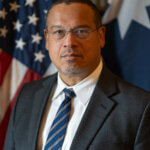
Keith Ellison was sworn in as Minnesota’s 30th attorney general on January 7, 2019. As the People’s...

Amanda Arriaga is Chair of the National Conference of Bar President’s 21st Century Lawyer Committee. She was the...

Juan R. Thomas is Of Counsel to Clifford Law Offices and is the founder and principal of...
| Published: | October 5, 2026 |
| Podcast: | Leading the Bar |
| Category: | Career , News & Current Events |
Americans have the right to vote, and protecting the integrity of our elections has become an increasingly pressing concern in communities across the country. Amanda Arriaga welcomes Juan Thomas, Robin Wolpert, and Keith Ellison to discuss the role of legal professionals in upholding the rule of law and doing their part to preserve free and fair elections. Setting partisan politics aside, they explore the importance of understanding and applying the rule of law to protect voting rights. They also share practical strategies for engaging with local communities through education and support to help strengthen election processes.
Juan Thomas is NCBP President.
Robin Wolpert is a Past President of both NCBP and the Minnesota State Bar.
Keith Ellison serves as Attorney General of the state of Minnesota.
To learn more about NCBP or to become a member, visit ncbp.org
At the 2026 NCBP Annual Meeting, bar leaders and judges simulated an escalating rule-of-law crisis involving judicial budget cuts, political attacks, and threats against a judge. NCBP partnered with the Divided Community Project, the ABA Center for Bar Leadership, the ABA Center for Human and Right and the German Marshall Fund, with funding from The Carter Center Rule of Law Program, to conduct this exercise which prepared bars to cultivate trusted relationships, define roles, and build broad community coalitions in advance of crises. Read more about lessons learned: https://cdn.ymaws.com/ncbp.org/resour…
Since then, NCBP has curated election resources for bar leaders: https://ncbp.org/page/ElectionResources. To learn more about NCBP or to become a member, visit https://ncbp.org/.
Attorney General Keith Ellison:
It is the legal profession that kind of keeps the flame of rule of law and how we have fair rules, understanding that there’s consequences to departing from our legal system. How would people resolve conflict if there was no rule of law? Somebody smart, I’m not sure I remember, said where law ends, tyranny begins. And so we as lawyers got to understand that law is what protects us from absolute chaos. It’s what protects us from the Law of the Jungle.
Amanda Arriaga:
Welcome to the next episode of Leading the Bar. I’m your host, Amanda Arriaga. Today I’m joined by NCBP President Juan Thomas, past NCBP and Minnesota State Bar President Robin Wolpert and Minnesota Attorney General Keith Ellison. Today we’re talking about what bar associations can do to help ensure that we have free and fair elections. General Ellison, for our NCBP audience that doesn’t live in Minnesota and may not be familiar with your background, can we start off and talk about why you wanted to be a lawyer?
Attorney General Keith Ellison:
Well, I wanted to be a lawyer because I wanted to stand up and fight for justice. When I was a kid and in high school, I had this weird fascination, probably because of my dad with the economy. So I used to check what the unemployment rate was, what it was, GDP. I used to want to know. I was into it and I had friends who would crack jokes on me about my nerdiness around that. But when I got to college, I majored in economics, but I went to law school right after there. And I tell you, my mom is from a place called Nacotis, Louisiana. And she would tell us that her dad who died before I was born, he was a leader in the local NAACP in Nackie, and she was very proud that he was organizing Black voters when it was very dangerous for people to do that in that part of the country.
And the local Klan members would not sell him gas. He had to put tractor fuel in his car. I don’t know how that worked out, but that’s what he had to do. They burned across from their house. And so growing up with those stories, hearing that Walter White and Thurgood Marshall actually spent the night in my grandparents’ home on Lee Street in Nackodis, which is now Martin Luther King Boulevard, but those kind of things made me think about being a lawyer. I remember reading about the life and times of Thurgood Marshall and these things inspired me. So I went to law school and I decided to do what I’m doing. And I’ve been a lawyer now for 36 years and I really like it. I hear people crack jokes on the profession, but I feel in 2026, it’s a great honor to be a lawyer and to be able to stand up for the rule of law and for equal justice for all people.
Amanda Arriaga:
Well, and not just a lawyer, the lawyer of all lawyers, some might say in Minnesota is the attorney general. And so you took everything that you’re sort of passionate about, including the fun, nerdy GDP stuff is related. You have divisions that do all of those things. So I think that you can take all of the lawyer skills and all of your economic skills and it all applies to the same agency that you lead.
Attorney General Keith Ellison:
So true. I tell you, what I tell my staff and even the public is that I think of my job as helping people to afford their lives and live with dignity, safety, and respect. Why that? If the insulin cartel says that you got to pay $1,000 or more for your insulin, it’s my job to take them on and say, no, you guys are illegally dominating the market, anti-competitive behavior. We sued them and now you don’t have to pay any more than 35 bucks no matter who you are in the state of Minnesota. If for example, we sued Live Nation Ticketmaster because they were jacking up people’s ticket prices with their market dominance. All these things boil down to helping people afford their lives. We sued Trump over these illegal tariffs and now he’s on his third round threatening more and we’re going to sue him over those too because he’s driving up prices for people.
And so how do people supposed to compete in an economy where they might be middle class, they might be upper middle class, and certainly if they’re lower income, it’s just a Dave and Goliath thing. They’re not in a position to fight some multinational. And imagine a worker who’s labored all week long, busting tail, working hard, and the boss says, “Oh, we’re not paying you for that. Oh, we’re not going to cover that. We’re going to deduct your pay for that.” Well, this could be wage theft, right? And so we feel like we got the size and the ability to go toe to toe with that employer. And so we set up a wage theft unit and we’ll sue you if you try to take workers’ wages. And so this is the kind of thing that we’re doing, housing, healthcare. So much of what we do is equalizing the playing field in the world of making a living.
And I think that people are owe and due what they work for and we make sure that happens.
Juan Thomas:
AG Ellison, you have been a zealous advocate for your constituents for many years. I mean, your time in Congress, we saw you do that on a federal level for the members of your people who lived in your district, but also across the state in Minnesota and the country. And now as AG, you’re doing the same zealous advocacy in the work of the people of Minnesota statewide. As we are approaching the midterm elections, what specifically are you doing to ensure that your constituents in Minnesota understand their rights to vote in the upcoming election, particularly in light of the recent Supreme Court decision, if you will, regarding mail-in ballot?
Attorney General Keith Ellison:
Yeah. So one of the things that we’re doing is we are litigating on behalf of the state of Minnesota’s people the right to vote by mail and on early vote on the day of. We’re fighting for and protecting our voting rights. And we’ve been working with our Secretary of State, Steve Simon, great guy. But let me tell you Juan, the Democratic Attorneys General and the Democratic Secretaries of State have been doing collaborative efforts for literally over a year now. We had a tabletop exercise that we did back in the springtime in Milwaukee where we just sort of figured out all of the crazy things that they’re going to try to do to interfere with people’s right to vote. And we have answers for it. So during Operation Metro Surge, which was the largest deployment of immigration agents at one time in one place directed at a state in the history of the United States, we were working together.
Pam Bondy, who was the USAG back then says, “Give us your voting roles and we’ll stop the chaos.” And our answer was, “No, you’re not legally entitled to it and we’re not giving it to you. We can fight it out in court.” Of course, we won that battle. Then Trump issues an executive order saying that you can only vote with a birth certificate. That’s not the law, that’s unconstitutional. State set up time, place, and manner. Maybe Congress can weigh in, but the president doesn’t have any independent ability to weigh in on that. So we fought him and we beat him on that one. On this recent Supreme Court decision, let me just tell, just to get real weedy with you guys, what the Supreme Court said was that the US Postal Services did not have a final order. And so the Trump plan to try to set up a federal screening for who’s allowed to do mail-in voting, they said our lawsuit was premature, was not ripe.
Well, they subsequently did issue a final order. We sued them on that. And today we got a temporary restraining order on that because now it’s a final order and the president has no authority to tell states who and who doesn’t get to vote based on our own state laws. So the bottom line is this is improper, illegal, unconstitutional, and you can count on us to fight it back every single day and there’s more. So the other thing I’m asking all lawyers to do is get in the fight for election protection. I don’t care if you are as conservative, liberal, progressive, whatever you are, if you believe that Americans should have the right to vote, then we need you to volunteer with your bar association, form an election protection committee. You can be a very… I mean, this is not a partisan thing for me. The question is, will the American people get a chance to vote or will we allow people who are in power to try to orchestrate a certain outcome and basically take the attitude there’s two election outcomes possible, I win or they cheated, which is what the president says.
That’s not American democracy. So I’m asking all lawyers to use your law degree to monitor, to get involved in election protection and to make sure that the people have a right to vote. Check in with what the ACLU is doing with what your local Bar Association is doing on election protection. Check in and volunteer for your NAACP chapter, your La Rasa chapter.
There’s a number of… Juan Parano leads a very important Latino serving organization on civil rights, LULAC, but whatever it is, don’t be found missing in action. Right now, America needs everyone whose life has been devoted to the rule of law, which is every lawyer and paralegals, legal workers, legal secretaries. We need you to step forward and protect the American election system because at the end of the day, democracy was hard earned by the American people. When this country started, nobody on this call could vote. And through the course of time, we were able to push back the forces of intolerance to make sure that whether you’re male or female, no matter what color you might be, if you are lawfully allowed to vote, if you’re a citizen of this country and legally entitled to vote in your state, then you can vote. And we have people right now who are trying to drag us back to a bad time when America wasn’t a true democracy, it was a male democracy, it was a white democracy, it was a property owner democracy, but we need an America that includes us all.
I love our multiracial inclusive democracy and I think lawyers need to stand up and fight for it.
Juan Thomas:
AG Ellison, a lot of people have tried to politicize these issues and make them partisan and often are now trying to use what used to be constitutional norms and make them political. And so I’m wondering what specific message would you have to our more conservative lawyers across the country as to why they should be involved in election protection and voting rights and not look at this as some partisan left-wing attempt to discuss these issues when really we’re just trying to play by the fair rules that we all agreed to?
Attorney General Keith Ellison:
Well, Juan, thank you for that question. I really do appreciate it. My dad, God rest his soul, was what he called himself a conservative. And he said, “Save your money, don’t trust the government.” My dad voted for Nixon, he called himself a conservative, but I love my father very much. So the fact that somebody’s conservative should not create a divide. I would like our conservatives to step up to their calling, conserve the constitution, conserve the rule of law. How about that? We need conservatives to be conservatives because nothing Trump’s doing is conservative. In fact, it’s a radical extremism, in my opinion. It is a fierce and sharp departure from the rule of law. Let me give you a few examples. At the end of the day, I have sued Trump. I have, but I have not sued him because for partisan reasons. We’ve actually won 93% of all of the motions that we have brought because he’s operating contrary to law.
Take, for example, birthright citizenship. Our country decided back in the 14th Amendment that all people were citizens of the states in which they were born or naturalized in. That’s been decided quite a long time, 128 years ago. That’s a conservative position. To stand up for birthright citizenship is conservative by definition of the word. And if you were even confused a little bit, we solved this issue under the Wong Kim Arc decision, which is in 1898. So that’s a conservative position, longstanding, standing the test of time. To say we’re not doing it is a radical departure from the past, and I ask conservatives to just be conservatives at this point. I believe that there is rational conservatism. Let me tell you, I got four kids. I’m a married man, and I’m a believing faithful person. Is that conservative? My bottom line is, if you think that’s conservative, then that’s a perfectly fine way to be, in my opinion.
Is it conservative to believe in liberty, people’s right to make their own decisions for themselves? I think it is a conservative position. The bottom line is conservative people, our right to demand the rule of law, our right to demand that the president abide by the rule of law, and our right to stand up for legal precedent that has been in place hundreds of years.
Juan Thomas:
Well, thank you for sharing that. We often have these discussions at the National Council of our Presidents around being viewed as political. We don’t want to be viewed as partisan. We’re really just trying to uphold the rules of our profession and the rules of our democracy, which inherently, as you’re saying, are not political, but there’s a history of these principles and they are conservative principles that we’re trying to preserve.
Attorney General Keith Ellison:
That’s right. And ultimately, if you look at conservatives over time, they were never against any change. They were against big change without respect for tradition because they believe that there’s knowledge in tradition, and you may not be aware of it, but once you depart from tradition, now you’re going to get into the rule of unknown consequences or unexpected consequences. So there is rational conservatism. My thought is that today you have a lot of conservatives, people like Bill Crystal, people like Adam Kinsinger, people like Liz Cheney. There’s a lot of conservatives who don’t agree with the direction of the president. And let’s just go to the issue of tariffs. Clearly, the Constitution says taxation and duties are within the province of the Congress. The president doesn’t get to just tariff anyone he wants. That’s why we sued him and we beat him in the Supreme Court.
This is not a conservative position. If there’s one thing that you should have general buy-in with, it’s taxation, which tariffs are, and yet the president has just grabbed this to himself when he should be deferring to Congress where these issues can be debated in committee and where every American’s interest can be considered. That’s why we have a Congress.
Juan Thomas:
Well, you mentioned, and you highlighted the importance of election protection, which many bar associations, in fact, the one that I was past president of, the National Bar Association, just launched a election protection program in partnership with the Lawyers Committee and with the Urban League. I’m wondering beyond election protection work, is there a role for Bar Association specifically to play in this upcoming election? What would you say to bar leaders, particularly bar presidents, as they lead their state and Metro Bar Associations as we approach the midterm elections?
Attorney General Keith Ellison:
I think Bar Association presidents and leaders have a very critical role to play because I will tell you this, that I think most Bar Association presidents and leadership are not considered to be partisan. They are considered to embody the best and noblest ideals of the profession. They are how we, as lawyers, come together and sort of represent a consensus of the profession. And again, just like the medical profession is a keeper of healthcare and health policy and health ideas, and just like the engineering profession is sort of a keeper of how to build and construct and the proper way to approach these questions, just like scientists uphold the scientific method and inquiry, it is the legal profession that kind of keeps the flame of rule of law and how we have fair rules, understanding that there’s consequences to departing from our legal system. How would people resolve conflict if there was no rule of law?
Somebody smart, I’m not sure I remember, said where law ends, tyranny begins. And so we as lawyers got to understand that law is what protects us from absolute chaos. It’s what protects us from the law of the jungle. So it is our profession, and that’s why I call on our bar leadership to say, “You know what? There are certain basics that we can all agree on. That is, if you’re eligible to vote under the state law of your state, you should get your chance to vote. It’s not proper for anyone to sort of interfere with your right to vote because they don’t like how they think you’re going to vote. Better for candidates to try to persuade people that their position is right rather than just exclude them because they think their position is wrong. And so it is very important for the bar to not be viewed as a political enterprise, but be viewed as the keeper of the flame of the rule of law.
And these are the things that we can all get around.
Juan Thomas:
Well, AG Ellison, we are so happy to have on our podcast today, not only you as our guest, but also Robin Wolpert, who’s a past president, not only NCBP, but also of the Minnesota State Bar. So I want to ask my friend and colleague, do you have any questions for the Attorney General?
Robin Wolpert:
Well, Mr. Attorney General, first of all, I appreciate all your comments about the role of lawyers in promoting the role of Law, but also in protecting election rights and voting rights. And in Minnesota, our current bar president of the Minnesota State Bar and work by the Hennepin County Bar Association, for example, they’ve already started their work and they started it months ago. Part of their work is, and like all of us lawyers, we talk to people who we know to make sure that they’re registered to vote, that they know where to get the information that they need to register, because sometimes just registering is a hurdle. Not all states are like Minnesota, which make it easy. Sometimes there are more hurdles. So just making sure that people know where they can go to get the information and get the help. But also getting to the polls, that’s the other thing.
Things come up in everyone’s lives. How do lawyers talk about this with their neighbors, with their friends, where they assist people to get to the polls so they know they have the right to vote, plus they actually get to the polls and get to vote no matter how they’re going to vote. We don’t care how people vote in the bar associations. We just want people to go exercise that vote. And then a lot of people will have questions, Attorney General. They will hear things on the news about what President Trump, for example, may be doing, what our Secretary of State, our wonderful Secretary of State, Steve Simon is doing, and they may have questions. And so if lawyers could be educated, and that’s what the Minnesota State Bar is doing right now, educating lawyers, COEs about how elections work, what are the processes and so forth, so that we lawyers can answer questions from our neighbors and friends if they’re worried about something or have questions about what’s going on in the news, they have a trusted source of neutral information that’s grounded in the law.
And I just thought as Attorney Jo, in terms of your work, besides those things, which so many bars are doing, including here in Minnesota, is there anything more we could be doing to make people comfortable that yes, they have the right to vote, yes, they can get fair and neutral information about how to exercise their right, and then when they do so, it’s safe to do so, and they shouldn’t be scared to go do that.
Attorney General Keith Ellison:
Yes. Thanks for that question, Robin. I think it’s an excellent one. Let me tell you, one of the most important thing lawyers can do is to get educated on how they can be of service to the overall issue of rule of law, particularly now in the moment of elections. And that means the Bar Association can conduct classes. Now we can do lunchtime brown bag online. We can have CLEs on this. You can get credit for it. There’s a lot of educational things that the Bar Association can do to make sure lawyers who want to be part of the solution can be, and there’s good access to information and they’re drawing in people who are experienced in the practice area to help bring lawyers along so they can be part of the solution. And then the other thing I think is that the Bar Association could share legal information.
I didn’t say legal advice because that’s different, but I think legal information and legal education through podcasts like this one, but also appearing on radio programs, TV programs, and to really letting the public know that the profession of lawyers is very aware of the challenges our country is facing and is stepping up to the moment to be of assistance. I remember during the pandemic, I saw so many public health people and so many people in the medical profession try to help the public understand what a vaccine was, why they work, why they… And this is a very important information. And so I think the legal profession is in a position to do that. I’d also say volunteering. We all as lawyers, they tell you it’s not just a matter of pecuniary interest, making money. It’s also a matter of in a profession, you should volunteer your time to help the profession, to help people understand the profession.
So I just want to lend my voice to encourage people to do that. I guarantee you for any lawyer listening, you will find it rewarding. And then also Law Day, I mean, usually, I don’t know if there’s one coming up soon, but certainly people will ask questions about elections during Law Day and we want to make sure people know that because here’s the other thing, Robin, as you know very well, laws on who’s eligible to vote may vary from state to state. So we do need people who understand what the different state laws are to make sure that good information is being shared with potential voters. I’d also say it’s great for lawyers to go to high schools and get people ready to vote. I mean, even if you’re not old enough to vote, that doesn’t mean you can’t learn about it. So when you get old enough to do it, and we also need to make sure that we’re attentive to our seniors.
We also need to make sure that we’re paying attention to our people who may not speak English as a first language. As you know, there is no national language in the United States. The framers considered a national language and decided not to do it in their wisdom, but we should make sure that people who may speak Hmong or Spanish or Somali or whatever language group you may come from, that there are materials and information in various forms. And so I simply would say that those are some things. And the last thing I would say is lawyers can help debunk things that just aren’t true. The idea that significant numbers of people who are not citizens are voting is not true. It is a false statement. It’s a lie, and it’s being perpetuated by people who feel that they are going to advantage themselves by telling that lie.
But I hope lawyers to say, “That’s really actually not true. Our legal system is one of integrity, something people can believe in and they should participate in it.”
Robin Wolpert:
And I do like your last point because it isn’t true. We know that from the data nationwide, but also in Minnesota. And so I wonder if we could just talk briefly about how to inspire trust and confidence in our elections because we do have these kind of statements coming in saying there’s fraud and things like that. We know that the data don’t support it. So one idea would be how can lawyers and bar associations talk about this topic in a way that inspires trust and confidence? And one thing I though of, Mr. Attorney General, was we don’t have to be partisan in the way we talk about elections. In other words, so many of the comments you made are just about fairness, about even-handed application of the law. And so I think that if we have the proper demeanor as lawyers when we go out into the world and talk about elections, we can point people to websites like their Secretary of State website where they can get neutral information about how elections work and what their rights are and how to vote.
But we can also, like you said, talk about the evidence of the allegations that there’s challenges of fraud and say, “Here are the data, you decide for yourself, but my view is that there is no such evidence, but we do it in a way that’s not accusatory or we’re just mutual kind of lawyers, just how we are in court. We don’t cast a gate, hopefully, opposing counsel or a judge if things don’t go well. We act professionally, and I think if we speak about it in that demeanor, that also helps to inspire trust and confidence.
Attorney General Keith Ellison:
I sure agree with you. I think the operative phrase is to speak with dignity and professionalism, but to speak, you’ve got to speak. You cannot let untrue statements just go unaddressed. I remember years ago, around election day, they’d say you’d see materials like,” If you have back child support, you can’t vote. “And we would have to get out there and say,” No, that’s actually not true. “And we would work hard to do it, but here’s something we should not do. Never assume that because something seems ridiculous that people won’t ever believe it. Now, I’m not saying people aren’t smart, people are smart, but people are busy and they don’t devote their lives to election law like we do. So you may have a super busy mom or dad who’s trying to raise kids, do a job, clean the house, all that stuff, and they see something and it might be a little unnerving to them because they’re like,” Hey, if you vote and you got back child support, you could be arrested.
“I can’t be arrested. So the bottom line is we need to take responsibility for dispelling and debunking those myths. We need to engage in radical transparency, absolute accountability, consistent conduct and reliability. We need to use plain language. Us lawyers should not be pulling out these 35 cent words because not everybody has had the chance to go to school. You may not know what some of these words mean. So use words that you would use that people can have access to in a general way.
But be relentless in the truth and communicate, communicate, communicate with respect and professionalism and in an objective way, just like both of you have said. So I thank you for that.
Amanda Arriaga:
Robin, if your bar association doesn’t have the structure to engage in some of the things that the general was talking about, how else can lawyers be involved as individuals?
Robin Wolpert:
Well, as individuals, you could go to your Secretary of State’s website and get educated on the election procedures and processes for your state. And you could go out and conduct CLEs by yourself or in partnership with your Secretary of State’s office to just let people know what are the rules? How do you register to vote? What happens on election day? What is your ballot going to look like? How could you help just answer questions that ordinary citizens and neighbors might have about the election process? You could sign up, for example, to be a poll worker or watcher in your state, and you could get trained by your county or the location in which your elections are going to be held. And that means that you get to watch the polls or you could actually participate in manning the polls for the day. You could be one of the workers who hands out ballots or checks rolls and things like that.
So there are a number of options. You could find other local nonprofits in your community that focus on election law. For example, in Minnesota, we have, for example, Common Cause or the Disability Law Center. There are some organizations that you could partner with that way where you could assist or take on cases or answer questions from citizens, answer questions that election officials may have through those organizations and other organizations. So I think there’s many opportunities if your bar isn’t engaged. And if it is engaged, of course, then you can work with your state bar or through your Metro Local Affinity Bar. So you don’t have to stand back. That’s the point. Democracy isn’t a spectator sport. If you don’t have a bar association that’s doing something, it doesn’t mean you can’t do anything. You just go create that opportunity for yourself in many ways.
Amanda Arriaga:
Juan, what steps is NCBP taking to get the voting and election resources to bar associations across the country or to those lawyers that maybe don’t have an organized bar that’s helping with this?
Juan Thomas:
Well, this year, Amanda, I’m very excited to be working with two of my dear friends and colleagues in NCBP, Robin Wolpert, who is with us today obviously, but also Monty Frank. Monty is a past president of the Connecticut State Bar and a former council member to NCBP. And Robin and Monty are co-chairing our rule of law committee that’s working on specifically trying to help state and metro and affinity bars with the rule of law initiative around voting rights and election protection. And so Robin and Monty are working to not only develop programming, but also strategic outreach around the country to help our bar associations and members with this information and these resources. So I’m very excited to have two phenomenal leaders leading this effort, and I’m very grateful to them for the work they have already done, but will continue to do between now and November and beyond.
Amanda Arriaga:
And we can put a link to those resources in the podcast notes so that they’re easy for any of our listeners or viewers to find. Well, we know people are busy and you are busy, and we thank you so much for your time and being with us today.
Juan Thomas:
Thank you.
Attorney General Keith Ellison:
Well, I want to say thank you to you and what a great pleasure to spend time with you. Consider me a friend of the podcast and all the best.
Juan Thomas:
Thank you for your service.
Robin Wolpert:
Thank you, Mr. Attorney General.
Juan Thomas:
Thank you so much.
Attorney General Keith Ellison:
You bet. Bye now.
Amanda Arriaga:
Thanks to all of you for joining us today. This was an excellent discussion that will be important for so many people across the country. On behalf of the National Conference for Bar Presidents, thank you for tuning into this episode of Leading the Bar. For more information about membership or getting involved, visit ncb.org. To catch up on episodes you may have missed, you can find us wherever you get your podcasts or watch us on YouTube at Bar Presidents.
Notify me when there’s a new episode!
|
|
Leading the Bar |
Bar presidents share strategies, tools and insights for attorneys growing into leadership roles. Learn from real stories of growth, crisis management, and innovation in NCBP's Leading the Bar podcast. Listen monthly for compelling stories the next generation of lawyer-leaders can use to develop skills, confidence, and vision to lead with purpose and integrity.