

|
|

Ana Laurel (she/her/ella) is a Staff Attorney at Texas Riogrande Legal Aid, where she works on real...

Professor Schutz grew up in rural Nebraska and attended the University of Nebraska at Kearney for his...

Kate Rosier serves as the Assistant Dean for Institutional Advancement and the Executive Director of the Indian...
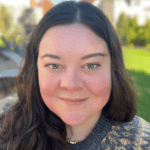
Lee Rawles joined the ABA Journal in 2010 as a web producer. She has also worked for...
| Published: | November 25, 2025 |
| Podcast: | Talk Justice, An LSC Podcast |
| Category: | Access to Justice , News & Current Events |
A recent report from LSC’s Rural Justice Task Force, “Justice Where We Live: Promising Practices from Rural Communities,” dives into a multitude of programs and approaches that address the biggest challenges to accessing civil justice in rural America. One issue is the scarcity of attorneys in rural areas, often called “legal deserts.” This episode highlights three programs working to create a pipeline of new rural lawyers.
Kate Rosier:
As someone who is from here and who knows this community intimately well and who knows the people and they know me, I feel like I am uniquely positioned to come back here and do this work.
Announcer:
Equal access to Justice is a core American value. In each episode of Talk Justice and An LSC Podcast, we’ll explore ways to expand access to justice and illustrate why it is important to the legal community, business government, and the General Public Talk. Justice is sponsored by the Leaders Council of the Legal Services Corporation.
Lee Rawles:
Hello and welcome to Talk Justice. I’m Lee Rawles, longtime legal journalist and your host for this episode. Today we’ll be discussing programs that are helping guide rural students into law school or encouraging new attorneys into rural practice. LSCs Rural Justice Task Force recently released a report called Justice where we live promising practices from rural communities. The report dives into a multitude of programs and approaches that address the biggest challenges to accessing civil justice in rural areas. These include the digital divide, distance and transportation obstacles, building community trust, and a shortage of attorneys. The lack of attorneys in rural areas, often referred to as legal deserts is a major concern for access to justice, but the programs that our guests will be sharing about today are working to create a pipeline of new rural attorneys. Let’s dig in. Joining me today we have Anthony Schutz, associate Dean for faculty and professor of Law at the University of Nebraska, where he also serves as Director of the Rural Law Opportunities Program. Welcome Anthony.
Anthony B. Schutz:
Thank you for having me.
Lee Rawles:
Next we have Kate Rosier. She’s an assistant dean at Arizona State University’s Sandra Day O’Connor College of Law, and the executive director of the school’s Indian Legal Program. She’s joining us to discuss its Pathway to Law Initiative. Welcome Kate. Hi, happy to be here. Last but not least, we have Ana Rell. She’s a staff attorney at Texas Rio Grande Legal Aid. Prior to this role, she was an Equal Justice Works Disaster Recovery Legal Corps fellow and a rural Summer Legal Corps fellow. Hello, Ana. Thanks for joining us.
Kate Rosier:
Excited to be here. Thank you.
Lee Rawles:
So I do want the bulk of our conversation to be about these awesome programs, but I think it’s important that we establish what the rural attorney shortage looks like. Right now. I have a personal connection to this topic because I grew up in rural Illinois and my parents were both attorneys, but I’m interested to hear what statistics look like right now in your areas. So Dean Schutz, could you kick us off?
Anthony B. Schutz:
Sure. So I gathered a few numbers. So Nebraska has 93 counties. We’re a fairly large state and we have relatively small counties, but there are various sizes. So 93 counties for Nebraska, 12 of those counties have zero lawyers in them, and 18 of them have three or fewer lawyers in them by 2027. We project that to be 16 counties with no lawyers and another 32 with three or fewer lawyers. Land of course doesn’t need lawyers, but by nearly any measure and any definition of rural places, all I’ve seen is data that indicates that we have a rural desert on our hands.
Lee Rawles:
Well, how about Arizona? Kate Dean Roser?
Ana Laurel:
We’re having a lot of similar issues that Dean Schutz just mentioned. A recent study came out that said Arizona is 49th out of 50 of lawyers per capita. The national average for lawyers per 1000 is four lawyers per thousand people in Arizona, it’s only two lawyers per thousand people. And when you think about it, it doesn’t sound like a big deal, but it becomes a very big deal when you consider that most of those lawyers live in the two largest cities in the state, Phoenix and Tucson. The other thing that I think that a lot of people don’t realize about the state of Arizona is that about a third of the land base is tribal land. So a lot of those are very remote and they’re very large pieces of land. For example, the Navajo Nation, which is in the top northeast corner of our state is about the size of West Virginia. And so it’s a very big piece of land and there’s very few attorneys to help all of those people living up there. So we really have our work to do to try to figure out how to make some changes within the state.
Lee Rawles:
Ana, how about Texas?
Kate Rosier:
I don’t have the statistics to speak to Texas as a whole, but I work for an organization called Texas Rio Grande Legal Aid, and we serve about 67 counties ranging from El Paso over to San Antonio, Austin, Victoria, where I live, and then south towards the border. And of those 67 counties, we have approximately 17 offices serving them. And the geographical area I just mentioned is quite large and there are a lot of people living within that area. So already we can see how there is a dearth of resources for that area. And to be clear, Texas Rio Grande Legal Aid serves those 67 counties. Lone Star Legal Aid serves 70 something counties in East Texas. And then legal aid of Northwest Texas serves the area across the north and panhandle of Texas. And that’s all that Texas, as big as we are and as big as our population is, that’s all that we have in Texas.
And a couple years ago, Texas a and m did a survey of the area where I have most of my cases. It’s called Texas’ Rio Grande Valley. It’s on the south Texas Mexico border. It’s four counties that are star algo, Cameron and Willesee. And I remember of those statistics when they were looking at the legal needs of the Valley, specifically looking at whether there should be another law school in the valley, I think one of the statistics they found was that in Willesee County for example, there was one attorney for every 2000 people. So that’s kind of the issue we’re facing here in Texas as well.
Lee Rawles:
And when we’re hearing these numbers, as you mentioned Kate, it may not seem like a huge deal and plenty of people make jokes about, oh, I wish there were fewer lawyers. But think about those 2000 people and all of the legal needs they may have and one attorney for those 2000 people, especially if they perhaps need to be suing each other, that’s not great.
Ana Laurel:
It’s not great. And what makes matters worse is a lot of these areas are our poorest areas in the state. And so for them to buy gas and drive for hours to try to find somebody to find out that they can’t represent them or to appear in court and not have the right materials, it just makes it a really hard situation for people who are in their times of need.
Lee Rawles:
So Anthony, let’s talk about what are the biggest obstacles that are preventing rural areas from recruiting and retaining more attorneys?
Anthony B. Schutz:
So I mean, we’ve looked at this quite a bit in order to try to figure out what maybe we could do, and that’s where our program came from, which I’ll talk about. But the more we look at it, the more we sort of understand there are opportunities and there are some pay disparities, at least at the outset of one’s professional career in a rural place, but they tend to fade relatively quickly as a person moves into a more mature practice. There’s a number of perceptions about rural places that can sometimes act as an impediment, but what we really are finding is that the basic impediments to having professionals, including lawyers in rural places are the things that you would think they would be. It’s healthcare, it’s education and it’s housing. People are concerned about whether they’ll have good schools for their kids. They want to know if they can get healthcare including senior care for their families and they want affordable and available housing. And so the hurdles that face repopulating areas, rural places with professionals are much larger than what a law school can tackle, unfortunately.
Lee Rawles:
Well, let’s talk more about the Rural Law Opportunities program because when I read about it, it sort of pinged for me the old TV show Northern Exposure and the issue there was getting doctors to remote Alaska rural areas. And I read that the program was modeled after a program that was supposed to increase rural healthcare providers. So tell us more about this program, its origins and what you’re trying to do with it.
Anthony B. Schutz:
Sure. So the Rural Health Opportunities Program R Hop it’s called, was sort of the model for what we tried to do with the Rural Law Opportunities Program RO. But the basic idea is we’re going to recruit students into their undergraduate education with a carrot in the form of a secure pathway, presumptive admission to law school after undergrad. And over the course of their undergraduate career, we’ll support them with sort of preparation for law school, really more programming in the nature of familiarizing them with what rural practice is, what law school’s all about and all of those sorts of things and helping them with their admissions packets and LSAT prep and all of those sorts of things. The reason why we chose to do this though, our hot program had seen some success and the success is kind of primarily born out by some of the impediments that stand in the way of people going to rural places.
To the extent there are perceptions in play, recruiting people from rural places helps avoid those perceptions, right? To the extent healthcare, education and housing are issues, we tend to find that those concerns fade or maybe they’re sort of valued differently when we’re talking to a group of people that is already in those sorts of places and is willing to return to those rural places. I grew up, for example, in a rural place, so I lack these sort of biases against those sorts of places. And I also understand some of the challenges. I mean, I grew up with all of the challenges, so they’re not something new. They don’t stand as an impediment in the same way that they stand as an impediment to somebody who has no familiarity with the rural place. And so the Rural Health Opportunities Program had seen a lot of success in that by taking that approach, recruiting people early as they were trying to sort of select and find their place in the world as they were embarking on their undergraduate educational experience, and then helping to prepare them specifically for practicing in a place that is different than a rural place.
Mentorship becomes important. Access to ancillary legal services becomes important, and it’s a different set of services than you would need if you’re, for example, in a large firm in an urban place. The Rural Health Opportunities Program dealt with those issues in the healthcare context, and we try to deal with those issues in the legal education context as an important both incentive and aspect of the program. Our goal, at least for their undergraduate education, is to get them through their undergraduate education with no debt, so their scholarship programs with our constituent schools. So the University of Nebraska College of Law partners with four undergraduate colleges that are themselves in rural places, Wayne State College, Chadron State College, the University of Nebraska Kearney and Peru State College are all smaller state schools in relatively rural places scattered throughout the state that tend to attract students that are from rural places.
It turns out that people who are wanting to return to a rural place also aren’t super excited about leaving a rural place in order to pursue their undergraduate education. So it works relatively well. Those undergraduate schools provide students with scholarships. The law school provides support during their undergraduate education in the form of programming. In fact, today I had a group of 50 students from three of the undergraduate schools here at the law school to observe arguments before the eighth Circuit Court of Appeals, which held arguments here in three cases, one of which was actually a rural case out of Iowa. And so through that experience, through being at a law school and interacting with law professors and interacting with other law students, these undergraduate students are prepared and then matriculate to the law school with very little undergraduate debt, keeps their overall debt levels relatively low so that that impediment of perhaps relatively low pay at the outset of one’s legal career isn’t as much of an impediment to those students as it otherwise would be. So there’s a lot to the program.
Lee Rawles:
Well, Dean Roser, before you became the executive director of the Indian Legal Program, you practiced in rural areas and tribal areas yourself. So I would love to hear your perspective. What were some of the unique challenges for lawyers who are practicing in rural areas and on reservations?
Ana Laurel:
Sure. I guess when I first got my license, I was practicing as a children’s court prosecutor for one of the local reservations, probably about an hour and an hour and a half out of this Phoenix metro area. And even there we’re still pretty close to Phoenix, however, the tribe didn’t have resources at that time to really have much of a legal presence anywhere. And so in my role, I would often be prosecuting children who were unrepresented and there was nobody to help them at all. So it really put a strain on the system to try to do the best you could for these kids without really knowing everything. And it’s now better for some of the tribes with more resources. But I use Navajo as an example. I talked to them recently and their office of General Counsel was down 17 attorneys, their public defender’s office for that reservation that I said was about the size of West Virginia, had maybe two or three public defenders.
So it’s really puts a strain and puts a heavy weight on the system to try to keep everything fair when people are going without representation. The other big challenge again is just getting your clients and getting people where they need to be when they don’t have gas money. I mentioned earlier they don’t have a car that will get them and there’s no public transportation and then they’re at risk of violating probation or getting warrants for no shows, all because there’s just so much distance to get to where they need to go. It’s really a stress on those needing help.
Lee Rawles:
So tell us more about your school’s Pathway to Law initiative. What are you doing to try and address this problem?
Ana Laurel:
Sure. So this one is specifically trying to help tribal citizens to think about careers and law. As I mentioned earlier, a lot of these reservations across the United States and in Arizona have large numbers of reservations on them. So the program actually, it addresses the rural area problem, but also we have another problem in Indian country that we are one of the least represented in the legal profession. So we’re trying to encourage students to think about law but also to demystify the application process. So we partner with other law schools from across the country. Our main partners are Berkeley Laws Admissions Office, Michigan State Laws, indigenous Peoples Program, A SU, and then we also work closely with the American Indian Law Center and we take sophomores up and tell them how to apply to law school, tell them what they can do as lawyers. And this might not be hard to believe for all of you on the call, but a lot of our native students either have had no experience with lawyers or they’ve had very negative experiences.
And so we’re trying to do is show them that there’s so much more that they can do with a law degree. And so we do some mentorship and bring in lawyers to talk about what they do with their law degrees. We bring in law students to tell them what it’s like. The other issue we have is that we also still have teachers and professors telling our students that law school might be too hard for them or that maybe they should think about being a legal secretary instead of becoming a lawyer. So we’re really having to do a lot of work in this program to make sure that these students know that they can do it and give them the tools to be successful in their law school applications. I’ll say one more thing that I’m very proud of about this program is we call it a student-centered program, meaning that we really work hard with the students to help figure out what’s going to make them the most successful they can be in law school. So for like you Lee, you might need to be close to home where Ana might need to go someplace that as cheap as possible. And so whatever reason you want to go to law school, we want to make sure that we’re helping you get there versus recruiting you to our school that might not be the right fit. So during the program, we do absolutely no recruitment and really let the students focus on their own needs.
Lee Rawles:
Speaking of Ana, we are lucky enough to have you on the program because you were one of these students. You attended Arizona State University and graduated from the Indian Legal program. So tell us about your journey and your experiences.
Kate Rosier:
Sure. It’s funny listening to Dean Schutz and Dean Roser, but Kate to me always talk about this. I am one of those students. I am from a very rural community in Texas called Port Lavacca. We have a pretty small population. We’re on the mid Gulf coast of Texas. I was born and raised here in the hospital. My mom graduated from high school there. My grandfather was a rice farmer. We’ve been here for a long time and we’re surrounded by chemical plants, all the things that would probably kind of make it an unattractive place to maybe come back to. And I was from this area and I actually came back to the area. I live here now and this is where I practice law and working somewhere like Texas, Rio Grande Legal Aid allows me to do that. But my journey was similar to what you were describing, Kate.
I didn’t have a lot of experience with the law thankfully. And I did work for a general practitioner in high school and that was pretty much my only experience and he was kind of a renegade. So I don’t know how much of a model he was for what practice could ultimately look like, but so I had no idea what law school was. I mean, I knew what law school was, I knew what being an attorney was. I had an idea, but I didn’t know what public interest was. I didn’t know how to apply to law school. I didn’t even know how to apply to university. I didn’t know how to fill out my fafsa. I had to figure all that out on my own. And again, when it came time to go to law school, which I did as an older person, I didn’t go straight out of university.
I had a career in nonprofit management for a while before I actually decided to go into law school. I didn’t really know what I wanted to do. I just wanted to make a difference. And I felt like because I was an English literature major, because I had always been told a lot of people with a smart mouth that I would be a good attorney. And because I felt really comfortable with language, I just felt like the law was where I could do that. But my only experience was what I had seen on tv, but I didn’t know how I would do that. And even when I went to a SU law, I will say, and Dean Roser can certainly correct me if I’m speaking out of turn, but when I went to a SU law, I graduated in 2019, there was no public interest program.
There really wasn’t a focus on public interest law outside of the Indian Legal program. And it was mostly focused around corporate law, government jobs, which I think are technically public interest and being public defenders or prosecutors, which are also technically public interest. But there was no public interest program. And so I didn’t even know what legal aid was. I didn’t know what the Legal Services Corporation or LSC was. I didn’t know about public student loan forgiveness or anything like that. When I went into law school, I thought maybe I would be a corporate attorney and do pro bono. I knew I wanted to make a difference. I didn’t know how. I didn’t have the language for it. And in fact, it wasn’t until my two L year that I was, so my second year in law school, the ILP, the Indian Legal Program, we were hosting the National Native American Law Students Association moot court.
And I didn’t have anything to do that summer yet because I wasn’t on the corporate law tracked and I didn’t really know what I wanted to do. And Kate in fact had sent out an email to everyone and before this time, not knowing what public interest was, I didn’t know what equal Justice Works was. I didn’t know what Skadden was, I didn’t know what opportunities existed there. And Kate sent out an email blast for people who didn’t have jobs yet for the summer, and it was an equal Justice Works rural summer Legal Corps opportunity. Again, I didn’t know what it was, I didn’t know what it meant. All I saw was that it paid $5,000. And one of the places that I would get to work it said Port La Vaca, which is my hometown. And I was like, yeah, I’m going to apply to get money to go home for the summer and be with my mom. I had been living in Arizona for quite a while up to that point. So I mean that was my first introduction into legal aid and even what that was, what it looked like, anything like that.
Lee Rawles:
So the rural Summer Legal Corps, what a cool program. Kate, have you heard from other students who went through that process and what were their,
Ana Laurel:
I think that having information and making connections just really opens your eyes, what Ana was saying. I think that the feedback we receive is basically they feel so empowered after going through the program that they actually have made connections and cohort that they can rely on and do follow-ups with. And they’ve created a community and many say that’s the best part of the program because they all might be going to different law schools, but they will have somebody to get through it with. So it’s kind of a security blanket for themselves. And they’ve also made friends with the attorneys who they can then get career advice from. So I see it as less about mentorship, but building a true community that you can take with you throughout your legal career.
Lee Rawles:
So Anthony and Ana, you like me, were students in a rural area and I don’t know if this was your experience, but it seemed like there was a real message from the surrounding adults that, oh, well, if you want to do something like go to law school, you’ll be leaving the community. You will be one of those kids who go to the big city. And not everyone wants to be in the big city. Not everyone wants to leave their community. Not everyone wants to live an urban life. And I think that for some people that might close them off to the idea of going to law school and it doesn’t seem like a possibility if they want to live the kind of life that they want. Does that resonate with you, Anthony?
Anthony B. Schutz:
Somewhat. So part of what we try to do is inform students early on in their educational journey, I guess for lack of a better word, is that there are possibilities to do this kind of work in the places that they’re from. And this kind of goes back to the experience that our students have had with law and to the extent they’ve had any experience with law, it’s difficult to instill in somebody a sense of what they can be past a certain age. And so some of the tribal work that you all are doing in Arizona I think is really interesting on that front. But that’s what we’re trying to do is attract people to law school and into this career path that are from these places, but haven’t really thought about what kinds of opportunities await even in the places that they were from. That said, many of us and me included, came from a small place and then saw sort of some of the things that we could go do with a law degree when we were in law school.
I went from a town of 650 people to in my second year of law school, going and interviewing in Chicago and staying at a Swiss hotel on the banks of this giant lake in this massive city and interviewing for a job that is going to pay more in a summer than I would make in half the salary that I would earn on an annual basis for the jobs that I had when I was a kid. So there is definitely the possibility that when we recruit rural students to law school and then we open up a number of different opportunities that they haven’t considered to move away, that they’ll take those opportunities to move away rather than move back. Maybe they had originally planned what we’re finding with our students. So we are seven years into the program. We started with college freshmen. So it took four years of doing this work before we even got any of these students really at the law school proper, and then another three years before they graduated. So it took seven years to get to the point where we’re starting to see whether our students go to rural places and go back. They thought they would when they started doing all of this. And we’re finding about 60, 65% of our students are going back to rural places immediately and practicing law. While some are going to more urban environments, what I suspect will happen is a lot of those students may return to rural places further on in their legal career
Lee Rawles:
Or when they start families. Yeah,
Anthony B. Schutz:
Yeah, exactly. Starting a family might be the real thing that tips the balance for many of them. So it’s a long road is one of the lessons that we’ve learned in the RO program. It was a lesson that they’d learned in the RO program before that, so we came into it with eyes wide open. But yeah, so getting students to envision themselves doing this career in the place that they’re from and then dealing with temptation or opportunities that arise just as a function of being successful in law school and then who knows what the road, where the road goes further down the road. But we try to keep all of those options open and just support our students as they move into all of these different career paths.
Lee Rawles:
Well, Ana, you did decide to stay in your rural Texas community. Can you share a little bit about your experiences?
Kate Rosier:
Yeah, so I kind of took a circuitous route to get here. It’s funny, I was telling my wife the other day, I still feel like a country mouse a lot of times, especially when we are in the big city. But I left home when I was 17. I graduated early from high school and I had a few false starts with university. I think when you go to a smaller public school in Texas and you don’t have people who graduated from university to look to it is very hard to get started. It’s very hard. Like I said, I didn’t know what FAFSA was. I moved away, I came back, it didn’t work out. I came back and I started at community college and then I worked my way up to a four year university. I worked the whole time. So I took a lot of night classes and I moved to Houston and that’s where I went to university.
And so that was my first experience living in a bigger city. And it was quite a culture shock. It was a huge culture shock for me. And I think for a long time I was really excited and I didn’t want to come back home. And Dean Schutz talked about the temptations of city life, not in a negative way, just there’s a lot there to embrace when you’ve been in a pretty small community your whole life. And I definitely enjoyed all of that. But like I said, I wanted to do something. I wanted to make a difference. I always knew I wanted to make a difference. And for me, eventually law school was where I wanted to go. And part of the reason why I went to a SU was because I was interested in Indian law and the Indian law program is an amazing program and I’m sure one of the best in the nation, and that’s where I wanted to go and that’s where I wanted to do it.
I met Kate when I was applying and it sealed it for me. That’s where I wanted to go. But even in law school, I didn’t know I was going to come home at the time. But what I did learn, especially in the Indian legal program is so many of my peers and colleagues were tribal members or had affiliation with a tribe in one way or another. And it instilled within them a pride of place where they were from the land that they’re from, the culture that they’re from. And I didn’t realize that within myself. I didn’t have that before. And it wasn’t until I had all of, I was surrounded by colleagues who felt that way that I realized that I too had something to be proud of for so long. I felt like there’s a lot of negative things about the community I’m from in news and media and stuff, and because we’re surrounded by chemical plants and stuff, but there is a pride, I do feel a pride for being from here.
We’ve been here for generations. I was born here. And again, I think that experience and the ILP made me feel like I do need to go back home because there is work that needs to be done here. And I am to the point that Dean Schutz mentioned as someone who is from here and who knows this community intimately well and who knows the people and they know me. I feel like I am uniquely positioned to come back here and do this work. And it took me a long time to get here is I was in the RGV the Valley for a while, for the last five years from 2019 when I graduated law school until 2023. But then in 2023, my wife and I were like, it’s time to go home. It’s time to go back. So in 2023, I left home when I, and about 2005 or 2006, so this was the first time I’d actually come back. So it took me as y’all talked about a long road to get back here.
Lee Rawles:
Well, and Kate, you actually are about to hold the 11th annual Native American Pathway to Law Workshop this year. So you’ve seen more than a decade of students go through the program. What have you observed over that decade, that long road?
Ana Laurel:
It’s been really interesting and very rewarding. One of the very cool things is that we’ve seen people really improve their application rates and acceptance rates because they’re now actually applying the correct way. They know how to write a personal statement. They know they have a realistic timeline of when they should get their materials in and they know that they actually have to study for the lsat. So through our program, we’re trying to keep statistics, but we’ve seen people jump their LSATs over 20 points. So we have ’em take a practice one at the beginning and then they report back their official scores. But that 20 point jump, that student was basically not going to go to law school if they would’ve applied with that original score to then being a very competitive applicant. And so that’s really rewarding to see that you’re going to make a difference in so many students’ careers and have more opportunity for scholarship money based on their scores. What’s been really interesting for us though, as we’re looking at the stats is that we have a man problem of 400 students that have gone through my program. Only a hundred have been men. And so that’s been kind of surprising to see as we were looking at the stats. And so I think we need to figure out how to do a better job of reaching some of our young men.
Lee Rawles:
Well, we have been addressing the issue of growing the next generation of rural lawyers, but as the LSC report, which I encourage everyone to go look up, it’s called Justice where we live promising practices from rural communities as they say, this is only a piece of achieving access to justice in rural areas. And I think that most legal professionals agree that there will never be enough lawyers who provide these types of civil legal services to reach every person in need of help. So what are some other innovative approaches that you all are excited about for the potential to improve rural access to justice? And Dean Roger, let’s start with you.
Ana Laurel:
Sure. I’m excited to talk about this because Ana mentioned that when she was a student, there wasn’t a lot of public interest work and there wasn’t a lot of talk at all about rural communities. And under the leadership of our new dean, Stacy Leeds, she is starting now online part-time option for JD students who are specifically interested in public service and in rural communities. And I think that that’s going to be very popular for folks who, as somebody mentioned earlier, just don’t want to leave or don’t think they can afford to leave and move their whole families. And so this program’s going to start its first class in January, very small class. I think we’re thinking under 50 for sure. And we had a very, very large number of applications. And so we think as this program shows success, that number’s going to grow, but hopefully it does what it’s supposed to do and provides more resources to those rural communities.
The other things that we’re doing with the state of Arizona is really trying to think about how we can keep our Arizona attorneys in state. We have a UBE score pass score of two 70, which is now one of the highest in the country. The state of Arizona has started an apprenticeship program so that if you get a two 60 to a 2 69, which used to be a failing score, that you can now stay and practice under an apprenticeship program where if you’re working in a rural community or with a government. So they’re really trying to make those spaces more comfortable and accessible for lawyers. And finally, they’ve also started a new program called the Paraprofessional Licensing in Arizona. And this is where people who are not lawyers can do a certain number of classes either through a master’s program like we offer at a SU or other schools and sit for a minibar exam in certain areas. The areas are civil law, criminal law, probate or juvenile dependency, and you do a minibar exam on one of those practice areas. And then you can practice as a non-lawyer if you’re affiliated with a lawyer. So we’re hoping that some of these new paraprofessionals can help people draft wills or work on their papers and at least be another resource for those people who have need.
Lee Rawles:
And Dean Schutz, is there anything that you’ve seen that seems promising for increasing access to justice in these rural areas?
Anthony B. Schutz:
There is. Many of the things that were mentioned are exciting and happening in lots of places. Nebraska’s historically had a bit of hesitation with regard to the nurse practitioner model of legal service provisioning. That I think is changing as more states are experimenting and as we see some success in other places, I think that’ll come to places like Nebraska. A lot of the concern for rural practitioners in Nebraska is really designed to sort of stem the tide of loss that we’re experiencing, which doesn’t necessarily meet access to justice needs. I mean, to the extent we’re worried about estate planners and real estate transactions and those sorts of things, and sort of getting business done with lawyers that can replace the lawyers that have historically done that work, that’s an important, I think, goal for folks like me to pursue. But it doesn’t solve the access to justice problem, which is it has a much longer lineage than just this current dip in the population of rural lawyers.
And so I think we’ll see more attention, access to justice concerns if we can put out this maybe more, at least more pressing to the eyes of some fire that is, I think, driving current responses. That said, we’ve made some inroads. We have a children’s justice clinic at the law school that is providing attorney education and guardian ad litem education in rural places. And we of course run clinics and things along those lines that take practitioners up and coming practitioners under the auspices of a practicing lawyer to go meet some of the needs that are currently unmet by folks who are in need of services, who can’t find traditional attorneys. Legal clinics have often played that role. We’ve played that role in rural places as well. So that’s kind of where we are. We are seeing more firms branch out and associate with lawyers in rural places to provide those lawyers with a broader swath of, well, it provides them one with the ancillary services that lawyers need in terms of billing and administrative support and those sorts of things. So you can live in a rural place and associate with a larger firm that has a more urban placement, but it also opens up the opportunity of a firm wide slate of services that could include a larger dedication to pro bono hours that could be deployed in those rural places. So we’re seeing some of that as well.
Lee Rawles:
Well, and Ana, let’s close out with you. Is there anything that you have seen in your practice that gives you hope about access to justice in rural areas?
Kate Rosier:
Honestly, what Dean Schutz and Dean Ro are talking about, I mean, that gives me a lot of hope. As someone who could have gotten here a lot more quickly, I am doing the work that I always wanted to do. I just didn’t have the framework for it at the time when I was in high school or university, and I found my way to it, but it’s the work I’ve always wanted to do. It gives me meaning, it helps me give back to my community, and it is intellectually satisfying. And so I think hearing what y’all are working on is exciting for me. I also feel like things like loan repayment programs and the public student loan forgiveness and other things like that that make going into legal aid where we do provide holistic legal services, we will have a client, for example, who comes to us and maybe they were tricked into deeding away their home.
And so there we’re looking at a title issue. Well, I’m a title attorney. We can handle that. If they transferred the property for less than farm market value, that’s a public benefits issue. If they have Medicaid or SSI, social Security supplementary income, we have public benefits attorneys who can help her with that. If she deeded away the property and the person is now evicting her, we have housing attorneys who can handle that. So I think there are, the legal aids are uniquely equipped to do these, to provide these holistic legal services. I think it’s just a matter of continuing and broadening the types of resources and assistance programs that make going into legal aid seem like an obvious and a good choice to more students. So it’s not like students like me who don’t have a lot of financial support, and I couldn’t have dreamt of going into legal aid if I didn’t know that there was public student loan forgiveness waiting for me, or that I wouldn’t qualify for loan repayment assistance programs. And I think there’s a lot, Kate mentioned this too, but there’s a huge technological gap. There’s a lot that’s going on about doing more online and doing more with AI and other things like that. But a lot of the clients that I serve in rural areas don’t have access to the internet. Or like Kate mentioned, they don’t have cars, they don’t have phones. There’s a lot of things that they lack. So I think just more resources to have more attorneys would be incredibly helpful to bridge that gap.
Lee Rawles:
Well, I want to thank Ana, Kate, and Anthony for joining us today for this fantastic conversation about programs to create the next generation of rural lawyers. And thank you to the listeners for tuning in to this episode of Talk Justice. Be sure to subscribe so you don’t miss an episode. And if you want to read the Rural Justice Task Force Report, you can do that at lsc.gov/rural Report
Announcer:
Podcast. Guest speakers views, thoughts and opinions are solely their own and do not necessarily represent the legal services corporation’s views, thoughts, or opinions. The information and guidance discussed in this podcast are provided for informational purposes only, and should not be construed as legal advice. You should not make decisions based on this podcast content without seeking legal or other professional advice.
Notify me when there’s a new episode!
|
|
Talk Justice, An LSC Podcast |
Join us as we explore innovative ways to expand access to justice, bringing together legal experts, technologists, business leaders, community organizers and government officials for thoughtful conversations about ending the access-to-justice crisis.