Guest Michelle Behnke is a lawyer, president of the ABA, and a veteran polling place volunteer. She discusses how election integrity involves us all (so get involved!)
|
|
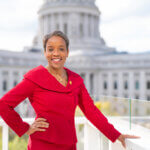
Michelle A. Behnke, a member of the Boardman Clark law firm in Madison, Wisconsin, is president of...
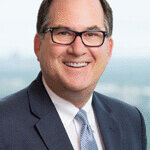
Jim Reeder is an accomplished trial lawyer who focuses on complex commercial litigation and antitrust. He represents...
| Published: | May 19, 2026 |
| Podcast: | Litigation Radio |
| Category: | Access to Justice , Career , Litigation |
In a timely episode, host Jim Reeder is joined by attorney, experienced poll worker, and current president of the ABA Michelle Behnke to discuss the American election system and the role of lawyers in that system. It might seem we’re a long way from the notorious practice of voting from the cemetery, but are we? (Spoiler: we are).
It seems like many Americans are becoming more skeptical about our current election system. And, as Behnke says, whenever there are humans in a process, there’s always a chance for error. But today’s technology and redundancies have made voting more secure than ever, even if allegations of cheating creep into the news cycle. Not only is she a business attorney, but Behnke has served as a poll worker and watched the system work as designed.
Hear about Behnke’s personal experience and how it built her confidence in the registration and voting process.
So where do lawyers fit in? And how can you get involved and inspire confidence? Get out there as a poll watcher or even an election official. The system needs you. As Behnke bites, “As lawyers, we are made for serving in that role.”
Also in this episode, quick tips from Lauren Williams as she discusses centering yourself.
Have a question, comment, or suggestion for an upcoming episode? Get in touch at [email protected] or [email protected].
Resources Mentioned:
“Become a Poll Worker,” United States Election Assistance Commission
American Bar Association Litigation Section
Special thanks to our sponsors Relativity, Sovereign Discovery, and ABA Section of Litigation.
Jim Reeder:
Welcome everyone. Today we have something exciting to celebrate. This episode is the 100th episode of Litigation Radio, 100 fascinating topics of interest to litigators, 100 informative guests. Our special 100th episode guest is ABA President Michelle Behnke. Michelle Behnke today is going to fill us in on the ins and outs of the US electoral system. So come celebrate our 100th episode. Stay tuned. Hello everyone and welcome to Litigation Radio. I’m your host, Jim Reeder. I’m a recently retired lawyer who practiced antitrust and commercial litigation in the Houston office of Jones Day. In addition to trying lawsuits, I’ve spent my entire career focused on helping young lawyers become great lawyers. On this show, we talk to the country’s top litigators, judges, in- house counsel and academics to discover best practices for developing careers, winning cases, getting more clients, and building a sustainable practice all while staying well and happy.
Be sure to subscribe to the podcast on your favorite podcasting app to make sure you never miss an episode. Litigation radio is brought to you by the litigation section of the American Bar Association. It’s where I make my home in the ABA and I’m a huge proponent of the litigation section. This podcast is just one example of the dozens of resources the litigation section provides litigators of all practice areas to help become successful trial lawyers for our clients. Learn more and become a member at ambar.org/litigation, that’s A- M-B-A-R.org/litigation. Today we’re going to delve into the US election system and the role of lawyers in safeguarding that system. We’ll be talking to one of the country’s leading lawyers who also just happens to be a thoughtful observer of the mechanics of our election system, Michelle Bankey. Additionally, you’re going to want to stay with us as we also bring you a quick tip from Lauren Williams, who’s going to talk to us about how to center yourself.
But first, let’s get started on our topic today, safeguarding the US election system. Our guest today is Michelle Bankey. Ms. Banky practices at Boardman Clark in Madison, Wisconsin, primarily in the business, real estate, and estate planning practice groups. Prior to joining Boardman Clark, she spent 26 years as a principal of her own firm. She’s also been recognized for the last 20 years in the best lawyers in America in real estate law. Ms. Bankey served as the president of the State Bar of Wisconsin in 2004 to 2005 and she has been active in the leadership of the American Bar Association for the last decade or so. And she is currently serving as president of the American Bar Association. Welcome, Michelle Bankey.
Michelle Behnke:
Thank you, Jim. It’s a pleasure to be with you today.
Jim Reeder:
It’s great having you. First off, so Michelle, you and I know each other but not well. I think that one of the things that helps contribute to all of our collective learning, our civil discourse and just understanding each other is getting to know each other better. I think it provides incredible insight into why each of us thinks the way we do. As such, I like to start off by having our guests do two things. One, share a thumbnail of your career path. That’s so helpful, particularly for young lawyers. And two, share something about yourself, your background, your childhood, some experience that you’ve had that has shaped who you are. So who are you, Michelle Bankey?
Michelle Behnke:
Well, I’ll share my career path, but the first thing I’ll say is that what I thought my career path would be like was not what it was actually like. So I graduated from law school in 1988. I thought I would join a firm. I would work diligently for seven years. I would make partner and rule the world. That’s not quite exactly what happened. What actually happened is I joined a firm. It was a medium-sized medicinon firm. I started in the areas that I still practice in, business, real estate, and estate planning. But we had our family. My husband is also a lawyer. We met in law school. And so we had a young family. We were both young associates looking for some work-life balance, seemed like a logical thing. So I next went in- house at an insurance company, CUNA Mutual. It was known as CUNA Mutual then.
And I was doing mergers and acquisitions and business work. And I did that for about five years. So now I’m 10 years out, but I missed individual clients. And that’s when I struck out on my own and started my own practice, as you mentioned. And I did that for 26 years before I headed into ABA leadership and I joined the Boardman Clark firm because I thought it would be important for my clients to actually be able to get their legal needs met while I was off doing this ABA thing. So that’s kind of the trajectory, very different than what I originally thought was going to happen.
Jim Reeder:
Which is not unusual. In fact, maybe it happens more often than not, but we all end up at where we should be, I think.
Michelle Behnke:
As for my kind of life journey, my parents grew up in the south down in Mississippi. They actually were middle schoolers, I would guess. They probably didn’t call it middle school at the time. When Brown versus Board of Education was decided, that did not immediately change the trajectory of their education system. And so I remember as a young child, just my parents’ emphasis on education and that that was really the way that we were going to achieve anything that we wanted to do. And so education was really stressed in our house. My parents decided their strict adherence to excellence and education could only be reinforced by Catholic grade school and high school and nuns were going to help them do it. So I went to Catholic grade school and high school and again, education was really central, was really emphasized. And so fortunately then I was a good student.
A guidance counselor suggested being a lawyer. I didn’t know much about what being a lawyer would be. How would you get there? But a guidance counselor suggested it and that’s how I ended up taking my twisty turning route to getting to be a lawyer.
Jim Reeder:
So the other thing I discovered when I had this opportunity to learn more about people is the sort of synchronicity of things. So you and I graduated law school within a year of each other. I grew up in Louisiana, you grew up in Mississippi. I was definitely taught and tortured by nuns and priests because I went to Catholic grade school, elementary school, Catholic high school, Jesuit high school. All huge, huge influences on who I am the way I think, et cetera, as I imagine it has been for you. And that segues in frankly to my observations in our topic. So growing up in Louisiana, which is notorious frankly from an election system standpoint, Mississippi similarly the ups and downs of the election system there over the last century, but particularly in the periods of the 50s, 60s, 70s, et cetera, was tumultuous. Having grown up in Louisiana, my dad was very active politically.
I heard all sorts of stories and jokes and they’re really just jokes about Earl Long and Hui Long who dominated politics in Louisiana during the period. And I can remember this one story that my dad told and it was about Earl Long going with some of his staff people and he would go from parish to parish on election day and we’d visit the cemeteries and he would collect votes from people who were dead in the cemetery. And at some point one of the staff people turned to Governor Long and said, “Listen, I think we have enough now for this parish we should move on to the next parish.” And Governor Long said, “No, no, no, no, no. All these other people have a right to vote too.” So that’s a joke, but I’m not sure how far off that is, frankly, in some places of the country as far as the integrity of the election system back then.
When you went into a booth, you closed a curtain, you were unsure exactly what happened after the curtain was opened. If it was a written ballot, you were unsure exactly what happened with a written ballot. So for 60 years or so up until I think the last decade, it sure seemed that the security integrity of our voting system was, well, it’s actually, I think, not in doubt anymore. I mean, we have electronic voting. You just never heard of any shenanigans up until like 10 years ago and now we start hearing it more at least. So how skeptical should we be? Can this system be trusted? Let’s start there. Should we be worried about the integrity of our election system?
Michelle Behnke:
Well, I don’t think so. And I can share some firsthand experience that gives me that confidence. But to your point, whenever there are humans involved in a process, there’s the possibility of mistake and error. I mean, there’s no sense in even arguing about that. You can make a mistake. But when you think back to the ’60s and ’70s, it was all manual. And so the possibility that somebody left a stack of ballots in the wrong place or that they got counted or two of them stuck together or somebody was a little tired, probability that an error or a mistake or whatever you want to call it happened I think was much greater because the process was so manual. We have come to a time now that you, I’ve had children, when you’re in the hospital, you have the bracelet on and they bring the baby and they scan your bracelet and the baby’s … That’s the kind of check and double check that now exists in our system.
So yes, we still close the curtain in some places or you have the little plastic sides alongside you, but even before you get your hands on a ballot, you have been checked and double checked and triple checked and your address and a drop of plud. I mean, it really is the kind of safety and integrity that you would want for a system like this. And so I have a lot of confidence. I have to say I’m saddened that people throw out things like, “Well, all of these illegals are voting.” And again, what you see in the system is such that you could come up there and you wouldn’t even be able to sign in, let alone get your hands on a ballot. And so I think it’s been, well, certainly overblown, but it’s been used as a weapon to scare people when in reality the system is really incredibly safe.
Jim Reeder:
You talk about errors and you talk about the human element that occurs, but that’s not something that sort of happens systemically, obviously. And then you have the possibility of malice of some bad intent on the part of somebody and you just mentioned some of the ways that that’s protected against, particularly in person voting. All right. So play a little bit of devil’s advocate for me. Where are the risks if there are any and how serious are the risks?
Michelle Behnke:
Yeah. So the issue has been studied and is it possible that somebody has requested a mail-in ballot for you and directed it to a wrong address or an address different than yours so that they could do that? Yes, that’s possible in some places. But when you think about our elections, especially national elections, in order to actually effectively impact the actual outcome, everybody else that would show up at the poll would have … We would figure that out. There would be a lot of people that’d be standing there wanting to vote and somebody would say, “No, we mailed out a ballot to you. It’s been returned.” And we would then know that something nefarious had occurred. Yeah. So the fact that people are routinely able to go cast their ballot, nobody has requested a mail-in ballot or voted already for them tells us that this is not happening in any sort of size or dimension that would actually affect our voting outcomes.
Jim Reeder:
Talk to us a little bit about transparency and the notion that, I mean, that’s a big other distinction besides the manual versus electronic aspect of it is what you can see versus what you never could see before the sort of the dark smokey room, whereas today everything seems to be out in the open.
Michelle Behnke:
Sure. So I actually had a firsthand example. I felt like my civic duty and that kind of thing. So way back in 2008, I actually signed up to be a poll watcher and I went and they had this, it was a regular polling place and I could watch and see from the moment somebody walked in in Wisconsin we have same day registration. I could see the people that were doing the same day registration. I could see once you do that step, then you can move over and you actually sign in. Now you become a part of the voting role and the people that were doing that. And then after you signed in on the voting role, you moved to the next station and you would actually get your ballot, you could see that process being issued. The person would go in and vote and then that ballot would be put through the voting tabulator.
As an observer, I could watch every one of those steps and being a business lawyer, I will just selfishly say separation of duties and checks and balances kind of in the audit world. Those are things that are prized. Those are the things that help you prevent the bad actors and all of those steps were in fact separated. The people getting you registered was different than the person signing the book was different than the person handing you the ballot was different than the person that was getting it fed into the machine and all of that was different than the people that were counting the mail-in ballots that were shipped to that particular location. But anybody could sign up to be a poll watcher. And so if you want to see how the process works, if you have any questions or concerns, you don’t have to have some special designation or be a part of any particular party.
You can just sign up to be a poll watcher and you can go see this whole thing happen.
Jim Reeder:
And so obviously again, it’s in the open. For instance, somebody shows up, they want to vote, they are looking for their name on the roles, the name’s not there or they are in the wrong polling place or whatever. That’s audible. You can hear it. You know then how the person responds to it. Do they say, “Oh, it’s okay, go ahead and vote.” Or do they do something right? I mean, you can see that and hear it.
Michelle Behnke:
Exactly. So then a few years later, I actually signed up and worked the polls. Having watched it all happen, I was so-
Jim Reeder:
So that’s a different role,
Michelle Behnke:
Right? It is. It’s a very diferent role. Okay,
Jim Reeder:
Explain that.
Michelle Behnke:
Yeah. That’s right. So if you’re a watcher, that’s all you do. You don’t get to have any contact with the actual voting process, but you can watch it all. You can take notes on it all. Separately, if you want to actually work the polls, because in every place that I’m aware of, it’s regular everyday citizens from your community. And in every place that I know of, you actually have to be a member of the community. So being in Wisconsin, I can’t go to New Jersey and work the polls in New Jersey. I’m working the polls in Madison, Wisconsin, which is where I live. And so you often see your neighbors as the people that are working the polls.
Jim Reeder:
And that gives you confidence. That also gives you confidence, right? Yep.
Michelle Behnke:
Exactly. I mean, unless you really think your neighbors are weirdos, it gives you confidence. These are people who are stepping up, you don’t get paid. They’re in their communities just trying to facilitate people getting a chance to vote. And the city clerk’s office does a training. They take you through almost every scenario you could possibly be given and they give you written materials and you can download the training so you can watch it multiple times if you had any questions about the various steps and then you get assigned to a polling place. And when you get there, there’s a captain of that polling place and that person is just walking around double checking, triple checking, making sure that everybody is doing their particular step. In my instance, we had somebody, for instance, who didn’t show up for one of their roles. Every one of these has two people as well.
So if you want to come and register same day registration, there are two people that see you go through that process. So somebody can’t say, “Hey, Michelle, you know me. I forgot my driver’s license, but you know me. ” There are two people at each of those stations and there is a process. When I worked, there was one instance we were registering somebody, got them registered, they went to the next step, they were supposed to sign in. Now I think structurally somebody made a mistake, but in on place you put your name in and it was last name, first name. Then when you came to the book to sign, it was the way you might regularly write and sign your name. But the person had just done it the reverse way and so they did it the same way, which was a mistake. You don’t get to just cross that out.
You don’t get to say, “Oh, don’t worry about it. ” The two people that were at that station, the head of the polling place, we all had to document. There’s a log on each and every incident that might happen and you all have to sign your name that this is when you explain what happened.
Jim Reeder:
That seems innocuous, right?
Michelle Behnke:
Exactly. How could this ever be? But they don’t say, “Gee, if the error or the mistake is teeny tiny, then we just look over.” Anything that happens that would require some change or something that’s out of order for the procedure is documented. And you can go back and look at that entire log all day long to see what has occurred. I was floored. It was a level of detail and care that as a longtime voter, I had no idea that this is what was behind it, but it was amazing to watch.
Jim Reeder:
People take it seriously. I mean, the people who are doing that job take it seriously. Absolutely. You and I talked about this before, but I served on a jury one time. I don’t know how I got to do that, but I was so thankful as a trial lawyer because I sat there and realized that each of those people who probably had not, this was not the thing that they wanted to do, but once they were empaneled, they took it so seriously. It was so important to them to get to the right result. I think we sometimes forget that this … We can talk about it globally, we can talk about it nationally, but what we’re talking about is precinct by precinct, by precinct, by precinct, by people in that community who live within that precinct, dealing with their neighbors, helping their neighbors through that process and dealing with bad addresses and bad IDs and typos and naming errors and identification issues, those kinds of things that just happen, but they take them seriously.
Michelle Behnke:
Yes. I was totally impressed and really felt a sense of pride that I was participating in that level when I served as a poll worker and I started to make it my mission to actually explain what I saw going through that process and encouraging others to sign up, not only because we need them, but I just think it gives you so much confidence and a different view if you actually get to see it and participate up close and personal.
Jim Reeder:
There’s a lot of talk about and perhaps skepticism about mail-in voting and people also talk about early voting as well, but mail-in voting is, I think, something that’s pretty well accepted now. The ultimate question is what happens to the ballots that are mailed in. You talked about the notion that if somebody showed up on voting day and you already had received or had sent out a mail-in ballot, there’d be a discrepancy, something that would have to get resolved there.
Michelle Behnke:
That’s right.
Jim Reeder:
What are the other sort of safeguards with regard particularly to mail-in ballots that try to ensure that they’re handled correctly, they’re not tampered with, et cetera?
Michelle Behnke:
Sure. So at least in Wisconsin, if you want to do mail-in ballots, if you’re already registered, that’s step number one, you have to still get registered. It’s not just, “Hey, I woke up, I happened to be in Wisconsin and it happens to be voter day. I’m going to somehow get a mail ballot.” You actually have to be registered in that jurisdiction. I had to scan my driver’s license during COVID. I didn’t want to actually go to the poll, so I wanted a mail-in ballot. You have to scan your driver’s license and show that the person that is requesting that mail-in ballot is the person that is in fact registered under that name.
Jim Reeder:
You do that online? Is that something that’s done online? You
Michelle Behnke:
Can.
Yes, you can do that online assuming … Now I look at my mom. My mom doesn’t have a scanner. She’s in her 80s, we had to actually take her down and get her properly identified to be able to get a mail-in ballot, but I did that so that she could likewise during COVID also get a mail-in ballot. But you need something to be able to prove that you are the right person in the first instance to get your mail-in ballot. Then the mail-in ballot comes, it has a very specific envelope. You have to have two witnesses. They don’t have to actually see who you voted for, but you have to actually be in the same proximity so they can see you mark the ballot and then they have to sign as witnesses and then you can mail that ballot back. Once that ballot comes back, at least in Wisconsin, that’s held and they separate those by the voting precinct.
And in Wisconsin, we can’t even start counting those until the day of voting or day of election. And then those locked bags go to those precincts. And again, there are always two people. They unlock the bag, two people witness that each envelope that comes out, two people witness and actually mark that person on the voting log. So to your earlier point, if you came to vote and a mail-in ballot had already been there, your name will be marked off. So you won’t get two votes from that person. And if you voted in person and then we find a mail, we won’t be able to process the mail-in ballot. So there won’t be two people, that same person won’t
Jim Reeder:
Get
Michelle Behnke:
To vote twice. And those two people feed those through the same ballot tabulation machine and you just work your way through it. But I mean, again, it’s just if somebody has to take a break and use the restroom, no ballots, right? It’s always two people. It’s the security and the check and double check are really fantastic.
Jim Reeder:
And you talk about Wisconsin and obviously that’s what you know,
But I dare say that if we had somebody from each state here who was as observant about it and interested in it as you are, they would likely have the same thing to say about their system. I mean, we have obviously elected officials, we have a Secretary of State in each state and then we have election officials within each county or parish and then we have precinct chairs, et cetera. And all of those people are doing that. Yeah. The great majority of them are doing that because they have a sense of civic duty or civic mindedness and they want to get it right. Great. All right. So let’s take a little break. We’ll come back in a second. We talk more about what lawyers can do But in the meantime, I want to remind everybody that we will also have a quick tip from Lauren Williams on how to center yourself, but now it’s time to take a little break and get a quick word from our sponsors.
We’re back with Michelle Behnke, the president of the American Bar Association and a lawyer practicing at Boardman Clark in Madison, Wisconsin, primarily in the areas of business, real estate, and estate planning. Michelle, we’ve talked about the many safeguards built into our election system to ensure integrity, but what are the ways that citizens and especially lawyers can play a role in inspiring trust in the system?
Michelle Behnke:
Well, that’s a great one. I will start with what I consider perhaps the easiest, which is to actually volunteer. Go work as a poll watcher or as a poll election official. And I say that for a number of reasons. As I described earlier, all of these jurisdictions need volunteers. These are not paid people. It’s not the clerk’s office and every employee in city government that is working these polls. It’s volunteers. And as people have busy lives or little kids or whatever it might be, finding the right number of people that you need on election day is always a tough act that the city has city or parish has to pull off. And so I volunteered. My name is on the list. This year it’s been a little harder for me to volunteer because the ABA is sending me everywhere, but my name is on and whenever I can volunteer, I do.
And so I would start with that lawyers of all … We understand and appreciate following the rules. The judge doesn’t let you file late if your brief is due on this date. So we understand and appreciate those rules and so we’re, I think, made for serving in that role.
Jim Reeder:
Well, and if you are in your community and your neighbors know you as a lawyer, and I just believe this, I think they tend to respect lawyers even if they don’t generally have a wonderful view of all lawyers, the lawyer down the street, the lawyer next door, the lawyer in their community, the lawyer that helped them, the lawyer that helped their friend. If that person is showing up at the polls, then it’s going to inspire confidence.
Michelle Behnke:
You’re exactly right. You’re exactly right. I would add to that explaining the system. Now here, I will say as lawyers, we like acronyms, we talk shorthand and right at this moment, I think people need to hear processes and things in plain English. The good news is even though as lawyers we like to talk in jargon, we can break it down. If you’re a litigator, you know that you’ve got a jury and that jury is going to span the whole gamut and you’ve got to get that entire jury to understand your view of the case so you’re going to explain it to them so that you’re sure that they understand, right? We know how to do that. As people have questions in their community about the system, or if they heard things in the news or the media, you can dispel the myths. I know one of the things that I hear very often, I described how we count ballots in Wisconsin.
Just 72 miles down the street in Milwaukee, Wisconsin, they have central counting for things like mail ballots. And what happens, none of those are right or wrong, but when the public hears, “Oh, this was a central counting place versus these Those were counted in the precinct. They think there’s perhaps only one way that this should happen and that raises questions and concerns and they wonder whether bad acts are happening. The beautiful thing is, and again, why I think they’re so secure is that individual communities are the ones who have decided how they think these are best conducted. The fact of the matter is state by state and jurisdiction by jurisdiction, they may be different. So the fact that one place does it a little bit different than you do does not mean that bad things are happening. It means that that’s how that community has elected to conduct their elections.
And we can explain that to people.
Jim Reeder:
Absolutely. And it is a great point because I can remember maybe after some election not too long ago and Georgia was under the microscope and people were talking about the process in Georgia and just the difference inspired some sort of skepticism just because it was different. And we know the difference, whether it’s in election systems or anything else, oftentimes inspires skepticism. And it was up to the lawyers and others in Georgia to be able to say, “Listen, this is the way we do it. And this works and it’s totally secure.” That’s right. Anyone who lived through the election where we observed hanging Chads Bush Gore and looked at that and said, “What is that? ” That’s not the system that we have.
Michelle Behnke:
That’s right.
Jim Reeder:
Knows that it still works, right? That’s
Michelle Behnke:
Right.
Jim Reeder:
And the other thing that I would be remiss if I didn’t mention because I’m constantly telling lawyers that we need to continue to defend our institutions and our systems that are supported by the rule of law. And that may be apparent to you that what you’ve got to do is every time you hear the criticism of some judge that you’ve got to stand up and say, “Listen, our judiciary works and it works right. And you may have a difference of opinion on their ideology or you may have a difference of opinion of the judicial philosophy.” But the fact is that they’re doing their best and they’re working hard within the system. Seems to me that another job of lawyers is to defend our election system as well. And whenever you hear a criticism, whenever you hear a skepticism, whenever you hear somebody repeating somebody else’s myth, you can’t just sit on your hands.
Michelle Behnke:
No, I think that’s exactly right. And you started with the story of kind of collecting the vote and in days gone by those kind of jokes, they had them in Chicago vote early and vote often kind of thing. But we are now at a point at which I mean, when people said that, they really did believe they were jokes. And now when people hear things like that, they may actually think that that’s exactly how it happens. And so I think we have to be careful in our language and as you say, we have to take the time. It may only take a couple minutes, but you got to stand up and say, “That’s not how the system works. And I’d be happy to explain it to you or I’d be happy to do something at your rotary to help others understand.” But if we leave these questions and concerns unchecked, then the system starts to deteriorate.
Jim Reeder:
That is a great place for us to end because I do think it’s a call of it to action to lawyers all over the country to make sure that they defend our election system. Michelle Bankey actually puts her money where her mouth is and does that. She’s doing a lot more for our profession as well as the president of the American Bar Association, which we are very, very thankful for. Michelle, thank you very much. Feel free to come back anytime to share further thoughts on any subject. It’s a pleasure to be with you.
Michelle Behnke:
Well, you may regret that, but thank you very much. I think this is a very timely topic. Thanks for taking it on and sharing the information.
Jim Reeder:
Thanks, Michelle. And now it’s time for a quick tip from Lauren Williams. Lauren practices corporate law at Morgan Stanley in Columbia, South Carolina. Welcome, Lauren. What’s your quick tip?
Lauren Williams:
Since this Mental Health Awareness Month, I wanted to talk about something that I think a lot of young lawyers and just lawyers in general deal with, but we honestly don’t talk about enough in this profession and that’s the pressure to constantly have it together. And I want to let you know you’re allowed to be a human being and a lawyer. Somehow the minute you become a lawyer, you’re supposed to stop being a normal person with limits, emotions, stress, health issues, family stuff, or bad days. And honestly, that’s just not realistic. This profession is a lot mentally and you’re dealing with deadlines, difficult clients, court schedules, office politics, opposing counsel, all while trying to build your career and figure out your life at the same time. And that’s just a lot for anybody, especially young lawyers. And I think a lot of us silently feel like we can’t say we’re overwhelmed because everybody else also looks overwhelmed.
So it then becomes this cycle where everybody’s stressed, nobody admits it, and we’re all just responding, “I’m good,” while just running off caffeine and vibes. And let me tell you something right now, burnout is real and burnout does not always look dramatic. Sometimes you’re just tired all the time or you’re irritated, you might have brain fog, struggling to focus, or not wanting to look at another email. Sometimes it’s opening your laptop and immediately being annoyed before you can even type your password in. That is real. And honestly, I think the legal profession sometimes rewards unhealthy behavior. In our profession, people brag about not sleeping, not taking vacations and working all weekend. Meanwhile, their eye is twitching and they haven’t had water since Wednesday. And I’m going to hold your hand when I say this. That’s not sustainable and I really need young lawyers to understand this early.
You do not get bonus points for running yourself into the ground. Take the lunch break, use your vacation days, go outside sometimes, talk to somebody, log off when you can because this profession will absolutely consum all your time and energy if you let it. There’s a reason why in law school they said the law is a jealous mistress. And I’m not saying don’t work hard, like obviously work hard, but there has to be a balance somewhere because if your entire identity becomes work, eventually that catches up with you mentally and emotionally. And another thing, asking for help is normal. I think young lawyers feel so much pressure to prove themselves that they’re scared to ask questions or admit that they don’t know something. Meanwhile, half of our profession is Googling things too and now we’re using AI, but nobody knows everything. And honestly, the lawyers who communicate well and ask awful questions usually do better long-term than the ones pretending that they have it all figured out.
I also think we need to stop acting like mental health conversations somehow makes somebody les professional. Taking care of yourself is part of being professional. A burnt out, exhausted, emotionally drained lawyer is more likely to make mistakes. So protecting your peace, your health and your wellbeing actually matters. And let me say this too. Please have a life outside of being a lawyer. Please have hobbies, travel, spend time with people you love. Watch something that has nothing to do with litigation strategy because Adobe Acrobat cannot be your full personality. It just can’t. At the end of the day, this profession is important, but so are you. And I think a lot of young lawyers need to hear that they are allowed to build successful careers without completely sacrificing themselves in the process. So during Mental Health Awareness Month, check on your people, check on yourself and remember that being human does not make you a bad lawyer.
Honestly, it probably makes you a better one. Thank you for tuning in to your young lawyer tips and I’ll see you next time.
Jim Reeder:
Thanks, Lauren, for another great quick tip. And our special thanks to our guest, Michelle Banke, the president of the American Bar Association and a lawyer practicing at Boardman Clark in Madison, Wisconsin. Thanks to the litigation section premier sponsor Roundtable Group for sponsoring this podcast. Roundtable Group is an expert witness search and referral service with decades of experience and a comprehensive array of academic and industry relationships as well as access to proprietary tools that further enhance the expert search capabilities of attorneys with no upfront fees. You only pay. If you retain an expert referred by Roundtable Group. Learn more at www.roundtablegroup.com. A reminder to be sure and subscribe to Litigation Radio on your favorite podcasting app so you don’t miss our next episode. And if you like the show, please help spread the word by sharing a link to this episode with a friend or through a post on social media and invite others to join the show and community as well.
If you want to leave a review over at Apple Podcast, it’s incredibly helpful. Even a quick rating over at Spotify podcasts, it’s super helpful as well. Finally, I want to quickly thank some folks who make this show possible. Thanks to Michelle Oberts, who is the producer on staff with the litigation section. Thanks also go out to the co-chairs of the litigation section’s audio content committee, Hailey Maple and Mike Stager. Thank you to the audio professionals from Legal Talk Network. And last but not least, thanks to you for listening. I’m Jim Reeder and I’ll talk to you later.


Notify me when there’s a new episode!
|
|
Litigation Radio |
Hosted by Michal Rogson and Jim Reeder, Litigation Radio features topics focused on winning cases and developing careers for litigators.