|
|
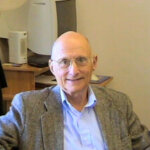
John M. Rosenberg was the Director of Appalachian Research and Defense Fund of Kentucky, Inc. (AppalReD), since...

Ronald S. Flagg was appointed President of the Legal Services Corporation effective February 20, 2020, and previously...
| Published: | April 14, 2026 |
| Podcast: | Talk Justice, An LSC Podcast |
| Category: | Access to Justice |
Holocaust survivor and longtime leader of the Appalachian Research and Defense Fund of Kentucky (AppalRed), John Rosenberg, joins Talk Justice this week. LSC President Ron Flagg speaks with Rosenberg about his memories of Nazi Germany, becoming a lawyer in the United States, working for the Department of Justice Civil Rights Division and eventually earning the trust of his Eastern Kentucky community. Rosenberg’s legal services work spanned almost three decades and impacted countless coal miners and Appalachian families.
John Rosenberg:
We thought there’s some real legal issues that we need to resolve, a lot of things that we need to do that we could help with. So we said we’ll do it.
Announcer:
Equal access to justice is a core American value. In each episode of Talk Justice, an LSC podcast, we’ll explore ways to expand access to justice and illustrate why it is important to the legal community, business, government, and the general public. Talk Justice is sponsored by the Leaders Council of the Legal Services Corporation.
Ronald S. Flagg:
Hello and welcome to Talk Justice. I’m Ron Flagg, president of LSC and your host for this episode. Today, I’m honored to be joined by really an incredible guest, John Rosenberg. John led Appalachian Research and Defense Fund of Kentucky, also called Apple Red Legal Aid for three decades. Though his accomplishments and experiences as you’re about to hear extend far beyond this. John has an amazing life story. He remembers watching the Nazis destroy his synagogue in 1938 on the night now known as Crystal Knock. He was seven years old. The following day, his father, a Jewish school teacher, was arrested and taken to Buchenvald concentration camp, along with 125 other men from their community. In the 17 days he spent there, 25 of the men died. Upon his father’s release, the Rosenberg family was given 30 days to leave Germany. They spent a year in an internment camp in Holland, then came to the United States to start a new life.
And the rest of John’s story is, I think, even more remarkable than his beginnings. John later joined the US Air Force, then studied law at the University of North Carolina at Chapel Hill. And after graduating, went to work at the Department of Justice Civil Rights Division and made significant contributions to civil rights through his litigation work. But that, again, was not the end of the story, but really a new beginning. For then, John and his wife, Gene, made their way to Eastern Kentucky in 1970, where John helped establish a new legal aid organization. Through his decades of leadership at AppleRed Legal Aid, he elevated the quality of life of countless Kentuckians, whether it was workplace safety for coal miners or divorces for women facing domestic violence. John’s legal work changed the circumstances of many low income Kentuckians. Those who know John well speak of his unwavering commitment to bettering his community and his belief that even the poorest Americans deserve access to excellent legal services.
John is being awarded with the 2026 ABA Medal for his exceptionally distinguished service. He was also awarded an honorary doctorate by the University of Kentucky in recognition of his profound impact on the Commonwealth. We have a lot to talk about today, as you can tell, so I won’t delay any further. John, it’s always a pleasure to speak with you. Let’s start here. I mentioned your family’s escape from Germany following Crystalkok. Hard to believe, but that was 90 years ago almost. Nearly 90 years later. What are your most striking memories of that episode?
John Rosenberg:
Well, I think when we were awakened in the middle of the night and brought out into the courtyard and the Nazis took all the prayer, but we were in the building adjacent and sort of perpendicular to the synagogue itself. We lived on the second floor of that building and they brought the Nazis then in the middle of the night, banged on the door and took us out into the courtyard. And then they brought the prayer books and the Toros, five books of Moses that are covered that are in every arc in the synagogue, out in the courtyard and made a big bonfire while my mother was holding my brother who was then about two and a half, three. He was born in 1936 in his arm and hang onto me. And then they dynamited the synagogue. And we’re told they dynamited almost every community. They burned the synagogue down.
But here we were, they say the building was close to a hospital and so they didn’t want to … They were afraid if they burned the synagogue down, they damaged the hospital. In any event, they did dynamite the place. And I went in the next … And then of course, I remember when we went back up into the apartment, they had pretty well demolished it. It was really unlivable, including the commodes, water faucets, and things that were on the wall. But my parents then put a mattress on the floor in the kitchen, and that’s where I was asked to spend the night. I remember that pretty vividly. The next morning when I woke up, there was a knock on the door and these two Gestapo agents came to rest my father. And my mother, like a good Jewish mother, said, “Well, can you wait a minute before you take him?
I want to make him a sandwich so he’ll have some fruit subject with him.” And they waited just a little bit, but then they took my dad and took it down away. And my mom finished the sandwich and gave it to me and asked me to run down the street and follow them and give him his sandwich, which I did. And then they took him away.
And I’ve told the story. The next day, I went into the synagogue and saw that actually the choir loft upstairs pretty was halfway down. I have a PowerPoint, but we got some photographs of what the inside of the synagogue looked like. But in any event, my mom then at that point, because the part building was unlivable, she took my brother to a family who had our former babysitter who used to be upstairs, family named Joseph, and then she sent me to Frankfurt, Germany to my father’s sister that had a son my age. And then mom stayed in different people’s homes while my father was at the concentration camp and for several days. And they were trying to get the authorities to help bring these men home. And fortunately, usually when I talk about this run, I tell people this was before this final solution before the Germans and Nazis decided to kill all the Jews.
And as you mentioned at that point, they gave a dad … Actually, my father and his brother came to his sister’s home in Frankfurt, Germany then, and they’d been shapebald and then brought me home. And as you mentioned, we were able to get to Holland because another sister was married to a businessman there and he was able to get the legal papers we needed to immigrate to Holland and spent that year in the detention camp. And the detention camp was a place that was sort of an overnight hospitalary for people who wanted to come to the United States on the Holland America line. During that year, my father saw these kids running around. He started a school for … So he started school for kids. There’s more to the story, but that’s probably enough for now.
Ronald S. Flagg:
Well, it really is an incredible story and is worth several books and movies in and of itself, but we’ll wait for those at a later time because I do want to move on to your incredible career that followed. And at the heart of your career as an attorney, both your civil rights and legal services work has really been about lifting people up through equal access to the protections of law, all of which sounds very theoretical and esoteric in comparison to what you’ve just described. Did your career follow, chronologically, it followed from your childhood experiences, but did your childhood experiences inform your career at all? Or was it law school that set you on the path you followed? Or did your passion for helping others through the law reveal itself somewhere else along the way?
John Rosenberg:
It’s a hard question to answer. I mean, I think that to some extent, or maybe to a great extent, that history in Germany and coming here was a great motivator. My mom and dad was ever so grateful to be in this country. We were in New York for six months and my father couldn’t find work. For some reason, they didn’t tell him how to become a school teacher. My mom was a maid and through some other connections, he learned that the communities in Spartanburg, South Carolina, and Gastonia, North Carolina didn’t have a rabbi, and he was prepared to be sort of a para rabbi. And so he went to Spartanburg and started riding the bus on weekends and every other weekend, served those two communities. And during the week he started even sweeping floors in a textile mill as a janitor. And after about six months, he saved enough money to bring us to Spartanburg where we were there for six months.
And then we moved to, later we moved to Gastonia, North Carolina, where became a office manager for a friend who brought a factory over from the United States. But in any event, the point of this is that they really had to start their lives over. It’s an immigrant story. And we were pretty poor. At first, one of the early presents I wanted was a bicycle so I could start to sling newspapers for the Spartanburg paper. We were always trying to make some extra money, and we did, and I did, and continued all the way through when we moved to Gastonia. So what I was kind of getting around to is I always remember when we had this little apartment after the war started, they were of course treated. They were aliens. And I remember we have a document when my mother wanted to visit her sister in New York.
She had to go to the US Attorney’s office to get a permission slip to get on the train to go to New York. Nevertheless, at one point, the FBI came in and said we couldn’t have a short wave receiver as alien. So my father had a monocle. I don’t know why he got it. They took that, but they were a little embarrassed because like a lot of other immigrants, my parents had Franklin Roosevelt’s picture on the wall and they were feeling a little embarrassed about it all. But in any event, what I’m getting around to is that my parents were … They never let us forget how important and how wonderful it was to be in this country. And so when they studied, they studied for their citizenship finally in the late 40s to become citizens. You had to learn civics and be prepared to take an exam.
And we finally did go in 1945 to federal court Charlotte to have them raise their hands and become citizen of the United States. Really a wonderful thing to see is when any of these citizenship proceedings in federal court, Jean and I saw one in San Antonio, Texas a few years ago, was just so moving. But after my parents had become citizens that day, we went across the street onto a place called the Piedmont Diner, and we had lunch, and it was the first time the family had ever eaten out. It was the big day of becoming citizens. So I guess it’s sort of a long-winded way, but we’ve appreciated being in this country, and I think we’ve always realized that … And my mom and dad were both pretty sociable.
Judaism, my Judaism, and Judaism teaches you that justice is the most important thing that we can do, and we want to do what we can to help the orders to repair the world. And so I think that’s been part of the history of our family history. Then you ask at what point … I didn’t know, I’m sure when I went off to undergraduate school, I had a tuition scholarship go to Duke because one of the Duke trustees was in Gastonia and said, John should go to Duke, I’ll get your tuition scholarship. Then I went to … From there, I spent a year … I was a cam major and I spent a year in the working for a chemical company. And then at that point, at some point I realized, I was thinking again, I think when you grew up in the south, you sort of take … My parents would say, probably wouldn’t matter where we landed, but during … I grew up at a time when segregation was the entire south, we had a caste system was segregated.
And in the back of my mind, I’m sure at some point I was worried about that, but I would have to skip forward in my Air Force days, Ron, to really answer the question. When I was a navigator in England, at one point, we were bringing a plane back to this country and little SA 16 and one of our passengers was a fellow named Abe Jenkins, who was, I think, the only black officer on our base. He needed to get a ride back to Charleston, South Carolina to attend a funeral for his brother. So when we brought this plane back to the Grumman Factory in Long Island, both of us were headed home and we were in full uniform and got on the train in New York. And when the train got to Washington, Abe said, “Well, I’ll see you back in England.” And I said, “Well, where are you going?
” And he said, “I’m going to the back of the train with a black sit.” And in retrospect, I think that was a very profound thing that hit me maybe more harder than I realized. But after that, I ended up going to the law school on the Gi Bill and had the good fortune to become friends with a fellow named Julius Chambers who ended up being the lawyer in charge of the NACP Legal Defense Fund, but Julius was number one in our class. And University of North Carolina Law School, like a lot of other law schools, was still a pretty conservative place. They were picking me up five blacks in the school who were in our class, but I became good friends with Jius and tell you a little more about that a little bit later. But I think that, again, the Abe Jenkins incident kind of inspired me to see what I get at that point, to wake up a little bit and see what I could do in a small way to help undo this caste system in the South.
Ronald S. Flagg:
So after law school, you ended up at the Civil Rights Division in Washington?
John Rosenberg:
Yes. Yeah, I was able to … I had to wait for about a month. I wanted to go to work Division, but at that time, I started the antitrust division because you had to get a personal interview with John Doerr, who was then then first assistant. And John was busy pretty much going back forth to University of Mississippi trying … When he got James Meredith to enter University of Mississippi, and John was with him and stayed with him initially, and then got some other civil rights division attorneys to stay with, literally live with James Meredith for the initial time he was enrolled. So it was hard to wait to get an interview, which I finally did on a Saturday morning when John was own. And then I got a job with the Division in 1962 and stayed there till 1970 as a trial lawyer and a deputy and Section chief really had a career in the department.
It’s a wonderful time and met Jean during that time. She came as what we now call paralegals. We called them research analysts, but it was a grand experience for me. I learned to try in big cases, small cases. I was involved in a number of major civil rights litigation, and it was really a wonderful opportunity for me to become a very good trial lawyer and have great respect and it’s quite something to be able to represent the United States in court with that history of ours. “That’s what you’re doing. “And at that time, John Doe had a saying,” We always cut square corners. We did it the right way. We worked very, very hard, and he was a fine trial lawyer himself. Basically, we use it. His system of getting the facts and putting together … It was a great experience. I mean, I could talk about the cases I did for a long, long time, but the final, before coming here, Jean, I actually moved to Houston five months.
I tried a school case with it to desegregate the Houston school system. I was actually chief of the criminal section at that time, but John wanted me to … Or I started it under … I think John and the Republicans came in and Jared Leonard was the assistant attorney general, and that was the last case in which we asked for busing because they were busing black kids across past white schools and white kids across black schools. So we had this major trial in front of Judge Conley in Houston, and then we came back and he became pregnant. Next year we had our son at that point, it looked like with the Nixon administration was kind of backing off on school desegregation and some of the work that we’d been doing. And so we decided at that point that we would leave the Division and went on a big campy trip.
Ronald S. Flagg:
Again, we could fill several books and movies about that phase of your life. It strikes me that much of the history I read from the time I was young up till now, you actually lived firsthand. So this is fascinating. And from the civil rights division that you’ve just described, spoiler alert, you end up in Kentucky at a brand new civil legal services office. And the first question is, how the heck did you go from DC to Kentucky, and what were those early days like in getting your civil legal aid office off the ground?
John Rosenberg:
The way we got here is that after we left, Jean and I, we hadn’t done this before. We went on a big tent camping trip up the Northeast Coast and to visit national parks from this country and then up to the Canadian National Parks. It was had a 66 Pusho and we had a new infant and we tend camped. And while we were … I had actually interviewed with a couple law firms that I thought were fairly progressive, one in DC and one in Atlanta without any clear idea of what we were going to do when we left. We were just a young couple with a new baby, and I figured I was a pretty good lawyer at that point, should be able to find a good position. We had decided exactly what we were going to do. So we went on this big camping trip.
And while we were on the trip, I don’t know how he got in touch with us by phone, but one of my former colleagues in the Civil Rights Division was a fellow named Terry Linsner, who had become, at that time, the head of legal services in the Office of Equal Opportunity at OEO. And Terry called and we finally got ahold of Terry. He told me about this group in Charleston, West Virginia and in Prestonsburg, Kentucky of all places that were doing public interest work, but were having some financial issues. And he was interested in funding that group to look at more of the symptomatic issues of poverty in Eastern Kentucky and West Virginia and the coal fields and that they needed a new director in Kentucky. And he said, while you were … And we were going to go visit my parents for the Jewish holidays in early September.
And he said, “Well, while you’re on the way, why don’t you drive through Charleston and maybe Prestberg and talk to these folks and see what’s going on? ” Because I think doing legal services work, something that might appeal to you. So we did. So there’s a story, we drove into Presidentburg at night, there’s campground outside called Jenny Wiley State Park, still there. It’s gotten much larger. And we put our tent up and then the next day we visited with … There were these folks … Well, we first went to Charleston and there was a lawyer named Paul Kaufman, who had been in the legislature of a progressive fellow who did a lot, wrote a lot of the workers’ comp bills for Myers in West Virginia. And Paul had recruited two or three other lawyers who’d worked with him. He was interested in energy issues and climate change and larger policy things, and especially those issues that affected coal miners, the single economy that was the problem we started in that area.
So we met with Paul and some of his folks, and then we went down to Prestonsburg, and there were a couple of lawyers who had worked with a group called Mountain People’s Rights, and they were more interested really in doing organizing work with the welfare rights folks. Any event, we met them, and then we went and headed down to Letcher County and met Harry Caudle who wrote this very famous book called Night Comes, The Coverlands, and drove over to a little place called Blackie, Kentucky in Letcher County and met a wonderful man named Joe Begley. Joe has a chapter in Studs Turkel’s book, Working. Joe owned the grocery store there, and Joe sat us down and said that the little people don’t have lawyers and they need them, and they especially need them because of this broad form deed, which was a mineral deed that was made in 1890s, 1900s, in which the landowners back then who were living up these hollers, transferred the right to the minerals, to these coke, to the companies or their folks, the company representatives, thinking the only reason any of those folks back in the late 1800s needed any coal, they’d go up the side of the mountain and dig enough coal for the winter and didn’t realize that the coal under the ground would someday be worth a lot of money.
And so they easily signed these deeds, many of them with Xs. And fast forward a hundred years, the issue became … And that’s what Joe Begley wanted to talk about, which you need to see, is that the companies at that point were doing strip mining, and they claimed the right to mine that coal, even though strip mining was not in existence at the time these deeds were executed. Anyway, this was called the broad form deed and Joan. There were lots of issues around coal mining and black lung disease. And we spent a lot of time with him, his wife, Gaynell was a school teacher who got the master’s degree in University of Chicago, and they ran this small grocery store, and they had a son who was just about ready to come out of the Marines, who had gone to law school. Anyway, after talking to all these folks, Jean and I drove home down to Florida where my parents had retired, and on the way we thought, gee, there’s some real legal issues that we need to resolve, a lot of things that we need to do that we could help with.
And so we said, why don’t we all do it? And so after we visited, after then we said, okay. So then we came around. The next thing we knew, we came back and I came back down to Prismsburg, looked for a place to live in an office that we could rent. And that’s basically how we got there.
Ronald S. Flagg:
This is all, again, unbelievably fascinating. What I’d like to get you to talk about, John, is sort of the change over time in the reception that you got in your community. Obviously, I’m sure the people you represented were happy to see you, but others maybe not so much. So if you could talk about the community reception you got, you received with regard to your work at the beginning, around 1970. And I know that by 1991, you were inducted into the county’s Chamber of Commerce Hall of Fame. So my guess is that something shifted over those 20 years. Could you talk about that?
John Rosenberg:
Well, you do become members of a community. And I think that when your kids are old enough to start in school and your neighbors, everybody sees what everybody wants is a better education for their children, which is part of all of this. But to answer the question, when we first came, it was hard. And one of the things I’ll always remember is that I had rented a office space from a good fellow, very nice insurance broker who had an office card. His name was Clark. And the day or two before we were going to move in, he called me on the phone and said, “John, I can’t rent to you because I lose all my business.” And I said, “What?” He just said, “That’s the way it is. I’m sorry.” So we actually rented a cabin at Ginny Wiley State Park and I had a young woman, a secretary Great.
And we had a desk and we said we’re going to start seeing clients here at Jenny Wiley while we’d find another place to have as an office. And the other incident that people have written about at times, the bar Association was really not happy for us to be there. I think part of it, this was coal country and the coal industry had their owners, lawyers who worked with them had a lot of influence and they were lawyers said, “Well, we can take care of this low income population. We’ve been able to do it for many years,” which was not quite the case. But you probably remember when we first started to hire this thing, the LSC rig, at that time, it may have been OEO really. It was before 1974, but we were trying to set up a system where we could fairly set clients away who were not eligible for our services and have a fair system for doing it.
So I called the president of our Association and said, “We need to figure out a good way to send out clients who we say are not eligible financially to the attorneys to have a listing of some sort that we could do that. ” And he said, “Well, that’s a good idea. We’ll have a bar meeting and I’ll let you know what we come up with. ” And I said, “Fine.” So next thing I know, the Bar Association had passed a resolution and we shouldn’t be practicing law there without their approval. And so that’s sort of another way of the kind of thing that we had to deal with when we got started. But I think what happens is that we, over time, we start representing more and more people and helping them with their data with the problems that they have and the lawyers, the judges see the kind of work that we were doing.
In fact, I remember one of my first, after a couple of years when either OEO or LSC came down on a monitoring visit, the circuit judge was a pretty conservative guy, and I think actually owned a coal miner two’s name was Holly Conley, said, “Well, if I ever was in trouble, I’d get one of those apple red lawyers to help me. ” I think those attribute to the folks that we had. And so I represented it in the earlier years, even though I was administratively in charge, but still tried quite a few cases. And one of them involved an OEO election for welfare rights group. They were supposed to have an election and set up a system that was, I think, related to one of the new healthcare programs, but they had not properly set up the election. We went to Frankfurt, Kentucky, and we got an injunction against the way they’d done it.
They represented a wonderful group of people in Pike County. It was over an hour from Prestonsburg in a case where they wanted to strip line this holler over the homes of a lot of these people. And the folks who got in touch with me, her name was Edith Easterling. She had children and she was a vista worker at one point. And in fact, there had been an incident some years earlier that there was actually, I think, a series in the New Yorker where when there was some vistas, the local prosecuting attorney came into their home and picked up a lot of literature that they had laying around. Some of it had to do with social … Some of it was just activist literature. There was some information about … I don’t really know the details of it anymore, but involved whether it was socialism, but it was just social justice kind of work they were doing, but they ended up arresting the vista workers and this guy’s name was Thomas Ratliff.
And the case ended up at one point in the House on American Activities Committee, went all the way and went to the Supreme Court and they finally got a plaintiff’s verdict and the fellow who was one of the fellows involved went to law school, ended up going to law school. They got a money judgment. Anyway, that’s just an aside, but Edith still had got called me about this stripbine operation and we ended up having a four-day hearing in Frankfurt, Kentucky, contesting the right of the coal company to strip mine this property. It was broad Form D, but it was really … We showed that these mine workings, they previously mined us out. There are a bunch of people living underneath, living in the holler itself, down below this mountain that had been previously mined out. And we demonstrated that those mine workings from years ago were filled with water.
And if they strip mined, all that water would be coming down on top of the people who lived there. So we were able … It was one of the first cases in which we were able to stop an operation like that, where we had a hearing officer and got quite a bit of publicity. The amazing thing was this about like a three hour drive from where they lived to Frankfurt, and they came every day. I stayed up there while this hearing was going on and Edith Easterling’s daughter who had gone up there every day with us, she ended up watching this process and then decided to become a lawyer and went to law school. He came out, worked for us for a while, and then went to private practice, later married a doctor. And so there was a lot of publicity, but people were very supportive, even though it was cold operation.
And then I always remember one of my first clients was a social security client who had been turned down and I went to a hearing and he described as a minor how he’d walk into the … It was a mile and a half at one point to drive to walk in 28 inch, called 28 inch top, which meant that he had to bend over to walk all the way into the face of the coal mine and there start digging with a shovel. Well, the entire time he walked was unpaid, but he went all the way to the face to start digging, and that’s where he worked. And he described this to the social security hearing officer because he was at that point proving his disability. His name was Gillen. I always wonder … I saw his daughter here not too long ago. The funny thing about it was after it was over, Mr. Gillum wanted to give me something.
I said,” I’m sorry, I can’t. “He had a shirt that he wanted to give me. I said,” I’m sorry we can’t take this sort of thing. “About a week later, his wife showed up and said,” John, he can’t give you a shirt, but I can give you this shirt. “And so we put his shirt, I put it in the attic of the house. I think about 20 years later, I brought that box down. I don’t think I finally wore the shirt. But anyway, those were the human sides of the clients you represented. And then I also quiet here in a minute, but this broad form deed became really a big part of what we were doing. And it’s a story that also has been told in one of our little programs, but it was like a 20 years and we ended up with a constitutional amendment changing the interpretation.
Basically, it was two legislative sessions. We had many cases in which unfortunately the courts in Kentucky kept rejecting our theory and we finally were able to have a grassroots group help us and got a constitutional amendment, which we had written, which said that if the deed itself didn’t describe the kind of nining that was in existence that it referred to, it would be presumed absent evidence the contrary that it’s the kind of binding which was existent in existence at the time the deed was executed so that if the deed was executed at that time there was no strip mining around, it would not allow strip binding court. So I could talk about a lot of this stuff for a long time, but more recently before I stop, I should mention when we mentioned the social security case, because you’ll be glad to know about legal services involvement in this, Ron, is that we had this terrible situation about 10 years ago, more than that, 15 years ago where a local social security lawyer had paid off the administrative law judge and this fellow himself, the lawyer had already made over a million dollars in fees in social security cases and disability cases, and that wasn’t enough for him.
So we paid off this law judge and the result was the law judge each month or so would be given … Erich Khan was this guy’s name and Khan gave the judge and he would agree on which of the cases came up every month and the judge approved all these cases. And when all of this came to light initially through Reporter of the Wall Street Journal, that there was a hearing in Congress, finally the Social Security said for these 5,000 people who’d been affected by this guy, that they would all have to have their cases reviewed. And initially they were going to tell them they had 30 days to get the evidence together or they’re going to lose their benefits. And so this was an enormous undertaking from the bar. And we at Apple Ret started recruiting lawyers. There’s actually a case, there’s a video production called the Big Con, C-O-N.
It really was a con in which the lawyer that I’ve been working with for many years after I left AppleRed at Pillar Store for sort of the year I met as a private attorney, but it really started with the recruiting efforts by those of us at Apple Red and we set up a system so that the clients who were at Social Security, we recruited lawyers from all over the country. I think in the end we recruited over 150 lawyers, some of whom came to Prestsburg to have hearings pro bono because this guy had already gotten all the attorney fees. And so these were pro bono cases that they handled and to get these folks their disability and frankly, it’s still going on. We’re still in some … We went through Commissioner O’Malley, who was the last commissioner, did some really good work, but it goes on, but it was one of the situations where I think without a legal services program to get this whole thing underway and where the client faxed medical reports to the lawyers in California or in Illinois.
And I spent some time with the Social Security Administration because they were just starting hearings by telephone. They hadn’t done that before in any event. They were trying them out in Atlanta, but it was a huge area in that our congressman at that time, How Rogers was quite helpful, although we have our political differences. He really had helped a great deal in trying to move this process along so we could get these people back their benefits. It was a terrible situation and one in which we can take a lot of pride for what legal service, for what we did at.
Ronald S. Flagg:
That’s a great segue, John. And I recall those cases very well because when they started general counsel here at LSC and we had a lot of conversations with you about recruiting all those pro bono lawyers. During your time in legal aid, which now goes back over 50 years, LSC has weathered several challenging periods. Given your experience, how do we keep the focus of the public conversation surrounding civil legal aid on the real human impacts of access to legal help and not let those conversations be derailed by partisan politics?
John Rosenberg:
Well, I think LSC deserves to pat itself on the back a great deal over the last few years, because I mean, if you just look at what has happened in Congress first, that last time, as far as I know, for many years, every year, some legislator or some representative would try to make a motion to defund legal services after each session started way back with what President Reagan was appointed and he tried to zero us out. That was a difficult time. So LSC has certainly gotten much better in trying getting the message out. I think, again, it’s really having connections in the community where you are, where folks realize that how important having representation is. More recently, I’m sure you know, I know LSC had this disaster report for disaster assistance. I know at Apple Read in the last few years in Eastern Kentucky, we’ve had tornado and we’ve had damage from several bands flood and just in helping FEMA appeals and in helping people try to get their lives back together after one of these floods.
And I think there’s been now a real recognition that having legal services available to represent these people in our area, it’s one of the highest poverty areas in the country, it’s not the highest in the region. So that when we have one of these natural disasters, it’s just essential that these folks have help and a lot of that help, whether it’s property issues or FEMA appeals, the same things … That’s just an example. I think the same thing can be said in domestic violence cases. We have unfortunately more domestic violence than we really keep up with, but I know at home we’ve always had … And we have a domestic violence shelter in recent years. In fact, we helped start the first shelter way back when in Prestsburg, Iowa was. I think the community and having those connections with other organizations that are working to the same end at home, I know we were working with groups that are trying to create a central hub, prepare for disaster, but the people who are doing that include representation from legal services.
And I’m hope at home, Apple Red, I’m really proud of the fact that we’ve got more and more lawyers who are from the region who come, who are living, who are there and are doing the good work. So I mean, to me, I think the answer is to be part of the community and to some extent, you have to pat yourself on the back is to have publicity, but have people be aware of those needs. And I know at Apple Read recently, we’ve had some grants to help veterans directly, to help more veterans. We’ve done a lot of work in the expungement area. I mean, you can really change the life of a person who’s had a, especially bet home. There’s still some strictures you can. If you’re a felon folks, impossible to get … If you have been a felon to get an expungement, but those are areas where in our area, I know we’ve done a lot of work together with Goodwill and Goodwill’s been a great partner in the expungement area.
I think those are the kinds of things that I think we could all feel good about. No, we have to keep getting better at. And I think that it’s been great to be part of that movement. And I think pro bono help. The other thing is I should forget, I think we’ve really gotten much better at involving the private bar and in letting them know that pro bono services are important, that we can’t … This justice gap that you’ve been talking about now in recent years, the large number of people who don’t get help and who we can’t help. I hope we can help the ones that really … I don’t know if there’s a foreclosure or there’s a family being affected as far as I know at home, those folks are going to still get help, but there are lots of situations where we can’t get help.
And I think it’s just crucial that people become … That that’s part of who we are, part of what legal service is all about, part of why I’ve been so proud of what my program has done and what other programs have done. And project directors I’ve had a chance to be with over the years. It’s been terrific. And I’d like to say I would like to say I hope I’m still a part of it.
Ronald S. Flagg:
Well, you certainly are. John Rosenberg, thank you so much for joining me today. More importantly, thank you for your profound contributions to your community, your state, the legal profession, and access to justice. You are a true hero. I know many of us at LSC and beyond are inspired by your work and honored to know you. Thanks to the listeners for tuning into this amazing episode of Talk Justice. Be sure to subscribe so you don’t miss an episode and stay well.
Announcer:
Podcast guest speakers views, thoughts and opinions are solely their own, and do not necessarily represent the Legal Services Corporation’s views, thoughts, or opinions. The information and guidance discussed in this podcast are provided for informational purposes only and should not be construed as legal advice. You should not make decisions based on this podcast content without seeking legal or other professional advice.
Notify me when there’s a new episode!
|
|
Talk Justice, An LSC Podcast |
Join us as we explore innovative ways to expand access to justice, bringing together legal experts, technologists, business leaders, community organizers and government officials for thoughtful conversations about ending the access-to-justice crisis.