
|
|

Father Pius Pietrzyk, O.P. was first nominated to serve on the Board of Directors of Legal Services...
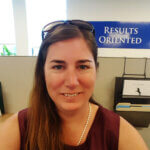
Meghan graduated from Colby College. After teaching in New Orleans post-Katrina, Meghan worked for Catholic Charities, American...

Will A. Gunn is the Vice President for Legal Affairs and General Counsel for the Legal Services...
| Published: | December 23, 2025 |
| Podcast: | Talk Justice, An LSC Podcast |
| Category: | Access to Justice , News & Current Events |
Meghan Foley:
It’s all about the connections that we’re making, not only with our congregations and with our communities, but with each other as disaster management professionals and creating those partnerships now and having conversations now before a disaster hits.
Announcer:
Equal access to justice is a core American value. In each episode of Talk Justice and LSC Podcast, we’ll explore ways to expand access to justice and illustrate why it is important to the legal community, business, government, and the general public. Talk Justice is sponsored by the Leaders Council of the Legal Services Corporation.
Will Gunn:
Hello and welcome to Talk Justice. I’m Will Gunn, Vice President for Legal Affairs and General Counsel at LSC. Today, we’ll discuss making connections between faith communities and legal services. For many of us, our faith provides us with guiding principles, one of them being to help those in need. Personally, as a follower of Jesus Christ and a member of a non-denominational Christian church, I found it very fulfilling that the work that LSC supports aligns with my own beliefs and values. Civil legal services can help keep families in their homes, protect victims of domestic violence, and help communities hit by devastating disasters to rebuild and recover. When people face big problems like these, many of them will turn to their priest, their pastor, their rabbi, or imam, long before they would ever think to contact an attorney. Fostering connections between faith communities and legal services can lead to powerful collaboration and make profound differences in people’s lives.
Joining me today to discuss this, we have, first, Meghan Foley, the National Director of Emergency Disaster Services for the Salvation Army. We also have Father Pius Pietrzyk, a priest of the Order of Preachers, who currently serves as the vicar for administration for the Dominican Province of St. Joseph. Father Pius is also vice chair of LSC’s board of directors. It’s a pleasure to have both of you with us today. Meghan, I’d like to start with you. I understand that your path to this work began in 2005 around Hurricane Katrina. Tell us about how your disaster work brought you from Baltimore to New Orleans and to other locations in Louisiana, and then finally on back to the Washington DC area.
Meghan Foley:
Absolutely. So my family is actually interestingly connected to New Orleans. And so when Katrina hit the city, I immediately wanted to go and help and immediately wasn’t the time for that. But I ended up getting my teaching certificate in Florida and felt very called to be a part of the education reform that happened in New Orleans post Katrina, and that was connected to the recovery that the city went through after the storm. So I didn’t arrive in New Orleans until 2008, three years later, and immediately noticed that the city was not back to normal and was so surprised that it took so long for recovery to happen. And it really changed what I wanted to do in my life. And I started asking all sorts of questions of why was it taking so long? And unfortunately, Louisiana is very prone to disasters, both human-made and natural.
And in 2010, the BPU oil spill happened and I had the opportunity to work on that recovery. And once I saw that from the beginning, I was in the incident command post a month after the explosion. Oil was still free flowing in the Gulf and saw this massive operation in all of these people wanting to serve and wanting to help. I knew that that’s what I wanted to do in life. And I really never looked back from a career in disaster management after that. And so after the BP oil spill, I worked with Catholic Charities on the floods in Baton Rouge in 2016, briefly worked for the American Red Cross, and then moved to Palm Beach County, Florida to work with the United Way on Hurricane Irma recovery. And then again, I felt called to both come home. I grew up in the Washington DC area and felt called to use all of that experience that I’ve gathered over the years during all these different disasters to bring that experience to the Salvation Army and support this national disaster program now.
Will Gunn:
So you’re deeply steeped in disaster response?
Meghan Foley:
Yes. Yes.
Will Gunn:
Well, can you share with us what role civil legal services can have in helping individuals and communities to recover from disasters?
Meghan Foley:
Absolutely. I really first learned about the importance of legal aid societies during the floods in 2016 in Baton Rouge. I was leading a team of 15 case managers in one of the hardest hit areas in the floods in Hammond, Louisiana, about 45 minutes northeast of Baton Rouge across the lake from New Orleans. And my case managers kept saying to me, “My clients can’t even prove ownership of the house or the bills aren’t in their name.” And so there were all these barriers we were coming across to get our clients the help that they needed and the resources they needed to recover and rebuild. And they kept looking to me to have the solution have the answer and I didn’t have the answer. It was very frustrating. And so we really just had to do a lot of research and ask around. And we found legal aid societies that then said they would offer free legal advice to our clients to help with all of these barriers.
In isolated rural communities like Louisiana, secesion issues can be huge barriers to proving ownership because someone will inherit a property from their grandparent, but it might be them and a dozen cousins that all inherit a part of the property. But one of them has been paying the taxes and paying the electric and living there. It’s still not legally in their name. And so there’s still not legally the owner. And the amount of help that free legal help can provide to get over those barriers is just tremendous and is a necessary connection and partnership in disaster relief.
Will Gunn:
Well, thank you. Father Pius, you’ve been on the LSC board of directors now for 15 years. What if your background as a Dominican priest have you brought to this work? Thank
Father Pius Pietrzyk, O.P.:
You, Will, for the question, but I just want to very quickly, if you don’t mind, reinforce Meghan. Sure. As you know, I was co-chair of our Disaster Relief Task Force at the LLC, and this was 2018, so a few years after the floods. And we had heard the same thing about the need for the disaster relief community and LSC to forge some good bonds together. And that task, I think one of the most important things we’ve done at LLC, and it’s not because I did much work on it, but was putting that disaster relief task force together and the incredible people that we had on it. I can’t remember if we had somebody from the Salvation Army. I think we did, but we certainly had lots of other faith groups on it, including Cal Charities and St. Vincent DePaul. And the faith communities and these organizations are absolutely essential in long … Disaster relief and long-term disaster recovery.
So a huge thanks to the Salvation Army for their really very good cooperation with our grantees at legal services and serving the needs of those who have suffered a disaster. And as your question, the church and my own formation as a Dominican especially has focused, especially on the theology of the church and the great social teaching of the church. I think one of the great gifts to the world that the church has provided over the last few centuries is that sort of comprehensive social teaching, especially as it relates to justice and the rights of individuals that are protected and that sensitivity for the individual rights of people and the obligation of societies, especially seen in their governments, to respect and promote and provide for those rights and those things that are owed to people in justice. And as well as the church’s understanding, very strong understanding of the individual dignity of every human person that whether poor, rich, or as the scriptures remind us, a Greek or Jew, male or female, slave or free, all are won because of our common baptism together, that respect for the individual person and the rights that they have and the care for them has always been essential to me.
And I will add to that, not just the Christian, but the Judeo-Christian focus on the poor, the Hebrew or the Anawim, the poor ones, and the importance and our obligation to service to those who are poor financially, yes, but also spiritually and in other ways. But that important obligation that we have, moral obligation that we have as human beings to tend to our brothers and sisters who suffer want and need has been essential to my own role in legal services and helping me and do the work that I do.
Will Gunn:
Well, thanks for that. I’m interested then, since you’ve been working in this access to justice movement or in community, has that work in any way informed or changed in any way your perspective on the priesthood?
Father Pius Pietrzyk, O.P.:
Absolutely. 100%. It’s easy when you get into discussions of theology, especially Dominicans. We do theology as kind of our thing, but it can tend to a sort of abstraction, a sort of removal from the day-to-day life. And in my own life as a Dominican, much of my life has been spent teaching and forming, especially young seminarians, soon to be priests in ministry. And it’s helpful to remind them that there is a particularity, a reality to the teachings that we do, especially when it comes to service to the poor. And my own experience of the stories that I’ve heard, my interactions with our grantees and their clients reminds me and brings home to me a reality of what goes on with the poor and the importance of their individual circumstances. And I’ve really worked to bring that perspective to the students I teach so that the poor are not simply an abstraction or just a concept that they’re people and that their part of their ministry is not just educating, providing these abstract concepts to people, but giving them the practical tools to assist in the communities in which they live, to see the people in their communities and their needs, not just from the spiritual dimension, but from a holistic dimension of who they are in their totality as a human person of which, of course, in the church, we have a special role in the spiritual side, but should never ignore the other aspects, the social and financial.
And so my role with legal services and my interaction with the poor that we serve has really helped inform that in the ministry that I do, and especially in my ministry, in teaching disseminarians.
Will Gunn:
Thank you. Last year, as you know, LSC created a faith community outreach toolkit to help spread the word about legal services to faith leaders and congregants around the country. Why do you see it as important that we make connections between faith communities and legal services organizations?
Father Pius Pietrzyk, O.P.:
I think as Meghan will tell you, I think, I hope, when it comes to disaster recovery, one of the things that we have learned over the years is that the best tool in disaster recovery is not just kits from the federal government. The best way, if you want to recover well from resastering, you need solid communities. You need good community interaction and involvement from people, from everyone. And an essential part of many, many, many, almost all of our communities is the faith community, the churches and temples and synagogues that are the anchors for our communities. And so we know from our grantees that if they want to reach out to where the poor are, if they want to touch the poor, if they want to find out what the problems are that are occurring with the poor, they need to be in contact with where they gather together, or I should say, where they congregate in their congregations, which is a lot of the churches.
It’s not everything, obviously, but if you’re a legal services entity and you are ignoring the faith aspect of your community, you’re ignoring a huge swath of the poor people that you are called to serve. And so this is an important way for our grantees to best serve their people because that’s where their people are.
Meghan Foley:
If I can jump in for just a minute, Will, I loved how Father started that conversation about it’s more than only a kit from the government. And what I’ve learned doing this work, doing disaster management from the nonprofit space is that we can put up as many resources as we want in a resource library on the Salvation Army website, but it’s going to be out of date as soon as I put it up. And if you’ve never responded to a tornado or you don’t know how to start a mass feeding operation after a hurricane, that piece of paper is useless. It’s all about the connections that we’re making, not only with our congregations and with our communities, but with each other as disaster management professionals and creating those partnerships now and having conversations now before a disaster hits.
Will Gunn:
Thanks. I appreciate that. And listening to both of you, it just strikes me that the concept of a disaster is something that operates on the macro as well as the micro level. And what I mean by that is that we have the hurricanes, the tornadoes, the floods, but we also have the house fires and in various other incidents that you’ve described. In my own family, I’ve seen extended family where there was heirs property, where several heirs owned it jointly, but it had never been changed out of say a grandparents’ name and there were issues that came up when that individual disaster struck. So having that information and being widespread and readily available is crucial. Meghan, can you talk about the mission of the Salvation Army and why you think that mission has led to finding allyship with civil legal services organizations?
Meghan Foley:
The focus of the Salvation Army is doing the most good. So what does that actually look like? We have over 7,400 service centers around the country, and we can say that we serve every zip code in the United States through all of those centers. We don’t only do disaster relief. We are one of the largest social service organizations in the world. So we are serving our neighbors when they are going through their most difficult time. We are dealing with addiction issues. We are reaching out to the homeless. We are supporting people when they don’t have enough food on their plates. We are providing utility assistance to keep the lights on. And so all of that supports our disaster relief services because every family we reach in this preparedness stage is creating resiliency in communities. And so those are one less family that I have to worry about when the hurricane hits or when their home is destroyed by wildfire because they have already gone through a crisis and have the tools to recover hopefully even on their own in some cases.
And so when it comes to partnering with civil legal aid organizations, we realize that we can’t do this alone. And the strength of partnership is really, really important. And the Salvation Army gets to do that in a lot of different ways and partner with a lot of different organizations. Our mission is faith-based, and so we come to this work with a faith-based lens and the scriptures guide us in how we support our most vulnerable neighbors. And so we partner with both other faith-based organizations and secular and civil organizations. And together we create a really rich fabric of resiliency in the communities that we serve.
Will Gunn:
Appreciate that. Now, I’m told that the Salvation Army recently launched a disaster training series for faith in community-based organizations. What’s the purpose of this training and who would benefit from taking it?
Meghan Foley:
I’m really ex excited to talk about these trainings. It’s a really great resource for all of the partners that I was just talking about. And so the purpose of these courses are to ensure that our local partners have what they need to respond in their communities when a crisis or a disaster hits their local community. And so they are free, online, easily accessible, and offered both in English and Spanish, and are specifically developed for local churches and local faith-based organizations. The hope is that congregations will have conversations with one another and say, “We need to be ready when something happens in our community and can take these rather short courses to get an introduction in what that could be. ” So they can learn how to start a mass feeding operation, and most importantly, they can learn how to connect to local emergency management and local disaster relief organizations like the Salvation Army.
We see the importance of these courses and the importance of focusing on this local connection when we see what happens after catastrophic disasters like Hurricane Helene and most recently the typhoon in Alaska. These are very isolated communities and the Salvation Army relies on the local population to find those who need our services and to even get into those communities because they’re so isolated. And so if we can now, before something happens, support that local populace gaining the skills that they need to support each other, then the communities we serve will be even more resilient.
Will Gunn:
Thanks. I appreciate that. Father Pis, we’ve talked about why faith communities are natural partners in disaster response. Where else have you seen meaningful collaboration between legal services and faith groups?
Father Pius Pietrzyk, O.P.:
Quite a lot actually. And you can think about it at a number of different levels. I think kind of to go with the macro micro distinction, the macro model, religious organizations, I think because often their commitment to things like justice, the care of the poor and the like, are natural partners for us in getting out the word about what LSC does, legal services and our grantees do. And so they are natural partners in helping us educate the people about the importance of the work that we do, about the care of the work that we do, and raising interest in being supporters of the mission of legal services. And I think that’s been an important role. I’ve been very blessed in the church to have some very prominent Catholic leaders, including the Cardinal Archbishop now, the former Cardinal Archbishop of New York. Cardinal Dolan has been a very important ally for us and has advocated for us in the past and a variety of other Catholic leaders who have done that.
But on the macro level as well, as I mentioned, often it’s these churches where the people are. So even on the simple level of often churches that provide just spaces for our grantees. Some people look at legal services and may think that our grantees are just a kind of passive participant in this, that just wait for clients to show up. No good nonprofit legal office simply waits for people to show up. Their duty is to help the poor. That is, they have to seek them out because oftentimes, as we know by our surveys, people have all sorts of legal problems and they’re completely unaware of them. And so reaching out to where these people are, that is approaching churches, using their halls, talking to their people, helping them to understand the services that legal services provides for them is essential in allowing them to have their service and to do their service as well.
In addition, a lot of religious organizations have their own legal services. I know, for example, Catholic Charities runs one of the largest nonprofit legal offices in the country that mostly focused on immigrants, which we don’t have a special focus on at LSC, but they deal with different legal problems oftentimes than our grantees do, but nonetheless, can often collaborate because there are often shared issues with these sorts of things. And so these faith-based legal services offices can work together with our grantees within a community to share resources, to share knowledge and their own best practices with regards to the faith. So there’s a great number of ways, both at the macro and micro level and various communities in various different ways, various different faiths and churches and things for that kind of collaboration. And it’s essential for us. It’s essential for our grantees to really maximize and to really be complete in the work that they do.
Will Gunn:
Well, thanks. I hear both of you emphasizing the importance of outreach and the importance of having local connections in order to serve people that we aim to serve. I appreciate that. I’d like to ask both of you a question. And Meghan, I’d like to start with you. Looking to the future, how do you think we can continue to foster and build on this relationship between legal services, organizations, and faith communities?
Meghan Foley:
Well, as we’ve been talking this morning, it is clear that we cannot do this alone. We have to start talking now, and we need to prioritize being in the same room with one another. And so what I mean by that is the power of partnership is strong in disaster relief, and there is a lot of work to do, and it’s going to need all of us to come to the table and work together in order to ensure that everyone who needs help and support and recovery gets what they need. We have to start now. Preparedness is key. You cannot create a relationship during response. It’s too late. In my world, we say you can’t pass out business cards in the incident command post.
It doesn’t work. And so having the conversation now means that we know the people who we’re working with, we know the capacity of our partners, we know what to expect of one another before something happens. And that leads me to my last point of, we need to priororitize being in the same room together. We learned that we can have really great conversations and do work virtually during the pandemic, but there’s nothing like sitting down in a room and having strategic conversations with one another and really honest, hard conversations about the future of this work. Disaster management is in a really exciting place where it is professionalizing and really looking towards the future and determining the emerging needs of our communities and how we’re going to solve those problems. And it’s going to need nonprofits, it’s going to need our houses of worship, it’s going to need our faith-based organizations, it’s going to need our mutual aid societies, and it’s going to need government to answer those questions.
Will Gunn:
Thank you. Father Pierce, same question for you. How can we continue to foster and build on this relationship between legal services and faith communities?
Father Pius Pietrzyk, O.P.:
I will first echo and agree with what Meghan has said. There are few entities, whether religious or secular, that have has as long and sustained reputation for its care for the poor than the Salvation Army. They do incredible things and they are respected across the United States for their work. And so seeing what they do and incorporating them is essential and groups like them is essential. I also think too, just sort of on the other side of the pastoral side too, I know a lot of pastors in churches who want to help me get people all the time. Every pastor I know gets people who come into his office all the time with problems. And the pastor has been educated to deal with the spiritual issues that come up with them, but is less able to deal with the legal issues and like the people might not know about them.
So things like the community faith community outreach toolkit that we’ve provided, and hopefully we can build on that, is to help pastors, the people who encounter the people and their problems, know when there’s a legal problem or at least know that there might be a legal problem and help direct them to somebody that they can help. And as Meghan said, they’re not going to know that unless the legal services community reaches out to them, helps to educate them about what legal services can offer and what they can do, and therefore what they in turn can do regarding their own people. I 100% agree that any pastor wants to be not just … It’s not a job for him. It is a vocation and it’s a vocation, not just to individuals, but to a community. And that community involvement, those relationships, being in the same room together, passing the business cards as it were out well before problems arise, all that sort of thing is essential, knowing each other, knowing our strengths.
And then I will say finally, fostering the respect, which I have seen greatly in the work that I do at legal services, the respect that legal services entities have for the faith community and vice versa and respecting their relative competencies and the way in which they can work together, each doing what they do best, but coming together to create a greater whole in their cooperation together. Seeing that the possibilities of that, respecting that and continuing to do that is going to be an essential part of what we do moving forward.
Will Gunn:
Wow. Well, thank you very, very much. I really want to thank both of you. What you’re saying here resonates with me. Part of my background, I’m a veteran, I’ve worked in veteran services where legal services, again, plays a huge role. But in this era in which we live, there are a lot of people that want to provide services to veterans, but they don’t know what other organizations are doing. And so Meghan, your statement about the importance of being in the same room really resonates with me. A former chairman of the Joint Chiefs, Admiral Mullen says something along the lines of, in veteran services, we’re enjoying a sea of goodwill, but we can drown in a sea of goodwill. And that comes about when we are not sharing information and operating, as you all have pointed out, at the local level, at the congregation level and getting the word out so that these issues are being addressed before people come forward.
Any last words?
Father Pius Pietrzyk, O.P.:
Thanks for the opportunity to do this. I think increasingly we at LSC are working to make sure that we leverage or at least pay attention to and take seriously the role of the faith community in the work of legal services. And in some ways we’ve just started that and I think that we’ve got some more work to do and I look forward to a great deal of advancement in that in the years to come. And I think this talk that we’re having here is an important part of that and hopefully it’ll is a sign of a lot of good things to come in the future. Great.
Will Gunn:
Meghan?
Meghan Foley:
I absolutely echo that. It’s been a pleasure to start the conversation with both of you this morning. And I would be remiss if I did not take the opportunity to say I would love to keep the conversation going. And so if there is anyone out there who is interested in learning more about the Salvation Army or wants more information about our trainings, I encourage them to contact me directly at usn.eds for emergency disaster services at usn.salvationarmy.org. And I’d love to talk more and see where we can partner together.
Father Pius Pietrzyk, O.P.:
Plug away, Meghan.
Will Gunn:
Plug away.
Meghan Foley:
Yes.
Will Gunn:
Absolutely. And because that was a lot, could you provide that site again?
Meghan Foley:
I would love to. So you can email me directly at [email protected].
Will Gunn:
Thank you very, very much. I want to thank you and Father Pius for joining us today for this incredible conversation and thanks to the listeners for tuning into this episode of Talk Justice. Be sure to subscribe so that you don’t miss an episode. And if you want to find LSC’s faith community outreach to Toolkit. You can do so at lsc.gov/faithtoolkit. Again, that’s lsc.gov/faithtoolkit. No spaces there. Thank you and have a great day.
Announcer:
Podcast guest speaker’s views, thoughts, and opinions are solely their own, and do not necessarily represent the legal services corporation’s views, thoughts, or opinions. The information and guidance discussed in this podcast are provided for informational purposes only and should not be construed as legal advice. You should not make decisions based on this podcast content without seeking legal or other professional advice.
Notify me when there’s a new episode!
|
|
Talk Justice, An LSC Podcast |
Join us as we explore innovative ways to expand access to justice, bringing together legal experts, technologists, business leaders, community organizers and government officials for thoughtful conversations about ending the access-to-justice crisis.