
|
|
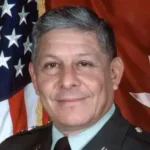
ALFRED VALENZUELA is a retired major general who commanded the U.S. Army South at Fort Buchanan, Puerto...

TERRY TOTTENHAM is a former captain in the U.S. Marine Corps, a former State Bar of Texas...

In 1999, Rocky Dhir did the unthinkable: He became a lawyer. In 2021, he did the unforgivable:...
| Published: | November 6, 2025 |
| Podcast: | State Bar of Texas Podcast |
| Category: | Access to Justice , Career , Litigation |
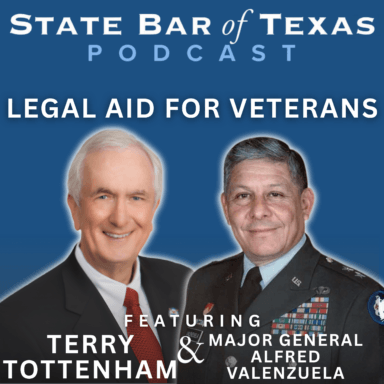
The Take One campaign is a statewide initiative encouraging Texas lawyers to take on one pro bono case a year for a veteran in need. Rocky Dhir sits down with Major General Alfred Valenzuela and past State Bar President Terry Tottenham to discuss the campaign’s mission to bridge the gap between lawyers and veterans. Their conversation highlights the challenges veterans often face when transitioning back to civilian life and the vital role legal support can play in that process. Through Take One, attorneys in every practice area can use their expertise to handle cases that align with their specialties while meeting the diverse legal needs of those who have served our nation.
Special thanks to our sponsor State Bar of Texas.
Rocky Dhir:
Hi, and welcome to the State Bar of Texas podcast. As of this recording, America is not at war. The wars in Iraq and Afghanistan have long concluded and we are for the moment, at least at peace. But the US military is still active all over the world, protecting American interests and putting to work our servicemen and service women. For many of these soldiers, they served in active war zones. Others kept our military machine humming in the event that war conflict ever broke out. During war, we all cheer and we thank our soldiers, but at peace it’s easy to forget their sacrifices and service. At some point, the tours of duty end, these active duty troops become veterans. They melt back into civilian life, and with that comes civilian problems dealing with the bad landlord, trouble paying bills, a potential criminal charge, whether valid or not.
Veterans have legal needs often without the available means to address them. Now, Texas lawyers for our part, we’ve never backed down from a challenge. And now the challenge has been issued by Alfred Valenzuela and Terry Tottenham. They have launched the Take One case campaign. What is it? Well, we’re about to dig into that, but first let’s get to know these two challengers. Alfred Valenzuela, AKA, Freddie, or should I say Major General Alfred Valenzuela commanded the US Army South and served as Deputy Commanding General of the US Southern Command serving Kuwait with the Third Infantry Division. Pretty freaking cool, huh? And then we have Terry Tottenham. Sorry Terry, you’re only frigging cool. I mean I’m going to take out the pretty part. Terry is a former president of the State Bar of Texas and also a former Marine Corps captain. He is now retired from law practice, but he stayed busy having launched Texas Lawyers for Texas Veterans. So General Valenzuela and President Tottenham. Welcome to the podcast gentlemen.
Major General Alfred Valenzuela:
Thank you.
Rocky Dhir:
So guys, let’s dig right into this. I don’t know how many Texas lawyers have really heard of this. What exactly is this take one case campaign and what is it all about?
Terry Tottenham:
The Take One case campaign was generated by the Texas Access Justice Commission Veterans Committee on the 15th anniversary of the establishment of Texas Lawyers for Texas Veterans Lawyers for Texas veterans was created in 2010. So we’re coming on the 15th year anniversary and it is in that regard that the Veterans Committee of the Access Justice Commission created a take one case campaign. Take one case campaign is very simple. It’s a campaign to encourage Texas lawyers to agree to take one veterans case pro bono in one year in that lawyer’s area of specialty. By doing so, we create a statewide referral list to which legal aid providers can refer a veteran’s case on as needed basis depending upon the specialized need of that veteran’s case. That in essence is the Take One case campaign.
Rocky Dhir:
So the idea then is that lawyers get to work in their areas of specialization. So they’ve already got, I guess domain expertise if you will, but they’re simply applying that to a veteran.
Terry Tottenham:
One thing we found from Texas Lawyers for Texas Veterans, which was a program wherein lawyers went to Veterans Legal Aid clinics aid is that lawyers were saying, wait a minute, I’m not specialized in certain areas. So if a veteran comes in and asks me a question on let’s say a wills issue, I know nothing about Wills issues, the Take One campaign addresses and solves that problem.
Rocky Dhir:
General, are you there with a sidearm to make sure that lawyers take the cases? What’s your role in all this?
Major General Alfred Valenzuela:
Well, the commission was kind enough to invite me to partake from a veteran perspective several years ago. So I kind of described my role as being one to help the messaging side of the house to make sure the vets understand what benefits are available to them to include here in the state of Texas pro Bono legal services. So it’s a tremendous challenge being that the state of Texas is the number one state for veterans and retirement.
Rocky Dhir:
Is that really?
Major General Alfred Valenzuela:
Yes. So if you add that coupled with active duty Veterans Reserve and National Guard, we have a large population of veterans and those in need of legal services. So I salute the lawyers who are part of this campaign because it’s very important to provide us that mentorship if you’ll that guidance to be able to orchestrate and maneuver if we have a legal issue.
Rocky Dhir:
If I’m understanding what the both of you are telling me, it sounds like Terry is there to go and recruit the lawyers and then general you’re there to go and explain the benefits to the veterans themselves. Is that
Major General Alfred Valenzuela:
That is correct on my part.
Rocky Dhir:
Terry, is that correct on your part? Because the general, I think he’s been hanging around lawyers too long. He couched it. He was very precise.
Terry Tottenham:
The general is a great wingman.
Rocky Dhir:
You just said Wingman. That brings up the question, which of you is Maverick and which of you is Iceman?
Terry Tottenham:
We haven’t decided that just yet. We’ll see how that goes after a few more months.
Rocky Dhir:
How old is the take one case campaign at this point?
Terry Tottenham:
Well, we trotted it out last year at the local Bar Leaders conference, but I would say this year 2025 is its real birth year. I’ll put it that way. So we’re just getting started.
Rocky Dhir:
Is it catching traction? How is it coming so far?
Terry Tottenham:
We’re going to see, we don’t have enough data yet to see whether it’s going to catch traction. We have an article in the November issue of the Texas Bar Journal that will outline the campaign and where the president and president-elect state bar have agreed to promote the campaign around the state. So we’ll see how, whether or not it catches fire, we hope it’ll,
Rocky Dhir:
When you say catches fire, is the concern about veterans signing on to receive benefits or is the concern more about lawyers signing on to provide service?
Terry Tottenham:
The concern is we want to get as many lawyers signed on as possible so that we have this statewide referral list that will help our veterans.
Rocky Dhir:
What are the biggest challenges or maybe the biggest concerns that lawyers have before they sign on to something like this?
Terry Tottenham:
Well, traditionally lawyers had concerns about going to the clinics because they felt like they weren’t qualified or specialized in those areas. The Take One campaign doesn’t have any of those issues. So honestly, I can’t think of a reason why a lawyer would not be really agreeable to this campaign because they can handle their case in the office. It’ll be in their area of specialty, it’ll be in their comfort zone and they will be able to help a veteran along the way.
Rocky Dhir:
General, any reservations from the veterans themselves? Are they skeptical?
Major General Alfred Valenzuela:
Yes, I would say for numerous reasons. One, obviously we have a lot of benefits afforded us. We really don’t have a full idea of what those benefits are fully. That is to say the Veterans Administration puts out a portfolio curriculum if you’ll of those things that we’re eligible for, and consequently, you have to maneuver again to figure out what those benefits are. So Texas, we have the Texas Veterans Commission and it’s they who help that veteran understand what he or she is eligible for. That messaging is the real key. So I really want to apologize to my lawyer friends, my colleagues there because it’s really incumbent upon the veteran to be able to figure out what it is that he’s eligible for. But we do that with that skepticism that you indicated, and that’s because it’s free. We’re not used free things. The Uniform Code of Military Justice is in its rigid institutional makeup. It’s from top to bottom. So we have to make sure that the vet do their part and once they find out that this campaign is about helping them, then it is to kind of make sure that they know what they’re eligible for and to pursue that mentorship and guidance that I mentioned earlier before.
Rocky Dhir:
This may be a great moment now for us to take a break and I’ve got a few questions I want to ask when we get back. I want to dig in a little bit more into some of these reservations and kind of figure out what might be lying at the heart of this. So gentlemen, be thinking about that. And for those of you listening in, we’re going to hear from one of our sponsors. We’ll be right back in just a few moments and we are back with President Terry Tottenham and General Valenzuela talking about this take one case campaign. So before the break gentlemen, we talked a little bit about the reservations on both sides of that transaction, the lawyers as well as the veterans themselves. General, I wanted to ask you something real quick. I hadn’t thought of this earlier, but the veterans themselves have reservations, they have questions. They’re skeptical about whether they’re really eligible to receive free benefits. Is there a type of lawyer or a type of specialist whose sole purpose is to help veterans understand what their benefits are? I see that a lot. There are veterans who just, they don’t understand what all is out there for them. Are there people that do that? And is there a role that lawyers can play in that? I
Major General Alfred Valenzuela:
Would equate this to internal medicine. That is to say an attorney who focuses on families and the benefits of any legal transactions that they may need. When I talked about the skepticism earlier, I think also it’s a cultural thing. We’re not used to having anything free or given to us, and so therefore we’ve got to convince ourselves that if we do have an issue that we’ve got to ask for it. Otherwise we have a tendency to go without. And so the one campaign really focuses on specificity of what type of law there is and therefore it allows us veterans to be able to look at the menu of what type of lawyers can help us. And again, we look more the attorney vet relationship as one of mentorship and guidance kind of help draw me out to be able to tell what it is. My issues are.
Terry Tottenham:
There are lawyers who are certified by the Veterans Administration and those lawyers are particularly focused on talking to veterans, helping veterans, giving them an idea of what their benefits are. Also the Texas Veterans Commission Statewide Agency that advocates for Veterans and the Commission. We have a very close relationship with the Texas Veterans Commission. That commission has three counselors. These are veterans to help vets navigate the various benefits available to them through the va.
Rocky Dhir:
Do we have lawyers like that as part of the campaign to help explain all this to the veterans themselves,
Terry Tottenham:
There are VA certified lawyers around the state, so they’re available to veterans in that regard. But lemme say this, we have legal aid providers throughout the state, veterans come to those legal aid providers and they’re very of those legal offices if they have a particular legal issue and if they eligible for legal aid. So with this statewide referral, these legal providers will be able to say to you, have an issue and X, Y, Z specialty. Here is lawyer ABC who is specialized in that area. We’re going to refer you to him or her.
Rocky Dhir:
So that actually brings up another question, Terry, that I wanted to ask. And we talked about reservations that lawyers might have about take one case campaign one. I can think about, I mean you addressed it to some extent, which was ability. This is all in your specialty area, so don’t be afraid about getting in and getting your hands dirty. But what if I’m a lawyer, I want to get involved, I want to help veterans, but I don’t have a specialty area that a lot of veterans would need. For example, let’s say I do securities registrations. I don’t know how many veterans come out of active duty needing securities to be registered, but if that’s my specialty, can I still be a part of this campaign or is there a role for me?
Terry Tottenham:
There absolutely is a role in one or two ways. One, you can volunteer to go to a veteran’s legal clinic in your area to serve as a general counselor or advisor to a veteran sounding board. Or you can make legal aid providers aware that you’re willing to serve. Take one case as a sounding board and as a general point of doubt, that’s really a lot of what these veterans are looking for. Someone to listen to what their concerns are and give them some direction along the way.
Rocky Dhir:
With most of these veterans, are we talking about folks that they’re needing pro bono help or are they wanting low bono help or are they just needing somebody to help guide them?
Terry Tottenham:
Well, I think all of the above
Major General Alfred Valenzuela:
Agree,
Terry Tottenham:
All of the above.
Major General Alfred Valenzuela:
That’s one of the reasons we inserted and put together clinics or at least a group of attorneys at Veterans Administration locations because we found that a lot of the questions, if you’ll were in the VA arena and therefore by having clinics, we were able to bring together an attorney and at a location where there might be issues with the veteran and the Veterans Administration. It worked like a charm, to be honest with you.
Terry Tottenham:
Veterans go to the VA for their health benefits. So we were able to work out with the VA and arrangement to allow us to have legal clinics in those facilities. Now when COVID hit because of COVID restrictions, we were no longer able to have our clinics in those VA facilities. However, because of General VA’s connections and others, we’ve been able to reopen those relationships. So the VA administration and their hospitals and their clinics have been very receptive to allow us to bring our legal clinics back into those facilities.
Rocky Dhir:
We’ve been talking about objections or questions or doubts that lawyers might have. The big one, of course for most lawyers is time. So Terry, I know you spent most of your career at Norton Rose Fulbright, and so you were at a large firm with a lot of resources and a lot of folks who could help you temper some of your other demands. What would you say to solo practitioners? They’re working all day, all night weekends, they’re just trying to make a go of it. They want to get involved, but time becomes a factor.
Terry Tottenham:
Well, honestly, this program is really tailored to the small firm practitioner because if a practitioner wants to help a veteran, they don’t have to take time, go to a clinic, spend three or four hours at a clinic dealing in areas of law, they’re not very familiar with the Take one campaign. They can operate out of their office on their own time with Zoom conferences with the veterans. If a practitioner solo or otherwise is interested in helping a veteran, there are ways to do it in a time efficient matter.
Rocky Dhir:
And a lot of folks, and I’m sure a lot of veterans think this, there’s this notion that all lawyers are rich in driving around in big cars and have big McMansions that they live in. And those of us that are members of theBar, we know that that’s not always the case. There are plenty of lawyers who are just struggling to keep the lights on in their practices. So what if I can’t afford to take a pro bono case, but I still want to help. I just financially speaking, I’ve got to put my time into things that are going to help bring revenue in. Is there still a way for me to get involved
Terry Tottenham:
If an individual has no time to get involved, I dunno what to say to that except the individual will not be able to get involved. So the individual lawyer has to make that decision. If they want to help a veteran, do they have the time or will they commit the time? However little or much that is to help with that,
Rocky Dhir:
Can they tailor that to some degree? So can they say, well, I don’t have much time, but I can devote some?
Terry Tottenham:
Absolutely. And again, it may be that the clinic approach is better suited for them and their time situation. It may be that by taking one case they need to just look at their docket, look at their schedule, look at their other commitments and make a decision as to whether or not they have time to take on one additional pro bono case. The fact that they sign on to the campaign does not mean that they will get a case. So in other words, the referral list is going to be a statewide list to which legal aid providers will make referrals. But in a given year, veterans may not need a particular specialty. There may be way more lawyers in that specialty available to take on a veteran’s case. So just because a lawyer signs on to take one campaign doesn’t mean that he or she is necessarily going to be assigned a case in that year.
Major General Alfred Valenzuela:
We also see that as a tremendous referral for us. That is to say if the attorney doesn’t take a case, but he knows of some attorney that might take that case in the specific arena that the veteran has issues with that. That just helps us immensely, particularly in the rural areas where we’re finding gaps or challenges to be able to connect the veterans who are more than apt to be living in the rural areas to be able to connect through that referral system.
Terry Tottenham:
That’s an excellent point. The general makes that is an offshoot of this campaign. Let’s say lawyer A wants to get involved but doesn’t have the time to do so. Lawyer A can then talk to his or her colleagues through the local bar association or through their networking and to say, put the word out, look, I’d like to help a veteran this year, but I’m just swamped. I don’t have the time to do it. Would one of you like to do? So we’re hoping this campaign will build on that sort of collateral relationship amongst our legal profession to where we can as general points out, get those referrals going that will help us in the long run.
Rocky Dhir:
This has gotten very interesting and I completely lost track of time. We need to hear from another sponsor real quick, but when we come back, we’re going to dig into this a little bit more and maybe talk about some nitty gritty issues about how lawyers can get involved and what the veterans need. So guys, those of you listening in, stay tuned. We’re going to be hearing from one of our sponsors when we be back with General Valenzuela and Terry Tottenham. We’ll be back in just a few guys. We are back. We’re having a great conversation with past President Terry Tottenham and Major General Valenzuela about the Take One case campaign. This is interesting, and as you know, we’ve been talking a bit about how lawyers can get involved, what veterans need, but general, I wanted to ask you a question. For those that are tuning in, they might want to get involved. What would you say are the biggest practice areas, the biggest specialty areas that most veterans come to you with and say, Hey, I need help. From a legal standpoint,
Major General Alfred Valenzuela:
I would say veterans Administration claims. I think because of the world situation as it’s, we depend a lot on our reserve and National Guard and call ups or being federalized or just, for example, lone Star campaign, the operation down in the valley on the border. So we’re calling up Reserve and National Guard folks and therefore they have to leave their family and say their mechanics or they need to deploy for a year. So then they have some family issues that they may need to resolve before they deploy. And that could be wills, that could be things having to do with their property or whatever. So veterans Administration claims I think would be probably number one. But I think there’s a plethora of different options that those veterans are looking for. And again, going back to the referral system just for guidance or being pointed in the right way. And really it’s a mentorship program, as I call it. And so we not only look at the Veterans Administration, but we’re also looking out even further looking at partnerships with different organizations, veteran servicing organizations. We look at the Veterans of Foreign Wars, the American Legions Foundations like Tunnel to Towers, wounded Warriors. And so we’re just really looking out to message to the veteran that we have all different kind of option for him or her to be able to pursue if they have a question or a legal need to take care of their
Terry Tottenham:
Families as well. The general mentioned Tunnel of Towers Foundation, if I may, I would like to address that issue. Tunnel of Towers Foundation was formed after nine 11 to assist the families of first responders. It migrated beyond first responders to veterans tunnels to Towers now builds retrofits hotels for homeless vets. They have one in Houston that houses a 31 homeless veterans. We have always wanted to address and reach out to find and assist homeless veterans, but that’s hard to do because they’re usually not located in a single place. However, because of our partnership with tunnels of Tower Foundation, we now have a legal clinic available in the facility in Houston for Homeless Vet. The Community First Village in Austin is a village for homeless citizens, many of whom are veterans. And Towers has a financial interest in assisting that facility as well. We’re hoping to build a legal clinic through theBar Association and that facility. So I just wanted to mention our focus on homeless vets through our relationship with the Tunnel Tire Foundation. Little bit off topic from the Take one campaign, but still on topic when it has to do with lawyers helping veterans.
Rocky Dhir:
Speaking of off topic, Terry actually listening to all of this, I realize I was remiss, there’s probably a glaring question that a lot of lawyers are going to have when they get involved in something like this and that has to do with malpractice liability. When you go to a pro bono clinic in most cases you have some level of protection for the advice you give because it’s pro bono and it’s a clinic here. If it’s the lawyer’s area of specialty and they’re taking it on pro bono, do you have to treat just like any other case and they have to have malpractice coverage for their work? Or is there some special arrangement for the Take one campaign cases?
Terry Tottenham:
Yeah, that’s an issue we’re trying to work through, to be honest with you, to figure out whether or not the malpractice coverage can come through the legal aid provider program or whether the burden would fall on the lawyer. Hopefully we can work it through the legal aid provider program. That’s an issue we’re trying to wrestle with right now.
Rocky Dhir:
So the answer is stay tuned, we’re going
Terry Tottenham:
To stay tuned. Important issue,
Rocky Dhir:
This is something I often wonder about anytime somebody gets involved with veterans issues, if there a veteran, there’s probably a lot of common ground there, but what about non-veterans? So if you’re a non-veteran lawyer, do you think veterans would still be able to relate to that person or is there a better flow and a better relationship when you’ve got a veteran lawyer talking to a potential veteran client?
Major General Alfred Valenzuela:
I think you have to look at the profile of the veteran. One third of us are below the poverty level. Most of us are married, but we have children, we have families. We’re probably struggling and maybe working one or two different jobs. We may have a spouse working and supporting as well. I think that when I came on the commission, one of the things that I really promoted was, again, I go back to that famous word of mine mentorship, is that we may not even know what it is that we do need and how it is to pursue it. Again, the Veterans Administration is one outlet. We probably go to use our GI bill in university, so they have student veteran organizations. So we really are looking for someone to help lead us in the direction that we so need. A lot of us are really humble and modest, therefore we don’t understand this free pro bono assistance that’s being offered to us. And so we really want to open that dialogue and help us understand exactly what the benefits are and what it is that we are amenable to be able to pursue and help ourselves and help our families.
Rocky Dhir:
So gentlemen, we got time for one final question, and I’m going to throw this to both of you and we’ll call it your, bring us on home. Bring us back to home base. Here’s an issue that I think maybe, I think most people love the veterans, there’s a lot of affection for them. I don’t know how much they understand the particular needs of veterans. So the question for you is veterans versus other demographics that might be in need. What are the special needs that veterans have and why is it so important that they be taken care of in this context? So I’ll let either one of you start with that question and then let the other one round it out.
Major General Alfred Valenzuela:
I think the biggest issue that Terry and I have found in working with the commission and the committee is that we have a very difficult time transitioning, I guess back into society. And a lot of us physically scarred, some of us are mentally scarred, so we have the traumatic brain injuries, we have the posttraumatic stress, and so consequently we’re just looking for a different type of society that not necessarily understands the institution for which we left. We’re not the same person that went into the military that came out. So any type, again, of relationship that we could have with attorneys or otherwise is really the main important focus that I think we’re looking for.
Terry Tottenham:
And from my perspective, I think as a general said, what most veterans want someone to talk to, someone to counsel them, someone to give them good common sense advice. Now, having said that, in terms of the legal needs of the veterans, legal needs are no bigger, no less than the legal needs of any of our citizens. You have veterans who have family law issues, wills and estates issues, real estate issues, litigation issue, employment issues, you name it. So that is why this take one campaign is so important to reach out and tap into all the various specialties that we have in Texas to make them available hopefully to our veterans on an as needed basis.
Rocky Dhir:
It sounds like it’s not so much looking at the special legal needs of veterans as much as it is looking to the special needs of veterans to get back into society after leaving military service.
Terry Tottenham:
That’s a major issue. Perfect. And I think lawyers are uniquely positioned and qualified to help make that transition. Exactly.
Rocky Dhir:
I know it’s a word that gets thrown around a lot, but this has been fascinating and it’s been a real insight into what you’re both doing. So major general Freddie Valenzuela and past president Terry Tottenham. Guys, thank you so much for joining us and for telling us about this very important work you’re both doing. And thank you for your service, both of you.
Terry Tottenham:
Thank you.
Rocky Dhir:
It just goes to show you guys, the military guys have the same desires the rest of us do. So of course, I want to thank our guests and I want to thank you for tuning in. I want to encourage you to stay safe, continue to be well. If you like what you heard today, please rate and review us wherever you get your podcast. Until next time, remember, life’s a journey, folks. I’m Rocky Deer. Signing off for now.
Notify me when there’s a new episode!
|
State Bar of Texas Podcast |
The State Bar of Texas Podcast invites thought leaders and innovators to share their insight and knowledge on what matters to legal professionals.