

Hear how two legal professionals, Commissioner Belinda Handy and certified paralegal Terri Walters make time to invite and include underrepresented communities inside the courthouse and into the profession.
|
|

Belinda Handy was elected as a commissioner by the Superior Court of Riverside County in 2016. Her...
Terri Walters is an advanced certified trial paralegal with the national litigation firm of Lydecker LLP. She...
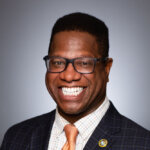
Tony Sipp is an accomplished legal professional with 19 years of industry experience, recently honored as the...
| Published: | July 9, 2026 |
| Podcast: | Paralegal Voice |
| Category: | Paralegal |
Our court system tends to draw in a diverse mixing pot of “customers.” Many of us will end up in a courthouse for some reason, a civil or criminal proceeding, a hearing, a deposition, a divorce, jury duty, even a marriage license. That’s why diversity and representation of all of us matters for those working inside the courthouse.
Guest Belinda Handy is a commissioner in the Superior Court of Riverside County, California. She says the mix of people working inside the courthouse should reflect those who use the services, that means diversity in race, sex, economic background, professional experience and more. Since the public using the courthouse is made up of everyone, so should the staff and leadership. Handy herself rose to the bench from a non-traditional pathway: the public defender’s office.
Our other guest, Terri Walters, shares her experience growing up as a person of color in a predominantly white community, then went to work in law firms that were predominantly white. It took effort to shake an “imposter syndrome” and understand she belongs and that she excels at her job. “Never did I have the opportunity to work with people that look like me,” she says. “Representation matters.”
Both Handy and Walters advocate for pathways to success in the legal field for people in underrepresented communities. The court system can seem intimidating, but there are doors open to everyone. It’s not all about college degrees and law school. Handy says the courthouse is “like a city,” full of opportunities including IT specialists, clerks, bailiffs, paralegals, and yes, judges and lawyers. “The court’s a public building. You’re welcome to come in,” Handy says. Hear how all of us in the legal community can invite someone inside, maybe a young person who thinks the courts aren’t there for them. Open a door today.
California Alliance of Paralegal Professionals
LAPA, the Los Angeles Paralegal Association
Orange County Paralegal Association
Tony Sipp:
And welcome back to The Paralegal Voice. My name is Tony Sipp and I have two special guests with us today, Commissioner Belinda Handy and Terri Walters CCP ACP. Today’s guest, Commissioner Belinda A. Handy of the Superior Court of Riverside County elected to the bench in 2016. Commissioner Handy has served in family law, domestic violence, civil harassment, child support, and small claims. Before joining the bench, she worked as a public defender, practiced both civil and criminal law. She also served as the California Supreme Court Committee on Judicial Ethics and is deeply committed to outreach equity and elimination of bias within the justice system. Our other guest is the distinguished Terri Ramsey Walters, CCP ACP. She is a California certified paralegal through the California Alliance of Paralegal Associations, CAPA, and the advanced certified paralegal through NALA, the National Association of Legal Assistance, the Paralegal Association. She also serves on the board of directors of the Los Angeles Paralegal Association that LAPA in many capacities, including as advisor.
She’s also a court-appointed special advocate, CASA for Children’s Court in Los Angeles. She’s NALA’s Diversity, Equity and Inclusion Committee Chair. Her parents are nationalized citizens and they were both born in Trinidad and the West Indies. Welcome both Commissioner Handy and Ms. Walters. How are you? Thanks for being on the podcast.
Belinda Handy:
Well, thank you for having me. Thanks for
Terri Walters:
Having
Tony Sipp:
Me. It’s really great to have you. So the reason we’re doing this podcast is we kind of started a conversation last year at the Orange County Paralegals Association, their educational conference that they had last year where commissioner, you were the keynote speaker. We were so impressed about your keynote and speaking that we had to have you on the podcast. It was just so captivating. Then I remember we’re outside in the hall just having a conversation with Terri happened to be there, which is why Terri’s here too, and just having a really deep and meaningful conversation about representation and why it matters. I wanted to continue that conversation here on the podcast and start with a question really when you hear the phrase representation matters, what does that mean to you personally and professionally? Commissioner?
Belinda Handy:
For me, that means many different things. It’s not just about being a woman. It’s not just being about a woman of color. It’s about age. It’s about diversity in terms of socioeconomic. It’s in people’s upbringing and people’s education. So I know people always want to just focus on race when they hear that, but that’s not what it’s all about. When I first came on the bench 10 years ago, a lot of times public defenders were not called to the bench. That was not necessarily a pathway. So you didn’t have that representation or that viewpoint from the bench. People of color, women were not on the bench as much as we are on today. So again, you don’t have that diversity if you would. You don’t have that perspective from a woman’s point of view, from a public defender’s point of view, and then a woman of color or somebody who is a first generation law school and college graduate.
So that all brings to the bench what I bring to the bench. I don’t leave my common sense at home. I bring with me all those years of schooling, of living to the bench. So even sometimes on the bench, I say to people, I live in the real world. You can just tell me the truth. I get it. You were angry. You were upset. That’s natural. It’s what we do with that. So I think those perspectives, I live my life that way and I bring that to the bench.
Tony Sipp:
You absolutely do. Great answer. Terri, same question. When you hear the phrase representation matters, what does that mean to you personally and professionally?
Terri Walters:
Well, personally and professionally? Well, I’m a first-generation American. My parents are from the Caribbean. So being a Black woman in the United States with Caribbean descent, to see someone that looks like me in a supervisory role or like the commissioner, that is amazing. That makes me perk up and say, wow.
Tony Sipp:
Me too. Me too.
Terri Walters:
We’re accustomed to seeing cisgender white males in positions of authority. And when we actually can see someone that is of diverse background, it kind of gets our attention that, hey, we can accomplish that goal or one of us made it. Personally, when I saw her on stage, I was at the conference as a NALA representative during the conference. So I was matting a table, but I stepped in and I listened to the commissioner and I was like, wow, a lack female judge. That got my attention.
Belinda Handy:
Same.
Terri Walters:
And judges play very important roles in the legal sphere, particularly when you’re going on jury duty. You want to get a jury of your peers, let alone having a judge, someone that might be able to understand your perspective or your background or where you’re coming from and not discriminate against you because they’re different. I was enamored by seeing her on that stage.
Belinda Handy:
Well, thank you. That’s very nice.
Tony Sipp:
No, it’s really true. Everybody was telling me, by the way, folks, if you haven’t been to the Orange County Paralegal Association’s conference, go. They’re really great conferences. It’s on a Saturday. So Judge, thank you for taking your Saturday out to spend with other legal professionals who are trying to advance themselves and uplift themselves on a Saturday morning to further their career. To that point, both of you share a moment early in your career where you became aware, positive or negatively, of how representation matters or the lack of it and how that shaped your career.
Belinda Handy:
I’m going to go way, way back. Okay. Only because this also sets the tone for some of the, I think, choices that I’ve made or how it has framed me today. When I was in elementary school, we had to do standardized tests. And so everybody did these standardized tests. You write it on a Scantron, you do that. And one day I get called into the office and I’m told I have to retake the test. And I’m like, I’m a little girl. Okay. I like school, no big deal. But they tell me that I won’t be able to write my own answers, that I’m going to be in a room by myself with a proctor, and she’s going to ask me the questions orally and then I will tell her the answer. Now, as a little girl, I didn’t understand this and wasn’t a thing. What I learned was they did not believe that someone from that neighborhood, that socioeconomic background, a woman of color, a little girl with Latino and African-American ancestry scored so very highly on this test.
They thought that I cheated or that the school cheated on my behalf. So they sent someone to make sure from the district that I did not cheat. Now I’m like eight years old at this time, so I don’t know anything. But when I take this test orally and it comes back and then they realize, oh my God, she really did this and really did score this great score, then I got lots of attention. The district then said, we need to bus you to another school. Instead of giving the resources to this school to help me or further me or keep influencing my education, they chose to provide a bus which showed up at my house in front of my door. I was the only kid on the bus being bused to another school. Wow. I learned very early on that being smart and doing well in school one had advantages.
But I also learned that there was then this perception that people from the school and the neighborhood that I lived in were not smart and that maybe we were cheaters or liars or that we couldn’t be trusted. And I say that story is because I think it’s twofold. I got such a great benefit. I got this great education that all this attention was put on me. But I also now know those resources could have been used for everybody in the school. I shouldn’t have been bused. And put those resources, don’t set a bus just for me. Let’s put those resources in the school that I’m in and everybody could have benefited, not just me. And so it’s a good and bad sort of a yin and a yang sort of thing, but it really does shape who I am today because I do try to then say, I realize that people didn’t all have the opportunity that I had and I’m thankful for that opportunity, so I can’t waste that opportunity.
So I have to continue to do well. I had to go to school. I always enjoyed that, but that also means that my courtroom is open to people. It is a public building. I’m always open because I didn’t know a lawyer or a judge or anybody when I was growing up. So I want to make myself as accessible as I possibly can because I don’t want somebody else to not have that opportunity since I had those opportunities. Well,
Terri Walters:
Can I applaud for her please?
Tony Sipp:
Yeah. I mean, this is why I have you on. I don’t even know where to… That’s it. I mean, that’s fantastic. Terri, Terri, you want to go after that?
Terri Walters:
Well, I don’t know if I can follow that, but I kind of echo her story a bit. I was the only Black girl, only Black person in my classes going through school, and I grew up in upstate New York in the Catskills. And I suffered from, what do they call that? When you don’t believe you’re supposed to be there.
Tony Sipp:
Imposter syndrome?
Terri Walters:
Yeah. Yeah. I was like, “Why am I here?” I thought I was the token, but I was really qualified to be there. So fast-forwarding all along, I went through high school, got in AP classes, and I really excelled, and I did well. I was able to get different places of employment. And one of the things that I most so recently realized was that with representation matters is that I worked my entire career supporting people that did not look like me. Not making it a lack or white thing, but I worked for white attorneys, partners, and I did not ever really get an opportunity to support people of color, attorneys of color. And that was one of the main reasons why I chose to choose a different path and leave my previous firm and join this new firm that I’m at now. I see people that look like me.
And it took me looking at their profile list to see, and I was like, “Ooh, ah, wow.” It’s like I finally get an opportunity to work for Latino attorneys, Asian attorneys, with Black male, lack female attorneys. And I had to look at my resume. I’m like, “I have an extensive resume. I’ve worked for some really great corporations, but never have I had the time to work for people that look like me. ” So in that sense, bless the rate increase.
I was like, “Wow, I’m going to take this opportunity to work here.” And that was one of the main reasons I did put forth when I was leaving the firm to tell them why. Representation does matter.
Tony Sipp:
It does matter.
Terri Walters:
It really does.
Tony Sipp:
Let’s take a quick break right now and we’ll talk about a little bit more about that and how that matters and how that plays its role in our legal system today. We’ll take a quick break and we’ll be right back on the other side of this commercial break. And welcome back to the Paralegal Voice. My name is Tony Sipp. I’m here with Commissioner Handy and Terri Walter at CCPACP. And we were just discussing representation and why it matters. And during the break, we started to talk about the barriers that still exist with people from underrepresented backgrounds who still aspire to judicial or leadership roles within the court. Commissioner Hitty was just sharing some of the thoughts. So Commissioner, can you expand a little bit more about those barriers that still exist and the underrepresented communities and what we can do if somebody really wants to get involved with the profession?
Belinda Handy:
Sure, absolutely. So I think one thing that people, yes, you have to be a judge or a commissioner, you have to have gone to undergrad, you have to have gone to law school, but there’s a lot more jobs within the court, number one, that people can do with just the high school diploma. The courts are its own little city if you would. They have IT people, they have secretaries, they have paralegals. There are people who work in the mail room. There are people who work in facilities. In our family court, we have social workers in our finance, we have accountants and we have lawyers who just do research. They don’t want to be the face of the court. So number one, I think people should really explore what are the jobs in the court and what can we do? And I started a program about five years ago that we bring high school students in to teach them about careers in the court.
Not everybody’s going to be the judge, not everybody’s going to be the lawyer, but they get to actually talk to people and they get to see and they leave there with a packet of what that job description is and how much those jobs make. And so that’s a good framework. But the second part of that is the courts are public buildings. They’re open to the public. Nobody should be turning somebody away. So if you want to come in and see a courtroom proceeding, see what the court looks like during regular business hours, you should be able to come in. I streamline my court proceedings so you could actually sit at home, go on the Riverside County Superior Court, and if my court is in session, you can just hear everything from home. We were talking about working from home, but you don’t even have to physically come in.
You can just listen every single day to my court. And I encourage pro people, people who are representing themselves to do that because then you learn. I say I’m very consistent with one, how I run my court and how I do things. So if you’re going to ever hear before me, listen in because you will know, you will see how other people do things and you will see what worked, what didn’t work. But then you can also come in person. Not just my court, that would be for anybody else’s court. So I really do encourage people to do that because this is taxpayer money and these are courts that are open. And I say it’s far more fascinating than anything that you guys would see on television. I
Tony Sipp:
Have to agree.
Belinda Handy:
But I’m a little biased, right?
Tony Sipp:
I have to agree. I have to agree. So Terri, you switched jobs, you’re still in the field, but now you’re in a leadership position. You are doing trials. And I remember when I first got my leadership position and one of the things that happened to me is that one, I had to switch my mindset from being this legal person to the business of law person and then understanding people and the nuances of people and the different personalities of people. But the other thing I understood, because I had hired two as part of that representation matters, and hiring people that were qualified that didn’t otherwise have an opportunity to get into the firm. And because of my position of where I was, I was able to look at a wide variety of resumes. The ones with the funny names, the ones that they’re just a little bit different, but those are the ones that intrigued me because I wanted diversity.
Let’s do something different. And did they specialize? Did they have the basic requirements, if not more, than what I was looking for? Yes. I’m proud of my track record of who’s there because a lot of people are still there at the places that they were placed and they’re kicking butt. They’re doing a great job. There’s no surprise. They just needed the opportunity, period. They just needed the opportunity. And I am hyper aware of that, just being able to be in the rooms where things happen. So now that you’re in a room where things happen, how are you taking on that role and how has that shaped your identity and your professional journey?
Terri Walters:
Well, I’m from the old school of each one teach one. So when we would get new paralegals in, when I was supervising paralegals, I think it’s very important to keep the paralegals engaged and keep them learning. Learning more about expanding their skills, learning more about staying relevant. Once they are engaged and learning, you tend to retain people a lot longer. On the flip side of that, no good deed goes unpunished. The more you’re able to do, the more they try to utilize your services in the law firms. So it’s kind of a catch-21, but I definitely try to ensure that paralegals, particularly if I’m supervising or if I’m working with them, we all work together as a team. And the best way to work together as a team is someone might have more strengths than the other. Each one teach one. It’s an old African aesthetic.
Tony Sipp:
I love it. All right, let’s take a quick break and we’ll be right back. And welcome back to The Paralegal Voice. My name is Tony Sipp. We are going to do 10 rapid fire questions for Commissioner Handy and Ms. Walter. Question number one. Commissioner, one word that describes why representation matters to you.
Belinda Handy:
Inclusion. I say that because as Terri was talking about, when you see people who look like you, you sometimes feel more comfortable, then you think that you’re not excluded. And so then we don’t maybe have that imposter syndrome because then you think that maybe then you can belong. So that’s why I say inclusion.
Tony Sipp:
Excellent. Terri?
Terri Walters:
Confidence.
Tony Sipp:
I love it.
Terri Walters:
Confidence. I mean, you have more confidence if you think, okay, I’m not stepping into this thing alone. I’m not an alien. I’m not recreating the wheel. You have some footsteps to follow, someone that you can reach up to. A lot of people were, when they saw Obama become president, they though, “Hey, what can I do now? I can be a president. I can be a senator. I can be anything I put my mind to. “
Tony Sipp:
Question number two, the first time you realized your presence in the room mattered.
Belinda Handy:
There’s probably been lots of moments, but being on the bench, I remember coming in and that’s a hard thing. I mean, you’re very proud or whatever, but when you see people actually smiling at you from council table and happy to see you there, right?
Tony Sipp:
Yes.
Belinda Handy:
And you’re like, “Why are they smiling at me? ” And then you realize because they didn’t always see people who looked like me. But I will share one other just really short one. When I did become a commissioner, we were coming through a special door or whatever and I come through and a woman I’ve never met before, she actually was the janitor, the cleaning lady. And she hugged me. And her English was limited and my Spanish is limited. But she was basically saying, “Thank you for being here.” And I hugged her back and I didn’t know this woman, but she saw somebody who now looked in the building coming through the door that we don’t normally come through. And here’s the cleaning lady, the janitor who’s going to clean up for us, who’s usually somebody that we don’t even notice. And she put herself out there and I hugged her back.
And a colleague of mine was like, “Oh my God, you let her hug you? She’s the cleaning lady.” And I was like, “She’s not cleaning right now. I’m more than happy. I felt the love. I felt her welcoming. I took it from that. I wasn’t making myself out better than anybody else because I had more education or whatever. We all are doing an honest day’s living from the lady who cleans my chambers to me being the face of the court. We’re all just wanting the same exact thing. I accepted the love from Matt. I still hold that dearly with me today.
Tony Sipp:
Yeah, that touched me. You both understood what that moment meant. Yes. And I understand what that moment meant. I get that. All right, Terri, question number two. The first time you realized your presence in the room mattered. I
Terri Walters:
Think I was doing a LAPA event when I went to the schools. They used to let the directors go and talk to the paralegals that are studying for paralegal programs at UCLA. And I went to Mt. SAC and a few other schools on behalf of the Los Angeles Paralegal Association. And the first time I walked into one of those classrooms and some of the students’ eyes lit up and some of them sat up because I saw a few slouching and when I walked in and they introduced me, I got their atention. They were like,
Belinda Handy:
Wow,
Terri Walters:
That was an amazing turning point for me.
Tony Sipp:
Question number three, representation without power. You have power. Meaningful or performative?
Belinda Handy:
You know what? It’s still meaningful because I think that even when I’m not on the bench, I have a lot of power because I have an important job and I make important decisions that affect people every single day, but also personally. When I’m not wearing that black robe in my own personal life, I still try to live away where I’m fair, where I still try to include people that I still shop at Ross. I don’t see myself better than somebody else or anything like that. So I’m still that same person. I still want to be that person to still lend a hand, to be open, to tell people and be encouraging regardless if they know what I do for a living or not. I still want to be that person in my personal life as well as in my professional life.
Terri Walters:
Representation without power, performative. I’m sure we all have heard recently, oh, they don’t listen to Black women. Some of us actually experience that in the workforce. We can represent and be, yes, we are there as a minority. But when we do speak, a lot of times, particularly some of the older generation attorneys, they don’t really listen to us. And it’s not until they see someone more so in their demographics that say the same thing you say that the point gets through. In some capacities, it’s easier for us to lead from behind the scenes.
Tony Sipp:
What’s more impactful? Who’s on the bench or who’s in the hallway doing the work?
Terri Walters:
Oh God, the bench, of course, particularly with commissioner on this podcast. The bench.
Tony Sipp:
Good answer. Good answer.
Terri Walters:
Well, I mean, that’s why you actually have to look up and do some research on the judge when you’re going into trial. We kind of find out what they’re about, what they do, how they’ve ruled previously, how they’re likely to rule. So I would definitely say the judge.
Belinda Handy:
Judge? And I’m going to say both because one can’t do one without the other. And when we’re talking about inclusive diversity and representation, we need people on the bench who come from diverse backgrounds, diverse ethnicities, diverse beliefs, diverse schools, all of that. So that when they are hearing the litigants, because our litigants come from diverse backgrounds, they come from all over. So we need all of that. Because sometimes I don’t know every answer and I have to go to my colleagues sometimes and say, “Hey, put this in perspective.” And then they have to teach me and we go to trainings and things like that. So I want to see people who look like me before me in lawyer roles, in paralegal roles who are doing the good work. I want those to be my colleagues as well. It goes hand in hand. Both parties, we need to see it all around.
One is not without the other.
Tony Sipp:
All right. Two last questions. Terri, a myth about the legal system you wish people will stop believing.
Terri Walters:
A myth about the legal system that everything moves by quickly. It’s a slow, tedious process. There’s delays, there’s rescheduling, there’s continuances, and everything isn’t just I object.
Tony Sipp:
It’s not over in half an hour?
Terri Walters:
No, it’s not over in half an hour. A case can take a couple years to four years. It could take years to resolve your matter. It’s not going to happen as soon as you file your complaint.
Tony Sipp:
Judge, a myth about the legal system you wish people would stop believing.
Belinda Handy:
That once you get a law degree, that you get a Lexus, that you have a bank account that is astronomical. It’s not that way at all. I just shared with somebody the other day, I said, usually the judge, the bench officer is probably the least paid professional there. But lawyers clearly many times make much more money than we do. That does not mean that I am complaining. I live a very nice and comfortable life, but I’m not the richest person usually in the courtroom. Those are usually the business people and things like that. And we come away with student loans because we’ve had so much schooling that I think that people don’t understand that. That is not a complaint that I don’t make a nice living or anything like that I do, but people think that you’re just this big deep pockets. You get a law degree and somehow you just magically got this nice salary and a new car in the driveway.
That’s years of work and practice to get there that just does not come. And then there’s people who choose to do nonprofit and things like that, and they’re not making the big bucks that people think that they’re making. So I want people to just sort of remember that sometimes people are just doing the work because they love the work.
Terri Walters:
One more thing too. Another myth is that attorneys do all the work. There are paralegals behind them.
Tony Sipp:
Judge, can you help us on this one? Let the people know what you know. When you see a well-put trial, anything put together, commissioner, and you see your sloppy attorney coming up with their disheveled… Who
Belinda Handy:
Put that
Tony Sipp:
Together? They might
Belinda Handy:
Be even in a designer suit.
Tony Sipp:
They might be in a designer suit. Yeah.
Belinda Handy:
And present well. But we do know that it takes a team, right? Yes. It’s the support staff and everything that make that all happen. But the paralegals, the courtroom assistants, the secretaries, they make up a team. When I first started out in law, even though I had a law degree, I worked at a big law firm, but because I didn’t go to a big name school, I wasn’t hired as a lawyer. I was hired as an other, if you would. They sort of created a position as a support staff, even though I had a law degree. So I do know firsthand exactly what that looks like and means. I was part of a team. I could put together the binders. I could do the legal research. I could write the first and second drafts of the memo. I could run and get the coffee. I could carry the binders to the court.
I could stand by the copy machine and all that. But when the client is walking in, it’s the partner who is holding the meeting. It’s their name on the letterhead and that’s all good and fine. But What I did take away from that is that even now when I’m on the bench, I realize it’s a team and I hold lunches and everything usually for my staff and even the courtroom people because I do believe and I say to them, I may be the face of the court, but we are a team here. All of this does not run unless you guys do all the work before I even take the bench. That doesn’t mean that I don’t work hard, but that means that I give them credit for the work that they do also because to me that is still very important. I can’t do what I do unless they do what they do.
Tony Sipp:
We need more judges like you. Thank you for sharing that. Thank you both for your input into this conversation. It really reminded me of why I do what I do, why we all do what I do. And folks, if you were listening to what the commissioner was saying, she held the jobs. She’s been in the copier. She’s done what we’re doing all the time, which allowed her to be where she is now. It sounds like there’s no job that you wouldn’t say no to. You would’ve done it. So that’s the attitude. That’s what you need to do. That’s the willpower and the determination. We have examples on this podcast right now that you can listen to that are opening up their courtrooms for you to watch them so you can see them. We have Terri Walters who is in the LA vicinity working with CASA, helping people, helping LAPA, doing great things, dealing with Nala, DEI.
People are doing major things. So please, if people want to get involved or get in contact with you, commissioner, where can they reach you? And Terri, after the commissioner, can you please let people know where they can get in contact with you?
Belinda Handy:
Yes. So you guys could reach out to the Riverside Superior Court if you go on the website. There’s usually a main number that they can call and then they can usually pass information through. For security reasons, we can’t share out our exact contact details, but anybody calling the Superior Court Riverside main website, main not line, they will be able to pass something along. I do sit in the Menofee Justice Center just so the people know. And so you can come. Like I said, our courtrooms are open, so you can come there.
Tony Sipp:
Invitation’s open. You heard her. Terri.
Terri Walters:
You can reach out to me on LinkedIn. Terri Race. Can you
Tony Sipp:
Spell that please?
Terri Walters:
T-E-R-R-I, capital R, Walters, A – C-P. Find me on LinkedIn or you can find me on the LAPA website, lapa.org. I’m one of the advisors for the LAPA. And through LAPA, I was actually able to do CASA and other pro bono activities. So yeah, join your local paralegal association. I’m a litle partial to LAPA and NALA. NALA’s the National Association of Legal Assistance. N-A-L-A.org. Become certified paralegal.
Tony Sipp:
Thank you both. Folks, listeners, thank you for listening to our podcast. Representation does matter. I want you to go out, have a wonderful day, and we’ll see you next time.



Notify me when there’s a new episode!
|
|
Paralegal Voice |
The Paralegal Voice provides career-success tips for paralegals of any experience level.