Guest Capri Maddox is a former paralegal and prosecutor now leading the Los Angeles office of Civil Rights and Equity. What can you do in your community?
|
|

Capri Maddox is the executive director of the Los Angeles Civil + Human Rights and Equity Department...
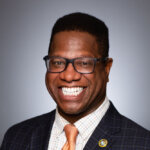
Tony Sipp is an accomplished legal professional with 19 years of industry experience, recently honored as the...
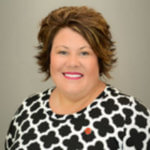
Jill I. Francisco, ACP, received her BA in Criminal Justice, (concentration in Legal Studies), from Marshall University...
| Published: | October 23, 2025 |
| Podcast: | Paralegal Voice |
| Category: | News & Current Events , Paralegal |
How do professionals in the legal community help protect and enhance the civil rights we all deserve? Guest Capri Maddox is the executive director of the Los Angeles Civil + Human Rights and Equity Department, working to ensure Los Angeles is a city of belonging, justice, and a welcoming space for all.
She’s an attorney, but she also worked as a paralegal professional, and she recognizes how big projects depend on every level of the legal team.
As a former prosecutor, Maddox says she knows no city can arrest its way to safety. Described as “a powerhouse of purpose,” she believes the only way to ensure public safety is to make sure everyone feels included, feels represented, and feels that justice works for all, not just a few.
Her team’s latest campaign is a simple, yet powerful project called “Just Say Hello.” The idea is that if people say “hello” to a stranger once in a while, it can create a friendlier, more inclusive city. As she notes, it’s unlikely someone will mistreat someone if they’ve just said “hello” to each other. Hear how we can all do something in our own communities to ensure everyone feels welcome, respected, safe, and empowered.
NALA, The Paralegal Association
Los Angeles Civil + Human Rights and Equity Department
“I Belong. You Belong. We Belong. Theme for Fourth Annual LA For All Week”
Using social media? The campaigns’ hashtag is #LAIsForAll
Tony Sipp:
And welcome back to the Paralegal Voice. My name is Tony Sipp and today we’re joined by a powerhouse purpose, Capri Maddox, the founding executive director of LA Civil Rights from launching landmark equity campaigns like LA for All. And just say hello to building a department that protects civil and human rights across Los Angeles. Capri leads with Vision, heart, and Unstoppable Energy. She’s here to talk about belonging justice and what it means to make LA a city for everyone. So let’s dive in. Capri, welcome to the Paralegal Voice.
Capri Maddox:
Thank you for having me, Tony. I’m so excited to be here.
Tony Sipp:
Excited to have you. Did I miss anything?
Capri Maddox:
Grateful to be here with the Paralegal Voice. Some of you know I served two years of my career as a paralegal legal assistant with the city attorney’s office here in Los Angeles, and I appreciate and uplift our paralegals wherever you are, private sector, public sector. Just thank you for leaning in and doing this work and making the world a better and more just place. So thank you. Thank you for having me.
Tony Sipp:
Thank you for being here and thank you for being so supportive of paralegals. I remember in 2020 you were very supportive of the Los Angeles Paralegal Association trying to pair us with the pro bono attorney. So you’ve been doing this for a long time, so we see you and we know what you’re about.
Capri Maddox:
Thank you. Yeah, I think my first meeting with you all might’ve been 10 years ago now, so I’ve been coming to events and like I said, I just appreciate fellow folks in the legal space. So I really appreciate this opportunity and you have a great organization.
Tony Sipp:
Thank you. Thank you. So Capri, what inspired you to take on the role of LA Civil Rights First executive director and how did you shape the department’s foundational vision?
Capri Maddox:
First of all, I received a call in December of 2019 from someone associated with the mayor’s office, then Mayor Eric Garcetti, saying the Black Worker Center members of the Jewish community as well as a number of immigration rights organizations to the Thai Worker Center leaned in to say Justice delayed was justice denied. And some of the delays with the California it’s now called California Civil Rights Office, were causing challenges as it relates to people in the city of Los Angeles getting justice. We’re talking two years many and people were not getting justice, not because the good folks at California civil rights weren’t able to provide justice. It was simply because they were backlogged. And Lola Smallwood Quavis, who is now Senator Smallwood Quavis, but at the time she was running the Black Worker Center, really fought for the civil rights ordinance to come into effect here in the city of Los Angeles.
Funny thing, Lola came to my office when I was the special assistant city attorney to Mike Feuer and said she needed help. And I told her, we can’t put a new law on the books, says city attorneys, you need to go to city council first. She came back a couple years later and it was done. Just want some of you all to know that about Senator Small. It’s easier to tell her no to do what she says and to try to tell her no. So it’s easier to do what she says than try to tell her no. Yes,
Tony Sipp:
That’s a great story. She’s going to love that.
Capri Maddox:
And you also asked about the formation of the department. So being that I was a prosecutor for many years in my career, I served as a neighborhood prosecutor for Wilshire Police Station. And we learned then, and many of us know it still, you can’t arrest your way out of crime and you can’t litigate your way out of discrimination. So we really wanted to build an opportunity for us to be sure that hate discrimination and inequity don’t have a home in Los Angeles. So I thought about all the ways these challenges come to folks and I wanted to be intentional to make sure that we had programming and stop gaps to make sure we were able to undergird marginalized communities in these spaces. So we have the participatory budgeting program where we are giving money to neighborhoods impacted by all the wrongs. We’re talking digital divide food, desert health inequities.
We’re looking at these communities where the environmental hazards are very high. And so we have participatory budgeting, $8.5 million going to community-based groups in the city of Los Angeles. And the community members, the residents, thousands of them voted on where those dollars should go. So some neighborhoods said we need a garden, others we need legal assistance. Others said we need medical care. So we have that and you can find information about the repair program on our website. LA is for everyone.com. The other thing that I think is important is to make sure, of course we stand up the legal operation to be ready to bring in cases when people are discriminated in the private sector areas of commerce, education, employment, and housing. Those areas focus for us were defined by the ordinance and city council and of course a number of worker groups leaned in this space and that is where they wanted support.
The next thing I think you should know is we wanted to make sure that some of our commissions that were just kind of scattered all over the city needed to be unified so there wouldn’t be any kind of competition. So that was the third component. Quick example, the Human Relations Commission, transgender Advisory Council and the commission on the status of women were buried in the housing department. When I took this assignment, I said, we need to bring all of this together. And then the last thing I’ll share about the department, we needed to be fighting hate on the offensive and that is where we have the award-winning campaigns. LA for All is the umbrella for our hate crime prevention campaigns. And many people know about the iconic LA Is for Everyone Campaign. It was in 21 languages, over 10,000 locations in the city and it’s still widely popular. We’re selling t-shirts. Yeah, you have a little something to show from the LA Is for Everyone campaign. And then of course we can talk about it later, but we have other campaigns ruling behind our award-Winning LA is for Everyone Campaign.
Tony Sipp:
Yeah, it was fantastic. I just went down and was talking to Alison before we got on this past weekend. I went to the congress of neighborhoods that you saw when you first came on and went to the session, the civil rights division your division was putting on and it was really good. They did a fantastic job. They had the buttons out with a smile, which we’ll talk about on the other side of the break. It was really nice to be there around so many leaders and so many positive leaders. It was great to see. So let’s take a quick commercial break and we’ll talk about the campaign LA’s for everyone. We’ll be right back and welcome back to the Paralegal Voice. My name is Tony Sipp and I’m here with Capri Mada Capri. The just Say Hello campaign is beautifully and simply yet powerful. What was the creative and strategic thinking behind using and greeting as a tool for inclusion and hate prevention?
Capri Maddox:
Thank you so much for that question, Tony, about just say hello. We want it to be intentional to have a follow up to the wildly successful LA Is for Everyone Campaign. The next level of our work is to make sure people felt seen and heard. That’s one of the number one things people talk about, especially living in a big city and the just say Hello campaign was created in 2020. It really was the idea and brainchild of my husband. And when I was looking for a campaign to move this forward, I thought we need to be intentional to make sure people are speaking to each other in the City of Angels. How can we call ourselves the city of angels when we get in the elevator and other relatively safe spaces and we do not speak to each other. And how important it is. If you’re speaking to someone, you’re probably not going to do a hate crime against them. You’re having a positive interaction with someone. You’re probably not going to discriminate against people who look like the person you were just chatting up with an elevator or on your morning walk in your neighborhood. So we want it to be intentional to encourage people to just say hello. People of a certain decades or certain generations kind of know to speak when you walk in a room, I may or may not have been the victim of a spanking. If I walked in a room and I did not speak to the adults in my presence.
I resisted the urge to whip on every Angelina and I figured let’s do something about it to
Educate folks to just say hello. It’s a simple yet powerful campaign and it was funded by a number of partners. Pretty much you should know that all of our campaigns, even the LA Is For Everyone Campaign had philanthropic support. Google was a lead on the Google and the Mayors Fund were lead on the LA Is For Everyone Campaign and for the Just Say Hello campaign. We had the Mayors fund as well as the good folks at the Weingart Foundation really lean in to help us uplift this work. We had partnerships with the Port of Los Angeles as well as the public library. And Allie Samar from our staff helped to launch the Just Say Hello campaign in a significant way. She serves as our comms director and our previous comms director, mark Derman really led the implementation of the LA Is For Everyone Campaign. And the reason I bring up Mark is Mark is a third year at UCLA law. So from the comms team, he caught the law bug and so he’s somewhere being bored to death in his 30 year of law school. We’re just very grateful for our artists, the artists were both campaigns and all of our campaigns. And I’d like to talk about a new one we dropped about two weeks ago.
He has been the artist for all of our campaigns. The new campaign we have is The Belong Campaign. It is I Belong, you Belong, we Belong. And the Belong campaign was launched during Latino Heritage Month to send a strong message for all immigrants and Angelenos that all of us belong here in this city. And we couldn’t be more grateful about being intentional to have so many unifying messages. We don’t want to be a one hit wonder kind of art campaign. And we are really moving to have art from other colleges and universities. I was actually with the Los Angeles Community College district just yesterday talking about getting their students engaged. And if you go to our website, LA is for everyone.com, you can find art from Cal State LA my beloved alma mater where we had a number of students put together maybe 30 plus pieces of art sending a strong message of unity for Los Angeles.
So it takes all of us. And I think that’s something that folks in this space, some people feel helpless. They say, all I do is accounting, but someone working on civil rights might need you. And if you happen to be an artist, someone like me may need your help to send a strong message that hate has no home in Los Angeles. And the one thing I just want to highlight, particularly about the Los Angeles for Everyone campaign is to let you know it was duly intentioned. I wanted to send a message to the marginalized communities, we see you and when we say Los Angeles is for everyone, yeah, we mean you and we have it in 21 languages. So I think that lets people know, oh, they’re talking about us, but I also want it to be intentional to send a message to the perpetrators of hate, to let them know when we say Los Angeles is everyone, for everyone Los Angeles, for everyone we mean this community.
And I’ll give you again, many languages spoken by the Asian American Pacific Islander communities, the Eritrean and Ethiopian communities. Of course we have it in Arabic, Farsi, Bangla, but we were intentional to put it in Hebrew. And the reason that I really want to show you how intentional we are in this space, 85% of the people who speak Hebrew also speak English. But we wanted to be intentional for people to see it in that language, to know when we say LA is for everyone, we mean all populations. Even if a majority of people who speak this language also speak English, we’re sending a message to both sides, those impacted by hate and discrimination and those who may be the perpetrators. It’s a fun fact. A lot of people dunno, it was a dually intention campaign.
Tony Sipp:
You would’ve missed that message. It’s like watching a movie that at the end they tell you what it was about and you’re like, oh, you got it. So thank you for sharing that. Let’s take a quick commercial break and we will be right back and welcome back to the Paralegal Voice. My name is Tony Sipp and I’m here with Capri Maddox. Capri, you said that your campaign was in 10,000 locations. How did you guys do that?
Capri Maddox:
So you have to keep in mind the city doesn’t have money to buy billboards like some of the fancy lawyers in the private sector. But we were intentional to use what we had. You may know I served previously a few jobs ago as the president of the Board of Public Works. So we worked with then Jessica Kloza who was on the board of Public Works to use Public works assets. And then we moved from there. When I talk about public works, we’re talking sanitation vehicles, bus shelters. We were actually on street banners and other spaces. We went to our rec and parks family and used a rec and park facility gates to make sure we had the message that LA was for everyone in maybe over 70 parks. We also worked with LA Unified, we were in about 70 schools as well on their gates.
And we had our banners hanging from anywhere that would let us hang a banner or anyone that had ad space including LAX. And actually if you still go to LAX and you look closely at the screens for long enough, you’ll see LA is for everyone or the just say hello campaign pop up. We wanted to really be intentional to even thank our partners at Metro. They had ’em on metro trains. So making sure that we used what we had. And when you think about government, there’s lots of space and it’s a model being used for other city campaigns now
Tony Sipp:
That’s excellent. And with the Olympics coming up, this campaign is great and what a positive campaign it is just from the conference and the smiles on everybody’s faces. It’s good. It’s a positive message. I mean who can’t get behind that?
Capri Maddox:
And marketing is important, Tony, regardless of what kind of law you practice, letting people know what you do for them is important. And of course, as I mentioned earlier with the attorneys that are on TV constantly and who have billboards out, it’s important for their business. And my business is fighting hate, discrimination and inequity. And so I had to be really creative on our ad campaigns to make sure our message was out because we are here to build a better Los Angeles, A Los Angeles for everyone.
Tony Sipp:
Well, I hope this medium helps you because I support that message and I’m LA strong. I know you’re LA strong, so thank you for being our guest. But before you go Capri, we have 21 questions, 21, yes or no fun questions for you. Are you ready?
Capri Maddox:
I’m ready. I didn’t know about this, but I’m ready.
Tony Sipp:
Did you ever imagine you’d be the founding executive director of a department born from a civil rights law?
Capri Maddox:
No, I thought I missed the civil rights movement as a kid in the eighties. I thought everything happened in the sixties. It was going to be big. And then you all have been living in the 2020s with me, so we had to create this in 2020. And the city of Los Angeles, United States of America.
Tony Sipp:
Is it true that LA civil rights was created to make sure Angelinos don’t have to wait years for justice?
Capri Maddox:
Yes, because justice delayed, justice denied and we want to be responsive to Angelinos.
Tony Sipp:
Have you ever said hello to someone at a bus stop just because of the campaign?
Capri Maddox:
Yeah, I’ve said hello to people in many spaces and sometimes the mother of a teenager, my son would say, waving at neighbors, people that I recognize their cars. I’m like, they must be my neighbor. I’ll wave. And my son would say, mom, we don’t even know them. And sometimes they don’t, but I still wave people walking their dogs. I still wave. So I think it’s important. And one thing I do want to stress is always say hello. When you feel safe, you are walking down a dark alley at night. You don’t have to do the just say hello campaign. If it’s midnight and you’re in a dark alley. So use your common sense in this space, but it can build a better Los Angeles, especially in safe environments.
Tony Sipp:
It can make for a good action thriller movie. So we can do that.
Capri Maddox:
But if it’s somebody on the bus stop that and you guys sit on the bus stop every day, say hello, that’s something that’s going to be appreciated. And you never know. You may make a new friend. We can learn about a job opportunity or just be a better angeleno. And I think all of us deep down want to be better angelenos.
Tony Sipp:
Yeah, just being kind. You might make that person’s day just simply by saying, hello. Have you ever had a moment when you thought this is why we do the work?
Capri Maddox:
I’ve had so many moments like that and I didn’t get to talk about our upper mobility programming work, which is a part of law day helping people get into law school. But upper mobility helps people get into the middle class and beyond. And we did a law day medical day and we actually do financial literacy, home buyer seminars and we did a home buyer seminar on a Saturday. I got a call from a lady about six weeks later and she said, A woman of color in my sixties. And I thought the only way I could become a homeowner was to move out of the state. And she said she was prepared to do so. But she said, I came to your event six weeks ago and I am calling to tell you I’m driving to pick up the keys to my home. And I thought, whatever this is, however tired I am, Tom and Jerry put toothpicks in our eyes and keep our eyes open and do this again and again and again to have that feeling.
And there are a number of things we do when we bring in justice to folks like we brought a case against smart and final for discriminating against an African-American male on a bag check policy. He was the person in the store at the time, the only person in the store at the time was asked to leave his bag at the front of the store. Other people walking around the store, giant bags had no idea there was even a bag policy. But to bring justice to a guy that thought, oh, this is just another bad day in LA, meant a lot to us. So we are happy to do this work. We are uplifting a better Los Angeles than a Los Angeles for everyone. Another space is when one group is attacked or made to feel othered like the transgender community or other communities in Los Angeles based communities, when people feel like they’re under attack when we show up, it’s a very healing moment to say your city stands with you during these tough times.
Tony Sipp:
Wow. You got to put your information up there so that people can get in contact with you. Alright, did you ever think a campaign could do both anti hate and full of joy?
Capri Maddox:
Yeah, I really feel that. There are a couple of things here, Tony. I feel that this campaign is something that brings joy to people, makes you proud to be an Angelina, and it kind of gives the LA vibe. LA is for everyone. There’s so many people, once you start saying hello to people, you learn where they’re from, what they do, what they love about la. So it’s a very LA feel good thing. But then at the same time, it is an affirming message and that’s something that’s important as well. So I want to let people know it was duly intentioned to people who may feel like their community is at risk or being targeted for hate crimes. But I also wanted to send a strong message to potential perpetrators that we stand united with all communities in Los Angeles and truly, mayor Bass and the city council believe that Los Angeles is for everyone. And we celebrate the beautiful mosaic of Los Angeles from our city leaders, from the very, very top all the way throughout the city.
Tony Sipp:
And Lord Norris, we need it right now. LA is a highlight of national attention. Thank you for sharing that. I think people like to know and how they can get that support from their city. Have you ever quoted Beyonce while given a keynote?
Capri Maddox:
I do. I think I was acknowledging my husband at A USC event. It was like 2025 and I was honored for something at USC Town and Gown and I must have said something like, that’s my crazy and love guy or something like that. And so I’m a husband of 23 years and so
Tony Sipp:
Oh congratulations.
Capri Maddox:
Thank you. And I couldn’t do this work and be out nights, weekends, holidays if I didn’t have a supportive family. So shout out to my husband and my son.
Tony Sipp:
Have you been tempted to turn? Just say hello into a dance challenge
Capri Maddox:
Challenge? Oh, you’ve got ideas, Tony. I can do. Listen. I have not, but it should be. See this is where we need artists. This is a perfect example. Someone’s like, well, this world is falling apart and all I can do is write a song, call
Me. Yes, write a song is for everyone. Dance challenge Tony, we going to go into the single pen. That’s a great
Tony Sipp:
Idea. Let’s make this happen. Let’s make this happen. If you’re campaign colors on purpose to match the message.
Capri Maddox:
Yes. So even today when I wear my just say hello button, if I have a shade of color here, as you can see there’s a little bit of reddish orange and it matches perfectly with my dress. So I thought about the colors and the other great thing about our campaigns, because we’re celebrating all communities and all colors. We have a button and logos that kind of go almost with every color palette. Even if I’m wearing all black, it stands out.
Tony Sipp:
That is awesome. I love it. Alright, last question. Did you ever throw out a first pitch at a Dodgers game?
Capri Maddox:
I have not. And thank God, because the booze would be like there. Let’s just say this, Tony. I work more than I work out.
Tony Sipp:
Well then I guess the second question, do you ever want to,
Capri Maddox:
Yes, with ample time to exercise and get it together. I would not embarrass the legal community by going out. Everything I do, I do a hundred percent. So I’m just letting know. I’m just letting know if I’m going to do it, I’ll be your girl, but you got to give me maybe two months to get it together.
Tony Sipp:
We got it. We got it. We’ll make it work. Well, Capri, it has been a pleasure talking to you. I’ve been really wanting to have this conversation with you, especially during these times that are happening in la. And I could not go without talking about LA and the work that you’re doing and you’re doing such incredible work. And just from my interactions with your colleagues and your directs, they all want to help. Every single one wants to help. And it’s really nice to see. Tell us a little bit more where people can get in contact with you. What else is going on? I think there’s a law day coming up, isn’t there?
Capri Maddox:
Yes, yes, yes. So Tony, we fight hate, discrimination and inequity on all fronts. And one of the things we do is we have this program called Upward Mobility Programming where we help people get into the middle class and beyond through college and career readiness. We do financial literacy, home ownership. We have special programs for people interested in medical school, law school. We call ’em medical day, we call it law day. We are intentional to make sure that we fight hate, discrimination and inequity on all fronts. So law day’s coming up, it’s coming up on October 25th. So on October 25th, Saturday, October 25th, folks can join us on a Saturday morning and learn about how to get into law school. And I love this program because the idea really is to make sure we level the playing field. Thinking about if you were on a golf course and you were very wealthy and you wanted your kid to go to law school, who would you call a partner from a law firm?
Maybe a judge, maybe someone who’s in law school, right? Maybe an admissions person. We saw that that happened. When people want to get their kids in school, they do what they do. So I want to let you know that we were intentional to make sure all of those resources were available to everyone. So at our last law day, we had Rocky Doug deal, the former city attorney present. He’s now a partner at Sheppard Moll and a major law firm in town. We had the head of Netflix’s Business and Legal Affairs division on that same call. We had a judge, we had elected officials, we had law students, we had law missions people. So this is a free program. It’s on Zoom, it’s a Saturday morning. And we want to be intentional to make sure that if we say Los Angeles is for everyone, we want access to certain career opportunities to be for everyone.
So not everyone may be interested in going to law school, but if you’ve thought about it, it’s important for you to have this moment. The other thing that I want to be intentional to share is regardless of your age. So if you have a 13-year-old thinking about it wants to know I love math, should I pursue a career in law? And to hear an admissions person saying, you’d be an excellent candidate, right? The cost of a law school may determine where people go to school. And there are some places where you can get a law degree out the door, total cost for less than a hundred thousand dollars. And then there may be another law school that’s has more accreditations that may cost significantly more. And for people just to be able to make an intelligent decision or know the difference between A, B, A and non a BA law school, American Bar Association law schools.
And then the last thing is there’s some parents that don’t want their daughters to move out of states to go to law school regardless of how prestigious it is, regardless of how good your financial aid package is. So I just think it’s important for us to share those facts and to be inequity busters in all aspects of life. So supporting people from hate crime prevention, all the way to making sure people can live their best. Los Angeles. If we truly believe we have a Los Angeles for everyone. When people can find us and they can sign up for this event or learn more about our work at LA is for everyone.com. You can go online and buy our t-shirts and other items from our Hate crime prevention campaigns. Another thing is you can sign up for our newsletter and open it. If you do get our newsletter every other week, that’s the only thing we use your newsletter for. It would be a great support for us. So anyone can make a difference and everyone should try. John F. Kennedy Junior said that. And we want to be intentional to definitely make sure that we all do our try in these times.
Tony Sipp:
Excellent. Capri, I have a lot of questions for you, but we don’t have enough time to go through all of those. So thank you so much for your time. Thank you for doing this and thank you for being our guest on the Paralegal Voice and hopefully we can have you back sometime soon because I know that you’re doing a lot of great work out there right now and I know it’s very busy, I’m sure very busy right now.
Capri Maddox:
But we still want your folks to send us cases. So if you see someone being discriminated against and your operation can’t handle, or if you want to just reach out and see what our services are and someone’s being discriminated against in commerce, education, employment, housing, call us (213) 978-1845 or folks can go to LA is for everyone.com and learn more about our work, refer cases to us, or they can make a donation and acquire items from our a s for Everyone campaign. And I just say Hello campaign for a small donation. So super grateful. And then of course they can sign up for a newsletter. And please, please, please, please know that if you give us your email address for our newsletters, that is the only thing we use your email address for. And you’ll get something in your inbox every other week to learn what we’re doing. And you can even go look at old newsletters, our previous newsletters at la s for everyone.com. So thank you so much for having me, Tony. It’s been a joy. Appreciate you and hope to see you again soon.
Tony Sipp:
It’s such a joy for me to have you on. This is a topic that’s very close to my heart, especially now. What did you do? So I’m doing what I can and I know you’re doing everything that you can, so I appreciate you. So thank you so much. And folks, this has been another episode of The Paralegal Voice. We’ll see you next time. Have a great day. Have.



Notify me when there’s a new episode!
|
|
Paralegal Voice |
The Paralegal Voice provides career-success tips for paralegals of any experience level.