Hard to believe it’s been a quarter century since the tragedy of 9/11. We return to our conversation with the special master in charge of distributing federal victims’ funds.
|
|

Kenneth R. Feinberg is an internationally recognized dispute resolution attorney perhaps best known for his pro bono...
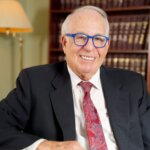
Alan S. Pierce has served as chairperson of the American Bar Association Worker’s Compensation Section and the...
Judson L. Pierce is a graduate of Vassar College and Suffolk University Law School where he received...
| Published: | September 10, 2026 |
| Podcast: | Workers Comp Matters |
| Category: | News & Current Events |
It’s been 25 years since 9/11. In this special episode, we revisit our conversation with Kenneth Feinberg, the architect of the federal compensation plan for victims and their families. As he asks in his book on the subject, “what’s life worth?”
Feinberg is an internationally known attorney who was appointed by President George W. Bush to administer the federal fund established to aid those injured in the terrorist attacks and to support the families of those who lost their lives.
We reflect on Feinberg’s Herculean efforts and how his team grappled with a national open wound and struggled to put a monetary value on thousands of lives.
In today’s often divisive political climate, a brutal period 25 years ago reminds us of a time when our nation came together as one. If any episode of Workers’ Comp Matters bears a second listen, this is the one. Everyone working with injured workers and their families can take a lesson from Feinberg’s extraordinary challenge.
If you have thoughts on Workers’ Comp law or an idea for a topic or guest you’d like to hear, contact us at [email protected] or [email protected].
Announcer:
Workers’ Comp Matters, the podcast dedicated to the laws, the landmark cases, and the people that make up the diverse world of workers’ compensation. Here are your hosts, Jud and Alan Pierce.
Judson Pierce:
Hello, and welcome to a special edition of Workers’ Comp Matters. I’m Jud Pierce. This September marks 25 years since the attacks of September 11th, 2001. It’s difficult to believe that a quarter century has passed. For those of us who lived through that day, September 11th remains one of those rare dates when we can remember where we were, what we were doing, and how suddenly the world had changed. Five years ago on the 20th anniversary, Alan Pierce and I had the privilege of sitting down with Ken Feinberg, the attorney appointed to administer the September 11th Victim’s Compensation Fund. It was an extraordinary assignment. Feinberg was asked to put a dollar value on unimaginable loss, to listen to thousands of grieving families and to create a system that offered an alternative to years of litigation. And as you’ll hear, workers’ compensation itself became one of the models for how that system could work.
But listening to this conversation again, 25 years after nine eleven, I’m struck by something beyond the law. We talked about service, we talked about empathy, and we talked about a country that at least for a period of time put aside many of its differences and came together. At one point, I asked Ken how we might find that sense of unity again without first having to endure another national tragedy. He called it the $64 question of the podcast. Five years later and 25 years after September 11th, I think that question may be even more important. So in remembrance of those we lost, those who were injured, the first responders, the workers and families whose lives were forever changed, we wanted to share this conversation once again. Here’s our 2021 interview with Kenneth Feinberg, a patriotic obligation. Kenneth Feinberg is a nationally, if not internationally known attorney and mediator with a firm he founded in 1993, the Feinberg Group.
He’s perhaps best known, however, as the special master appointed by President George W. Bush to formulate and administer the victim compensation fund or VCF, an unprecedented system of financial relief passed by Congress a mere three weeks after the terrorist attacks. The story of this fund and its impact on the families of the victims and Ken himself is told most dramatically in Ken’s book, What Is Life Worth and the recently released movie that can be seen on Netflix entitled Worth. Thank you for being with our audience today, Ken.
Ken Feinberg:
Glad to be here, of course.
Alan Pierce:
It’s hard to know where to begin and the profound effect it’s had on all of our lives for the past 20 years, and it’s hard to imagine that 20 years have gone by, certainly changed everybody’s life and I’m sure it changed yours. And before this and after this, you mediated and apportioned monies for a wide variety of tragic accidents, both before and after nine eleven. How did the victim compensation fund differ from your other assignments? Oh,
Ken Feinberg:
The emotion. You see, all of the other assignments involving tragedies, there was time to reflect, for emotion to dissipate a bit at least. The nine eleven fund was so traumatic to the country as well as the families and the injured victims. There was very little time for reflection. And as a result, the emotional overhang that accompanied the creation and the administration of the nine eleven fund was unique. It’ll always be unique in my mind because the law and how we treated compensation and workers’ compensation liens and medical liens all paled in significance to the emotional anger, frustration, uncertainty, disappointment of the victims and their families. And for that reason, more than any other, I think nine eleven stands alone.
Alan Pierce:
You made reference to workers’ comp, and of course our program here, workers’ comp matters, focuses primarily on workers’ comp. And as you undoubtedly know, workers’ comp has a very interesting history and I don’t want to stretch the comparison between VCF and workers’ comp too far because of the vast differences, but workers’ comp in its origins is a way of somehow compensating an economic wage loss with dollars. And in return, there is what we call a quid pro quo in which the employer who provides the workers’ comp gets immune from being sued civilly or in tort. And there is a parallel with the VCF and perhaps you can expand it.
Ken Feinberg:
I’ll say there’s a parallel. As a matter of fact, when Congress enacted the law and set it up for me to design the regulations and the compensation, the first cousin that we looked at was workers’ compensation, an administrative alternative to litigation, in theory at least non-adversarial. And we found tremendous structural similarities between the process, the process and the nine eleven fund. Now where workers’ comp became very problematic and we quickly solved it, the statute laid out all of these offsets that had to be deducted from the special master or the administrator’s calculations. And we saw that in some cases involving especially World Trade Center employees, the workers’ comp liens could dwarf the amount being offered and threaten the whole viability of the program. So we had workers’ comp processes, procedures, but we had to confront front and center the implications of comp liens on calculated value.
Alan Pierce:
And of course, overlaying this, workers’ comp really compensates one aspect, the so-called economic loss that can be measured with a calculator or a pencil. The non-economic loss, which we can get into later is where a lot of the emotion and a lot of the frustration came in.
Ken Feinberg:
But you see, it wasn’t even that simple, Alan, because what we found is that those in grief, families and physically injured victims, they didn’t want to listen or appreciate notions of economic loss that’s every day in the courtroom. I mean, it happens every day. And we weren’t going to get into the situation where everybody getting paid would have a different calibrated pain and suffering and emotional distress component. So it was challenging, I will say, but we solved the problems.
Judson Pierce:
Yeah. The families among others have claimed that the allocations were neither fair or just. And how did those concepts, fairness, justice, impact the nature and the amounts of the awards?
Ken Feinberg:
They had no bearing on the amounts. I tried to convince families over and over again, don’t even talk about fairness or justice. What’s fair or just at providing money for a lost brother or a lost son or a lost daughter or a lost husband? I mean, I learned very on in my career that when you start talking about fairness and justice, you’re entering a world where it’s going to be pretty hard to defend those concepts. I spoke about mercy, not fairness or justice. Mercy in the federal government and the taxpayer, the American people ponying up and providing the dollars, not private money that would be used to compensate.
Judson Pierce:
And that’s why I felt it such a great choice on your part that you separated out the citizens who ponied up charities, billions of dollars in charities as not being offsettable. I thought that was a brilliant idea.
Ken Feinberg:
Well, it was a brilliant idea forced on me, I must say. When we went and spoke to the charities, Robinhood Foundation, for example, the Twin Towers Fund. And when we told those charities, under the law, we may have to deduct charitable contributions. They looked at me and said, “Mr. Feinberg, if you do that, we’re going to hold up distributing any charitable funds till all of your money has been distributed. And if you want to be responsible for delays of three years or more in getting charitable money out the door, all you have to do is announce you’re going to deduct and we are going to hold off.” Well, we blinked in five seconds. We weren’t going to be politically responsible. And I exercised my discretion and announced that the statute was sufficiently vague so that we would not deduct charitable giving.
Alan Pierce:
Let’s roll back. Three weeks after the nine eleven tragedy, Congress passed the victim compensation fund and thereafter a search was made for a special master. And you were selected, you perhaps might have though of yourself as an unlikely candidate. And so who were you answering to and how did you come to the decision to take on this challenge?
Ken Feinberg:
Well, there was never any question in my mind that I would take on the challenge if asked. When I read about the new fund and its search for a special master to administer it, based on my prior work, as you know, Alan, working for Senator Kennedy, it was an easy call for me as sort of a patriotic obligation. I felt that there were probably thousands, maybe millions of Americans that were looking for a way to help these folks. And so I went to Senator Kennedy and he then went to my friend, also Republican Senator Chuck Hagel of Nebraska. Together, they approached the White House, President Bush and importantly, Attorney General John Ashcroft, who had the ultimate authority to select the special master. And they urged John Ashcroft to interview me as a bipartisan, apolitical person close to Senator Kennedy, not close to the Bush administration.
And the Attorney General offered me the position.
Alan Pierce:
Hollywood loves a David and Goliath story. I do and most of the general public does. And at least in recent fiction, we’ve seen civil action, the story of the contaminated soil here in Woburn, Massachusetts. We’ve seen Erin Brockovich, these series where there are victims going against the Goliath, the David versus the Goliath. Having read your book and seen the film, your experience almost seems to be a David and Goliath story, but in the reverse. Here we have Ken Feinberg and the federal government really being David and the Goliath being the families, the emotions surrounding the families. As a human being, did you feel that way? Did you feel somehow in order to convince the families to opt into this VCF system as opposed to a tort remedy? Tell us how that affected you and what that process was.
Ken Feinberg:
Congress really laid down the ground rules. Congress decided we want to create an alternative to the litigation system. And the attorney general said, “And Ken Feinberg will deliver on that promise of the federal government to make it easier, more efficient, less costly, more certain. So let’s set it up.” I didn’t really feel like David versus Goliath. I felt more almost like a proselytizer to try and convince families in grief that the devil you don’t know, this new fund, is preferable to the devil you do know, the litigation system, trials, lawyers, judges, juries. And it really was an educational undertaking that I went around the country, numerous town halls in Boston, LA, New York, Washington, and went about trying to convince very skeptical, emotional, angry people that when it came to at least financial assistance, this fund would work. And it took me a while. It took me quite a while.
A 33 month program, I’ll bet you it took 25 months before people really began to rally around the program.
Alan Pierce:
I think you had a time deadline. You had to get a certain percentage of these families to sign on. From reading your book, I didn’t realize it really went down to the wire before they started to come around. And you had some folks on the other end pushing them in another direction.
Ken Feinberg:
That’s true. Now let’s make sure that when you refer to the movie Wirth, there’s a little dramatic license.
Alan Pierce:
I think so, yeah.
Ken Feinberg:
You got to make this exciting so that people won’t leave to get some more popcorn or something. No, there was no statutory minimum number of people that would have to participate in the program, but it’s true. We were determined to try and vindicate Congress in its hope that the great majority of people would opt into the program. At the end of the day, 97% of all the families that lost a loved one in nine eleven opted into the program. Only 94 people, only 94 people litigated in the courtroom and they all settled their cases five years later. There was never any trial or anything about nine eleven. Now you’re right, and you know this from the workers’ comp world, what we found in the nine eleven fund was a little bit counterintuitive. 60%, over half of all the applications in the nine eleven fund came in, in the last six months of a 33 month program.
People procrastinate, they waited, they hemmed, they hawed. They didn’t say no, they didn’t say yes. They watched, they observed, they were unable to make decisions. And in the last six months, over half the claimants looking at the statutory deadline opted into the program.
Judson Pierce:
And it’s remarkable in the similarities and how it mirrors the sort of establishment of the workers’ compensation schemes in this country, in that people were suing, it was taking years for them to get to trial. Sometimes they’d get nothing. Sometimes they’d die before they ever got heard in court. So the states adopted these plans, if you will, to give a certainty to loss in the workplace. And this is what the fund did for so many people was there was some certainty that they were going to recover something for the loss. And should this be tried again, would you think, in future tragic events? What is your feeling about whether this should be adopted and tried again?
Ken Feinberg:
Absolutely not.
Judson Pierce:
Really?
Ken Feinberg:
Oh no. This program was a success. It worked just as Congress intended. Don’t do it again. The idea that you are going to create a special compensation system just for a select number of people, everybody else fend for yourself. You’re on your own, judge, jury, courtroom. But for this group, a speedy, efficient alternative to the legal system. Now, I must say, you should have read some of the letters I got back in 2001. Dear Mr. Feinberg, my son died in Oklahoma City, a domestic terrorist. Why aren’t I eligible for this fund? Dear Mr. Feinberg, you got to explain something to me. My daughter died in the basement of the World Trade Center in the original 1993 attacks committed by the very same type of people. Why aren’t I eligible for this fund? And it wasn’t just terrorism. Dear Mr. Feinberg, I’m at a loss to understand.
Last year, my wife saved three little girls from drowning in the Mississippi River, and then she drowned a heroin. Where’s my check? The idea that public money would be used just for nine eleven victims, bad things happen to good people every day in this country. There’s no nine eleven fund.
Alan Pierce:
I want to just add a quota to Jud’s question. Not only did this fund compensate these victims, but there was a huge problem if there was no such fund and the World Trade Center or the airline industry were to be faced with thousands or tens of thousands of claims. What would that have done?
Ken Feinberg:
Well, Congress certainly felt, Alan, that could drive the airlines into bankruptcy and threaten the entire economy if there was every day in the courtroom a repetition of all of these lawsuits and allegations and charges. So no doubt, no doubt, this nine eleven fund was promoted and urged upon by the airline industry and the World Trade Center. Now having said that, Alan, I must say you could have limited lawsuits and made lawsuits extremely unattractive without providing each family who lost a loved one an average of $2 million tax free. But you’re right, there’s no question that it was an important moving force.
Alan Pierce:
And did you find that some of the families felt that motivation eclipsed the value to them, that perhaps in the early stages, this fund was established more as a way of Congress bailing out industry at the expense of the families? Did you have to overcome that hurdle?
Ken Feinberg:
Yes. Yes, you’re right.
Judson Pierce:
Ken, can you tell us, was there a limit to the dollar amount or did you set that dollar amount within your broad unfettered discretion?
Ken Feinberg:
The latter. Congress authorized that whatever I felt was necessary to incentivize victims and their families to opt voluntarily into the program, I had that authority. And I had delegated to me the calculation. There were no caps. I exercised my discretion very wisely, I thought, after Senator Kennedy whispered in my ear, “Ken, this is public money. Make sure that 10% of the victims don’t get 90% of the taxpayers’ dollars.” And what I did was in my discretion, I brought down the high end Kanter Fitzgerald multimillion dollar claims, brought up the low end waiters, busboys, firemen, soldiers, cops, and it resulted in $7.1 billion paid out in the aggregate. The average award for a death claim was $2 million tax-free. The average award for a physical injury claim was $400,000 tax-free. And that’s how I tried to minimize the inequity, perceived inequity of high-end versus low-end wage earners.
Judson Pierce:
Yeah. One of the things that really came out in both the film and the book was the differences in how the families reacted to your best guesstimate, as it were. Can you explain a little bit about the differences in terms of the groups that you were speaking with, if people were appreciative or very, very much not appreciative of these results?
Ken Feinberg:
The Latter. No one was appreciative. No one was grateful. Nobody thanked you. You don’t expect that. These are people weeks, months after the attack, nobody, their husband turned to dust at the World Trade Center. No. What saved the program and made it so successful was the empathy and the sensitivity we showed by meeting privately in confidence with thousands of families. I met with 950 myself and listening and being empathetic to the tales of whoa that we heard made all the difference to the fund.
Judson Pierce:
Why were those conversations transcribed? Why was there a steno or a recording made?
Ken Feinberg:
Because we wanted to make a record. Most of the families wanted a copy of that transcript to put in a safe deposit box for future generations. But beyond that, we wanted a record in case there was some family or some physically injured victim trying to make a case for additional compensation. We wanted to make sure we had that on the record to go back and have the accountants look at it, et cetera, to see if we should and could adjust the amounts. Leo Boyle and the trial lawyers represented 1500 of these families pro bono around the country without compensation, and they were solidly behind our efforts to help these folks.
Alan Pierce:
I’m glad you mentioned Leo Boyle, who was then the newly appointed or elected president of the American Trial Lawyers Association, and little did he know that shortly after being sworn in as president, this would happen. And you mentioned that he and his colleagues, by the way, Jed and myself included, because we handled some of these workers’ comp claims pro bono here in Massachusetts, but you also and your staff work pro bono. And tell us the appropriate reasons, the decision that you made that a condition of accepting this role as special master.
Ken Feinberg:
Patriotic duty, that’s the high road. I felt it was a patriotic duty. But I must say, the idea in confronting very angry and understandably emotional people, the idea that I would have to explain to them why I’m getting paid to provide compensation for the loss of a loved one, I thought that would be political suicide. It made absolutely no sense that I’m making money off an injured or a dead victim. I just didn’t think that was strategic or wise, so for those reasons.
Alan Pierce:
I can only imagine that these 900 plus interviews you had and the other probably a thousand interviews your staff had, had a cathartic effect on the families, that this was a, I think I saw the word somewhere, an exorcism of sorts of this devil that was in their souls.
Ken Feinberg:
Well, now you’re an armchair psychiatrist. I’m not sure about that. I’m not sure about that. I don’t think there was much we could do other than give them an opportunity to be heard privately that would have much effect or exorcism on their horror or what the uncertainty of what they confronted. I don’t know.
Alan Pierce:
Okay. Well, you did describe your own role as requiring the wisdom of Solomon, the skill of H&R Block, kudos to H&R Block for that, and the inside of a mystic with a crystal ball. I mean, there was sort of all of that rolled into one and overlaying all of that was raw emotion, anger, grief. And you got to experience families and how the financial impact of the loss of a loved one or a breadwinner or what effect that had on families. And you saw people at their best and at their worst.
Ken Feinberg:
I think that’s right. I think that’s right. And the reaction of families that I met with or physically injured victims was as diverse as human nature itself. You think you can expect what you’re going to hear, believe me. When families came in or injured victims came in, one man came in with third degree burns over 85% of his body with the artificial skin on his limbs, just horrific.
Alan Pierce:
There were some other unexpected or perhaps unanticipated complications here. First of all, you had to determine who might be a valid recipient among family members and perhaps family members who were not getting along before the injury or death, but you also had people from other countries and the laws of those other countries. You had undocumented workers at the World Trade Center and elsewhere. What policy decisions did you make regarding, for example, the undocumented?
Ken Feinberg:
We’d followed the law of the domicile of the victim. If that law precluded same sex partners or others from getting compensation, we worked out. I put on my mediation hat and worked out settlements between competing family members or friends. We followed the will, the executor, the will of the victim. And we managed in almost all cases, not all, you saw the movie, there was an example where we couldn’t, but we were able to negotiate a resolution where family members were at odds.
Judson Pierce:
What strikes me about that time in our lives, I was not too far out of law school. And to see all the lawyers, as Alan mentioned, put a moratorium on lawsuits, folks getting into the military because they want to help and they think that’s the only way and the best way for them to show some unity. There’s a sense of unity that is not common among our populace now. So how, Ken, do we get that back without
Ken Feinberg:
Having
Judson Pierce:
To go through a trauma like this?
Ken Feinberg:
That is the $64 question of the entire podcast. What I like about the movie is for younger people to see that just 20 years ago, not a century ago, 20 years ago, the country rallied behind the victims. One community, no red state, blue state, no liberal conservative, no Democrat, Republican, apolitical, bipartisan, everybody behind it. And people should see the movie worth and recognize that it isn’t such a leap of faith to think that we should be able to do that again and not in times of tragedy. We should be able to work out differences now. That’s the great lesson, I think, and value of the movie and what we did.
Judson Pierce:
And you worked with Senator Kennedy and you talked about his relationship with Senator Hatch and their relationship bipartisan, finding ways to. I mean, the Congress passed this bill, this act so quickly. I mean, much to your chagrin, I’m sure you wish you probably had a little bit more substance in there.
Ken Feinberg:
It wasn’t the substance. The trouble, as I said earlier, the trouble with enacting a law so quickly after the event is the raw emotion. There’s no time. Countless family after family would say to me, “You’re giving me $3 million. They haven’t even recovered my wife’s body. All we got was her left arm.” I mean, horrible stuff. But I think if Congress had waited much longer, they probably wouldn’t have done this at all.
Alan Pierce:
I don’t want to draw an unfair comparison, but we recently had Congress act within a number of weeks and establish the PPP fund for businesses and individuals and a lot of criticism there that there wasn’t a whole lot of thought and process and it was just dumping money into the system and let it percolate down. That happened quickly and it happened out of emotion. Do you see some parallels there with what we’ve gone through?
Ken Feinberg:
And you see, the nine eleven fund, the Congress basically bucked everything to me. It was a unique statute. We don’t know how much money is going We don’t know what the rules should be exactly. We’re not sure about the details, but we got somebody who will decide that. No committees, no appeals, no access to the courts. We’ll just trust this guy.” And it worked, but I don’t view it as much of a precedent on political science grounds, I’ll tell you that.
Judson Pierce:
I just really wanted to thank you. I saw you on a webinar last week with Michael Keaton who plays you. Doesn’t handle your accent quite as well as you do, Ken, I must say.
Ken Feinberg:
You did. You handled it much better.
Judson Pierce:
But it’s a terrific movie. You wrote an amazing story. And in an article today in the New York Times, it was stated that, “The great crises in US history have often inspired the country to great accomplishments.” That was our conversation with Kenneth Feinberg. Listening to it again five years later, I keep coming back to Feinberg’s description of his work as a patriotic obligation. For those of us in workers’ compensation, there is something especially meaningful about that idea. Our system exists because when people are injured or killed in the course of their work, society has decided that we have an obligation to respond imperfectly perhaps, but fairly, efficiently, and with some measure of humanity. The September 11th Victim Compensation Fund confronted that same challenge on an almost unimaginable scale. But 25 years later, perhaps the most enduring lesson isn’t about compensation at all. It’s about listening.
Feinberg told us that what ultimately helped make the fund work was sitting privately with families, hearing stories and treating people experiencing extraordinary grief with empathy and dignity. Maybe there is a lesson for all of us today. We don’t need another September 11th to remember that we are capable of helping each other, listening to each other, and finding common purpose despite our differences. On this 25th anniversary, we remember the nearly 3000 people who were killed. Those were injured, the first responders and workers who became sick in the years that followed, and the families who continue to carry their loss. May their memories continue to remind us not only of what happened on September 11th, but of who we were to one another in the days that followed. I’m Judson Pierce. Thank you for listening to the special anniversary edition of Workers’ Compensation Matters. And as my dad has said at the end of his program for so many years, go out and make it a day that matters.
Notify me when there’s a new episode!
|
|
Workers Comp Matters |
Workers' Comp Matters encompasses all aspects of workers' compensation from cases and benefits to recovery.