
With a career in state, federal, and nonprofit Workers’ Comp programs, guest Christopher Godfrey shares his concerns for a Worker’s Comp field in peril.
|
|

Christopher J. Godfrey most recently served as Director of the Office of Workers’ Compensation Programs (OWCP) at the U.S. Department...
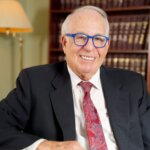
Alan S. Pierce has served as chairperson of the American Bar Association Worker’s Compensation Section and the...
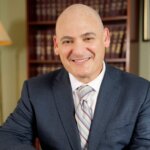
Judson L. Pierce is a graduate of Vassar College and Suffolk University Law School where he received...
| Published: | October 21, 2025 |
| Podcast: | Workers Comp Matters |
| Category: | Access to Justice , News & Current Events , Workers Compensation |
It’s not you, the Workers’ Compensation system has changed over time, and not always for the best. Guest Christopher Godfrey, with a long career in Workers’ Comp, including his current role as research director at the Workers’ Injury Law & Advocacy Group (WILAG) and a lengthy stint running the office of Compensation Programs at the U.S. Department of Labor, offers some insights.
Where a non-adversarial atmosphere used to prevail within Workers’ Comp, Godfrey worries it has been driven toward a confrontational system with a struggle for unilateral control. That isn’t how a program aimed at making injured workers whole and getting them back to work started out.
Also concerning Godfrey is a lack of funding for the Federal Employees’ Compensation Program, making it difficult for injured federal workers to even find a doctor willing to accept them as patients.
In both state and federal systems, Workers’ Comp is being buffeted by politics. Godfrey notes the government shutdown, a slowing employment environment, and even the potential for a stock market bubble threaten the system. Economics and politics can build hurdles that trickle down to how insurance companies and Workers’ Comp plans operate. Godfrey shares his personal concerns and describes what WILAG is doing today to protect the rights of injured workers.
If you have thoughts on Workers’ Comp law or an idea for a topic or guest you’d like to hear, contact us at [email protected] or [email protected].
Announcer:
Workers Comp Matters, the podcast dedicated to the laws, the landmark cases, and the people that make up the diverse world of workers compensation. Here are your hosts, Judd and Alan Pierce.
Alan Pierce:
Welcome to another podcast here on the Legal Talk Network. This is again, Alan Pierce from the law firm of Pierce, Pierce and Napolitano in Salem, Massachusetts. Bringing you another show, it’s October in Salem, and I’m looking out on really Halloween USA. So again, I welcome everybody for joining us. Normally we will introduce our podcast with the title, but in this podcast I was more interested in our guest. So our guest today, Christopher Godfrey, most recently served as director of the Office of Workers’ Compensation Programs for the US Department of Labor under the Biden administration. He was appointed under the leadership of Secretary of Labor Marty Walsh, and is there that he oversaw federal claim systems impacting workers across the globe. Before that, Chris was chief judge and chairman of the Employees Compensation Appeals Board, deciding critical cases under the Federal Employees Compensation Act, otherwise known as feca.
And prior to his decade of service at the Department of Labor, Chris served two governors in Iowa as a workers’ compensation commissioner where he worked to modernize one of the nation’s most respected compensation systems. He authored precedential rulings on multiple complex issues, having begun his career in private practicing, representing both injured workers and self-insured employers, which gives him a balanced real world perspective that drives his advocacy today. In addition to his legal work, Chris holds a master of arts and global policy from Johns Hopkins School of Advanced International Studies with a focus on labor rights, dispute resolution and just transition theory. He has been an executive member of the International Association of Industrial Accident Boards and Commissions, elected member of the National Academy of Social Insurance, and he currently remains a member of the Iowa Bar and works as lead attorney for the mainstay law firm and is the newly appointed research director for the workers’ injury Law and Advocacy group, otherwise known as willig. So I want to welcome Chris to AU and I want to just note that the views and opinions today are Chris’s personal views and not necessarily representative of either mainstay law or Willig. So Chris, after a long introduction that is well deserved. Welcome to Workers Comp Matters.
Christopher Godfrey:
Thank you. It’s an honor to be here and I’m excited to talk about something that I’m really interested in, which is workers’ compensation.
Alan Pierce:
Well, as you heard, as we all heard in my introduction, which is barely scratching the surface of many years in the field, how has the landscape of workers’ comp changed over the course of your career? I know that’s a very broad question, but if you had to distill it down to the essence, what changes have you seen over the last several decades in comp?
Christopher Godfrey:
So I started in workers’ compensation out of law school back in 1998 back in Iowa, and my first position was representing a large self-insured corporation. It was a meek packing company in my hometown of Sioux City, Iowa. And what I noticed initially in my practice was how stable and cooperative workers’ compensation was. It was a remedy that to a large extent had buy-in from both sides. We had members of both the claimant’s bar and the defense counsel bar working across the aisle to make sure that the system was evenly balanced and that everybody that participated in the system generally knew what we were doing, but we weren’t out to take advantage of one side or the other. And I think one of the things that I’ve seen is maybe that buy into the system of workers’ compensation has struggled recently. I saw that in both the practice of law but then also in the administration of law at the state level where in the past if the system was going to be amended, both sides would sit down and talk about what the issues were that were of concern to their side of theBar.
They would say costs are too high or access to medical care is insufficient. I think what we see now in the system is one side really trying to take control of the workers’ compensation system and utilize it for their own gain. And I think we are starting to see that at the federal level as well, which is extra concerning to me. I see the Feca system as a non adversarial system, which is what Congress and the administrations have always intended. It really seems now as though there is an effort to push more of a adversarial nature into the FECA system, and that’s concerning. So I really think the landscape is just more polarized and maybe that’s a reflection of where the US is as a society and as our governance at this point in time. But I think that’s really infected the workers’ compensation system and I think that’s of detriment to both sides in the argument for injured no workers, I think it’s problematic because we see cuts and benefits and declines in the amount of compensation that people receive when they have legitimate claims and access to medical care is more problematic. But I don’t think as we see those cuts, I don’t think that employers are really seeing the types of cost savings that they should see based upon the amount of reductions in costs that injured no workers are facing.
Alan Pierce:
It’s very interesting. Now you have the unique, I’m not sure if there’s been many other people that have this in their resume, but you headed a state agency that provided workers’ comp oversight and adjudicated disputes, and you also headed a federal agency that did the same thing. What are the main differences between a state-based system of workers’ comp insurance and the federal program under the feca, under the general auspices of the Office of Workers’ Comp programs?
Christopher Godfrey:
So the largest difference between the FECA program and the state systems is that in theory, FECA is supposed to be non-adversarial, but I think due to the under resourcing of the Department of Labor and the OWCP at this point in time, that it’s becoming a little bit more of an adversarial type of a process at the state level. Obviously there are private employers that have their interests. There are private insurance companies, self-insured employers, there’s defense counsel, there’s claimant counsel. The whole universe of workers’ compensation is pretty large. When you get to the FECA system, it’s pretty narrow because you’ve got employee agencies who are generally in a non-adversarial program relying upon a claims examiner to look at evidence to determine whether or not there’s causation in a case. Really what you see is within the FECA program, you see claims examiners looking at evidence to see whether someone qualifies for a very limited benefit.
And I think because of the general type of nature of government service remedies under feca are supposed to be pretty limited in terms of getting someone prompt medical care, getting someone a temporary benefit while they heal, and then the government is so large we should be able to return employees back to gainful employment. But for those who might sustain very serious and life altering types of disabilities, I think in the state system it’s a little bit different because there’s the opportunity for settlement of claims and people to move on to other employment. And I think that remedy is maybe utilized in state systems to resolve disputed issues and this may be a little bit more of a safety valve in the system, whereas in the federal system, there are no settlements.
Alan Pierce:
Let’s flush that out a little bit because I was going, that was going to be among my follow-up questions is one of the main differences in why you don’t see that many lawyers handling federal claims is there really is no mechanism for a compromise settlement. It’s either you either win your case or you lose your case. Which also goes to the question is who is your, I don’t want to say adversary, but your other side. When I’m dealing on a state level, I have the lawyer for the insurance company that ensures the employer on the FICA OWCP. Generally there are no insurance companies on longshore cases. There can be insurance companies, but for the most part postal workers, people who work in federal hospitals, veterans hospitals, the va, your opponent so to speak, if you are an injured worker or injured worker’s lawyer is the claims examiner. There’s no adjuster, there’s no Liberty Mutual. So if those cases go to a hearing, the hearing is a hearing officer, an administrative law judge one or either tell us how that happens.
Christopher Godfrey:
So in the FECA program, really the adversary is lack of funding. One of the big challenges with the FECA system that I hear from attorneys who represent injured male workers over and over again is it’s impossible to find a medical care provider who’s willing to enroll in the FECA program, go through the stringent process of getting enrolled in the system, and then moreover, anytime that they recommend treatment, they have to get pre-approval for a large segment of the type of work that is necessary to get someone healed and back to work. So that lack of funding is really the primary adversary, although it’s also building a case in a system where you don’t really have a claims examiner who’s helping to develop the evidence of the case, and you’ve got an employee agency perhaps that’s unwilling to share information about what happened to the person or share wages that’s necessary to calculate the average weekly wage or sharing the job description in a timely manner so that fact of injury can be decided in the case.
So it’s oftentimes building a case in the FECA program where it’s difficult, and I really think this is the biggest flaw in the FECA program, is it’s non adversarial, but it also is so hard to develop the evidence in the case because you can’t do discovery. You don’t have the obligations of the employer to turn over to its insurance carrier certain information, which then makes its way into the hands of whoever the attorney is or the advocate is for the person that’s trying to get benefits. I think the other adversary in feca claims is time. What I see and hear so often from people that practice in FECA is that the timelines are just unsustainable for people. I recall when I was director at OWCP, one of the situations that comes to mind that in a way infuriated me, but also drove me to require some retraining of our staff and to have procedural manual changes was a postal employee that was in his long life vehicle out to deliver mail and was in a motor vehicle accident where his vehicle was struck at a really high rate of speed by another vehicle.
It was all caught on a ring doorbell, maybe a couple of ring doorbell cameras. The individual was thrown from the vehicle, fell into a ravine and had a limb go through his leg, and the claim was denied for lack of medical evidence to establish how that was sufficient to have caused the laceration in his leg. So it’s that lack of claim development. It’s the amount of time it takes for someone. I think that individual had been without benefits for several months, hadn’t been able to work. One would hope that the employee agency would say, look, this is a visible injury. It’s a non-con contested motor vehicle accident. We need to start paying this person benefits right away. But after that period of continuation of pay ended, they determined that he hadn’t provided sufficient medical evidence to establish the claim. I think those are the types of failings within the federal system that are so damaging to the system and really have eroded trust in it.
I think at the state level you’ve got good advocates on both sides. Usually if it’s a contested case and there’s attorneys involved, there’s a balance of power that keeps the system a little bit more perhaps moving forward. Obviously people can claim, well, one side wants to delay, one side’s trying to go too fast. But in general, the system at least that I’ve seen in most of the states that I’ve had involvement with really try to move claims forward. And there’s the opportunity to settle if things are taken too long or if one side decides that they need to find a way to come to an agreement to resolve the matter, that’s just simply not able to happen in the FECA system and really drives a lot of people just to get upset and give, put their medical treatment on their private health insurance and take their annual leave or sick leave from their employee establishment
Alan Pierce:
Or retire if they’ve got enough service time.
Christopher Godfrey:
Correct.
Alan Pierce:
Yeah. Alright, we’re going to take a quick break. We’re going to pick up on this and a couple of other themes. We’ll be right back and we’re back with Chris Godfrey. Chris picking up on where we left off with Feca and the federal government involving in workers’ comp. Bottom line is both state-based workers’ comp programs and of course federal workers’ comp programs are in a large part, political benefit changes are done by either state or federal Congress legislators. We have the executive branch that oftentimes oversees the state systems and to some degree the federal system. We’ve had a change of administrations from Biden to Trump, and of course there’s no end of comparisons and contrasting both political parties and how these parties see social programs such as workers’ comp than the other does. But do you see any threat under the present administration of the federal government affecting state workers’ comp programs? And if so, how might they do that?
Christopher Godfrey:
I really don’t see any direct threat to state workers’ compensation programs. I think most of the state jurisdictions and the business and industry groups and insurance carriers really block of people that participate in the system. They don’t want federal involvement. That is the one thing that unites all of them would be that they do not want federal involvement. I would say that the biggest threat to the state systems is probably just the government shutdown that we’re currently in. As we’re currently recording, we’re over a week into a government shutdown. I think there are signs that the economy is slowing with employment numbers that are coming out of BLS, while we still have someone that is doing calculations at Bureau of Labor Statistics. And I also just really have a fear about whether or not the stock market is in a bubble and with insurance companies invested in the stock market.
I think we saw after 2007 with the collapse in the great recession that we saw a period where premiums went up because insurance companies lost a lot of money in the stock market crash. I think those types of outside threats that aren’t necessarily this administration per se, but it’s the overall political environment and economic environment that we’re living through at the moment. I think there’s some hurdles ahead some days ahead that are going to be influential on how the stock market performs and how insurance companies react to that. And what that might mean is to whether or not they either need to raise premiums to make up for losses or whether they try to push political change in states and try to save money in other ways. As we’ve seen historically throughout the 1990s, it was a period of pretty drastic reform of the system. I think that if there is a downturn in the stock market, we could see further tightening of benefits.
Alan Pierce:
Let’s just sort of divert a little bit. We’ve done some shows on this COVID and the whole idea of a pandemic not only shook the world and shook the country, but it shook the workers’ comp community, especially at the onset because nobody knew how deep or widespread this would be in terms of costs. As it turned out, it wasn’t as bad as expected, but it did teach us some things. One of the things we’ve talked about, the concept of presumptions, presumptions under workers’ comp law, both federal and state are nothing new. We have them for a variety of people, cancer or cardiac issues for police of fire, our first responders. Tell us how in your tenure with the federal government, how did Feca respond to both the concept of presumptions and dealing with pandemic among its vast number of federal employees?
Christopher Godfrey:
I would say that the FECA program’s response to COVID under the American Rescue Plan Act was probably one of the model examples of how workers’ compensation should work.
Alan Pierce:
Okay. Tell us how.
Christopher Godfrey:
So when I think of the threat that COVID had just to the airline industry and TSA agents, I think that’s a real world example that everybody in a professional environment has a pretty good understanding about the work of TSA agents, the things that they do to keep air travel safe, and how that puts them in contact with the general public in close quarters at airports working with their coworkers, they were on the front lines of interacting with people who were traveling domestically, internationally. That work during COVID was very dangerous, and the question becomes a value judgment. Who should face the risk of doing that work? Should the individual TSA agent have the full risk of going to work, getting their paycheck, but perhaps dying from COVID or having a very serious COVID infection where they’re off work for a period of time, maybe develop long COV, have respiratory issues, the remainder of their life, cognitive issues because of long COVID, et cetera, or should that risk be born by the industry who’s employing them?
When we look at the number of TSA agents who qualified under the American Rescue Plan Act, through the presumption that was put in place, I think it was probably one of the smartest investments that the administration made in the workforce during COVID because they said the government will take on the risk of these workers getting COVID, paying them a very limited benefit, paying for their time away from work, paying for their medical care costs for a very limited period of time, and then getting them back to work. And I think, I don’t know that the TSA numbers individually, but for federal employees, it was over a hundred thousand individuals that qualified for the benefit. But the overall cost to the system were minuscule when you consider what the costs would have been had TSA workers decided, I’m not taking on that risk. I’m going to forgo my job.
I’m going to find something safer where I’m not at risk of becoming infected, perhaps dying. We kept the transportation industry afloat for what was really a small monetary investment to provide that level of protection across industry. And that’s how as a social insurance program, workers’ compensation is supposed to work. The industry where people work is supposed to bear the cost of the risk of the health implications of someone becoming injured or ill at work, and then spreading that cost across all of that industry. I think the COVID presumptions, which were in the American Rescue Plan Act and the FECA program, we’re a prime example, and it’s really a model of how the system should provide protections to people so that they don’t have to bear that individual risk.
Alan Pierce:
We’re going to take another short break and then we’ll be back to conclude our conversation with Chris Godfrey. Stay tuned. We’re back. And picking up on that last conversation about the American Rescue Plan now, was that something that was passed by Congress in the early days of COVID or tell us a little bit about the history of how that came to be?
Christopher Godfrey:
The American Rescue Plan Act was one of President Biden’s initial responses, I guess to the COVID Pandemic, and it was meant to help businesses that were being impacted in the private sector, but also provided limited benefits within the federal governments as well. Were
Alan Pierce:
The same as the usual OWC PCA benefits, the percentage of wage and medical, or was it a separate benefit source?
Christopher Godfrey:
It was not paid through the normal chargeback provisions. It was an open appropriation from Congress and it did have a sunset provision, which
Alan Pierce:
Was, that was my next question. Yes. So when does the sunset on American Rescue Plan Act?
Christopher Godfrey:
It already has. The bill was passed through reconciliation, so there was a 10 year limit on benefits that were paid out, and that presents a pretty novel legal issue. For those who are on survivor benefits, a lot of the survivor benefits will have to be paid out through OPM, probably through another survivor program because to get it passed through reconciliation, the expenditures could not surpass 10 years.
Alan Pierce:
Okay. So that the benefits paid under the rescue plan was not the usual FECA benefit, it’s just a separate pool of money administered none withstanding by your agency?
Christopher Godfrey:
Yes, that’s correct.
Alan Pierce:
Okay. Was the presumption a conclusive presumption or was there room for argument? Let’s assume for the moment that the agency says, well, this work or this TSA worker was living in a household that had COVID, and it’s more likely than not that she contracted COVID from a spouse or child as opposed to a member of the public, or did that not enter into it the facts?
Christopher Godfrey:
It could enter into the facts. The presumption was fairly narrowly drafted so that if the person had the requisite amount of exposure and they had a positive COVID test within the period of the exposure, it was to be deemed approved. Yes, it could be. And we did see agencies really strenuously trying to press the deemed approval process through the presumptions, but generally Congress intended, and President Biden intended for that to be a pretty broad presumption, and we carried forth that intention.
Alan Pierce:
Yeah. It sounds akin to post nine 11, the victim compensation fund that was set up by the federal government. In fact, we had Ken Feinberg as a guest on Workers Comp Matters several years ago where in response to an unexpected, unusual and widespread crisis, the federal government stepped in with a financial aid package that was swift and carried with it certain requirements, but cut through a lot of the litigation and what we would call the friction costs of delay time and money to get to the desired results. So do you see a parallel there with VCFA
Christopher Godfrey:
Hundred percent? It really was intended to make sure that that protection was provided to the workers and the costs were born by the government. It was a cost benefit analysis. And again, I think it was a small investment for really keeping government open, keeping the airline transportation industry open. You think how many businesses rely upon that sector of the government alone, having these presumptions in place really allowed for mail delivery to continue air traffic controllers to be on the job, meet inspectors to go into very dangerous meat packing facilities where there’s close quarters, all kinds of particulates in the air. It really had the intended effect of keeping government open.
Alan Pierce:
And then the one thing that we learned early on in the first year or two of COVID, that all workers are essential workers, that phrase took on such a new meaning when we were all running out of, nevermind putting our health at risk, we’re running out of the toilet paper. I mean, the delivery person was just as essential as the milkman and the grocer. I mean, all workers are essential. Let’s shift gears a little bit. You are now research director of willig. Tell us a little bit about willig, what it is, who they are, and what are the pressing issues that as research director you are working on right now.
Christopher Godfrey:
Sure. So willig is a collection of attorneys who believe in social insurance programs. It is comprised of members from probably every state jurisdiction, those who practice before the federal government. It’s making sure that people have access to social insurance benefits, making sure that the systems are equitable, that we protect the most vulnerable of workers, really making sure that people don’t fall into poverty because they become injured or ill at work. In the Obama administration in 2016, there was a critical report that came out that spoke about the sort of the threats to the workers’ compensation system in the us, especially at the state level. And really what the Obama administration looked at is, is workers’ compensation meeting the essential function of keeping people from falling into poverty once they become injured or ill at work? And I think Willick has at its heart really that same focus, making sure that the system is there to protect people so they can get medical care promptly so that they can have compensation benefits that are not going to cause them to fall into poverty.
And making sure that employees really are employees that we don’t have jurisdictions that move too many people into an independent contractor or a gig work status. The issues that are probably most pressing to willig right now probably deal a lot just with the security of social insurance overall, making sure that people have access to medical care. So many, what I would say were reform efforts to try to cut costs, have really driven people into other social insurance programs, whether Medicare, Medicaid, social security, disability benefits that cost shifting from the workers’ compensation system that can really be problematic to the overall functioning of the system if too many people are driven out. And then at the same time when we have an administration and both houses of Congress that have decided to have cuts to the amount of money that’s going into, first off just the general Medicaid and funding levels, but also the actual administration of these federal agencies, whether it’s social security or at the state and local level. We’ve seen many states privatize their Medicare systems, or I’m sorry, Medicaid systems. It’s just really trying to keep those people that fall within the workers’ compensation social insurance umbrella there and making sure that they can get the benefits that they’re entitled to.
Alan Pierce:
I want to thank you for the work you’ve done as commissioner in Iowa, as director of the OWCP and the appeals folks, and the work you’re doing representing injured workers and their families, as well as being an advocate for an advocacy organization, willig, of which I’m a member, and we’ve had other willig guests. It’s not really a bar association, but it is a collection of workers’ comp claimant, attorneys who are advocates for their clients. And the whole role of workers’ comp as a system of social insurance workers’ comp, I’ve always said, is different than long-term disability. It’s different than Social security disability, but closer. And it’s certainly different than health insurance. It is an obligation of an employer to, at the very bare minimum, take care of a worker injured in the creation of a product or service that provides a source of profit for the employer. And toward that end, I applaud you for the various hats that you’ve worn in the work that you do. And to our audience, please tune in again to another additional Workers Comp Matters. And I want to thank you, Chris, for being a guest and hope to see you soon. So for those of you listening, go out and make it a day that matters. Bye-bye.
Notify me when there’s a new episode!
|
|
Workers Comp Matters |
Workers' Comp Matters encompasses all aspects of workers' compensation from cases and benefits to recovery.